Australian visa application fees surge across every subclass as new financial year begins
Australian visa application fees jump by up to 25 % as new program year begins
Minimum salary thresholds for employer-sponsored visas climb to AUD 79,423
Latest News

Minimum salary for employer-sponsored visas indexed to AUD 79,423
Australia’s skilled-visa salary floor has risen to AUD 79,423 under the first automatic indexation mechanism, effective for all new employer-sponsored nominations from 1 July 2026. Companies must raise offered salaries or risk refusal, increasing the direct cost of bringing overseas talent into Australia. The change is designed to keep migrant wages in step with domestic earnings and prevent labour-market distortion.

Pacific Engagement Visa ballot opens, giving 3,000 Pacific and Timor-Leste citizens a pathway to permanent residence
Registrations for the 2026-27 Pacific Engagement Visa ballot opened on 1 July 2026. Citizens of 12 Pacific nations and Timor-Leste have four weeks to vie for one of 3,000 Australian permanent-residence places, offering employers a new channel for long-term Pacific workforce recruitment.

‘Visa-hopping’ loophole closed: on-shore switches to Student and work visas banned
New regulations effective today bar Visitor- and Graduate-visa holders from applying for Student or certain work visas while inside Australia. The policy aims to end ‘visa-hopping’ and reduce the population of ‘permanently temporary’ residents, but could disrupt students, graduates and employers relying on seamless on-shore transitions.

People-smuggling attempt in Far North Queensland exposes porous northern coastline
A Taiwanese man has been charged over an alleged people-smuggling venture after up to 15 migrants landed undetected on a remote beach north of Weipa, Queensland. The security breach is likely to trigger heightened surveillance and inspection activity along Australia’s northern maritime approaches.

Real-estate, legal and accounting sectors now fall under Australia’s anti-money-laundering regime
Australia’s long-promised ‘Tranche-2’ AML/CTF reforms took effect on 1 July 2026, extending compliance obligations to real-estate agents, legal practitioners, accountants and other high-risk service providers. The tighter rules will add client-due-diligence steps for inbound assignees buying property or engaging professional advisers.

AUSTRAC ‘Travel Rule’ now live: crypto transfers face full identity checks
AUSTRAC’s long-signalled Travel Rule is now mandatory, forcing Australian crypto exchanges to capture and share sender-and-recipient identity data on every transfer from 1 July 2026. The zero-threshold regime adds new compliance steps and possible delays that globally-mobile employees and their employers must factor into relocation cash-flow planning.

Border Force overnight IT shutdown causes brief delays at air-cargo terminals
Australian Border Force took key cargo-processing and traveller databases offline overnight for planned maintenance ending 1 July 2026, leading to minor delays for some freight and a handful of international passengers. While the upgrade improves cyber resilience ahead of the busy holiday period, logistics firms call for better coordination to avoid financial penalties during peak trading cycles.
Overnight ImmiAccount shutdown 30 June – 1 July to roll out new pricing engine
ImmiAccount, Australia’s universal online visa portal, will be offline from 18:00 AEST 30 June to 08:00 AEST 1 July for system upgrades and fee table updates. The outage shortens the deadline to lodge applications under 2025-26 pricing and underscores Home Affairs’ shift toward fully automated processing.

New Financial Year Brings Higher Visa Fees and Tighter Compliance Rules for Migrants
Australia’s 2026-27 financial year starts on 1 July with across-the-board increases to Visa Application Charges and new integrity settings that make it harder for students, visitors and employer-sponsored workers to extend or switch visas. Experts say the higher costs and tougher monitoring regime will raise relocation budgets and compliance risks for employers and travellers alike.

EU’s new biometric Entry/Exit System triggers long queues for Australians arriving in Europe
Europe’s new biometric Entry/Exit System went live on 30 June 2026, replacing passport stamps with fingerprint and facial scans for non-EU visitors. Initial implementation caused multi-hour immigration queues at major Schengen airports, disrupting Australian business itineraries. Travel managers are lengthening connections and rerouting travellers until airports add more kiosks and staff.

Australia’s new financial year ushers in higher visa fees and tougher compliance focus
From 1 July 2026 most Australian Visa Application Charges increase by 2-5 %, and Home Affairs is launching enhanced data-matching tools to detect breaches in real time. Employers face bigger penalties for late reporting, while applicants are urged to lodge decision-ready files and strictly follow visa conditions. The changes raise assignment costs and heighten compliance risk for global mobility teams.

Nakamal Agreement Restores Pacific Engagement Visa Slots for Vanuatu
Canberra and Port Vila have signed a A$500 million Nakamal security pact that, among other measures, restores Vanuatu’s 150 places in the Pacific Engagement Visa ballot from 2026-27. The compromise falls short of visa-free travel but gives ni-Vanuatu workers a permanent-residence pathway while locking in Australian influence over future infrastructure deals. Multinationals with Pacific workforces gain a new retention channel, but applicants must still clear English, health and settlement requirements.

Australia–Vanuatu security pact restores 150 Pacific Engagement Visa slots
The Nakamal Agreement, signed on 30 June, puts Vanuatu back into Australia’s Pacific Engagement Visa ballot with 150 permanent residency places. The deal ties labour mobility to A$500 million in security and development aid, reinforcing Canberra’s strategic position while ensuring Australian industries retain a key Pacific workforce source.

Foreign Investment Surcharge Hits UK-Trained Midwife, Exposes Migrant Housing Pitfalls
A British midwife recruited under the Subclass 482 programme was slugged A$72,000 in federal and state surcharges for buying a home before receiving permanent residency. The case spotlights Australia’s complex foreign-investment rules and the need for employers to brief and support skilled migrants on property-purchase timing or risk unexpected relocation costs and retention headaches.

Nakamal Agreement restores Pacific Engagement Visa ballot places for Vanuatu
The A$500 million Nakamal Agreement signed on 30 June 2026 restores 150 Pacific Engagement Visa ballot slots for Vanuatu, reversing an earlier cut. The move reassures Australian employers who depend on Pacific labour and strengthens Canberra’s regional influence. Mobility teams should prepare recruitment pipelines and settlement support for successful Ni-Vanuatu applicants.

Foreign-Investment Surcharge Hits UK Midwife – SA Government Steps In With Refund
A UK midwife recruited to ease Whyalla’s maternity-staff crisis was hit with AUD 70,000 in state and federal property surcharges because her permanent residency came through three months late. South Australia will now refund the state component, but the federal fee stands – underscoring the financial risks migrants face when buying homes before gaining PR.

Foreign-Investment Surcharges Slam UK Midwife Despite Critical Skills Shortage in Regional SA
A UK midwife recruited to address regional health shortages was charged nearly AUD 70,000 in state and federal foreign-investment fees because her permanent residency was delayed beyond the 12-month stamp-duty exemption window. The incident exposes gaps between immigration processing and property-tax regimes that can deter critical migrants.

Qantas Adds 45,000 Seats to Japan and New Zealand Routes for Peak 2026-27 Season
Qantas will lift Melbourne–Tokyo Narita to 11 weekly flights and add capacity on Queenstown and Auckland routes, supplying 45,000 extra seats between December 2026 and March 2027. The move eases seat shortages for corporate travellers and hints at Qantas’ post-Project-Sunrise network strategy.

Appeals Become Pricier: Administrative Review Tribunal Fees Jump from 1 July 2026
From 1 July 2026 it will cost AUD 3,727 to lodge a migration review at Australia’s new Administrative Review Tribunal, with other application categories also rising. The jump reflects a government shift toward cost recovery and reduced caseloads but will force employers to budget more for dispute resolution and reassess appeal strategies.

Australia to Raise Employer-Sponsored Visa Salary Thresholds by 3.8 % from 1 July 2026
From 1 July 2026 the Core Skills Income Threshold will increase to AUD 79,499 and the Specialist Skills Income Threshold to AUD 146,717, affecting all new Subclass 482 and 186 nominations. Employers must uplift salary offers or lodge before midnight to avoid refusal, while mobility budgets should add 3.8 % to projected remuneration costs.

Home Affairs Schedules End-of-Year ImmiAccount Outage—Visa Applicants Warned to Lodge Before 6 pm Today
ImmiAccount and related online visa systems will shut down from 6 pm AEST on 30 June until 8 am AEST on 1 July. Applicants whose visas expire today must lodge before the outage to stay lawful, and corporations should expect new, higher visa fees once the system re-opens.
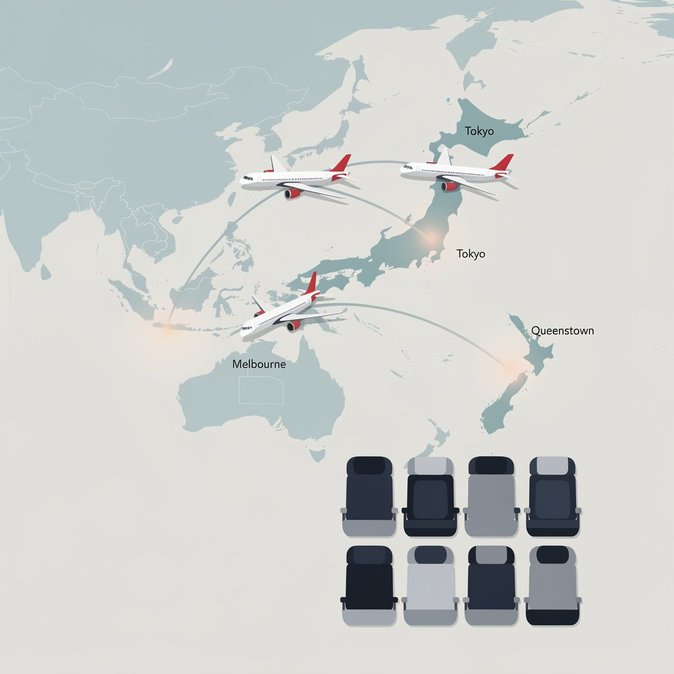
Qantas Adds 45,000 Seats to Japan and New Zealand Routes for Peak 2026-27 Season
Qantas will lift Melbourne–Tokyo services to 11 weekly and expand trans-Tasman flying to Queenstown and Auckland this coming northern-winter season, adding some 45,000 seats. The capacity bump should ease peak-season seat shortages and temper high business-class fares on key Asia-Pacific routes.

$70,000 property surcharge on UK midwife exposes hidden costs of migrating to Australia
A British midwife recruited to ease South Australia’s staffing shortage incurred nearly A$70,000 in foreign-buyer property surcharges because her permanent-residency grant arrived three months too late. The episode highlights complex, state-by-state taxes that can wipe out relocation incentives for skilled migrants and signals that employers may need to budget for these hidden costs.