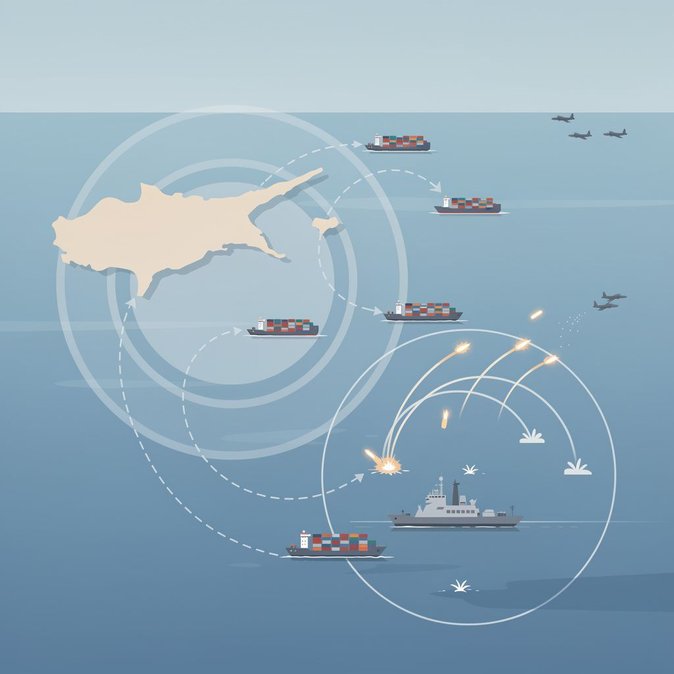
The Cyprus Joint Rescue Coordination Centre (JRCC) in Larnaca released Navigational Warning 193/26 on the morning of 30 June, advising mariners of a navy gunnery exercise scheduled between 05:00 and 09:00 UTC southeast of Cape Greco. The four-point exclusion zone—roughly 240 square kilometres—sits astride routes used by coastal cargo vessels and leisure craft sailing between Limassol and the Levant. Under International Maritime Organization rules, notices of this type must be broadcast at least 24 hours in advance, but Cyprus opted for a 12-hour window because the exercise was added late to the fleet-readiness calendar. Port agents confirmed that several feeder ships departing Limassol adjusted course overnight to clear the danger area, adding up to 40 minutes to east-bound voyages. Cruise itineraries were unaffected.
For seafarers, offshore crews, or logistics managers who may need to redeploy personnel on short notice due to such operational changes, checking visa requirements can become a time-sensitive task. VisaHQ streamlines this process by offering an online platform where users can verify entry rules, submit visa applications, and monitor status updates for Cyprus and many other destinations—visit https://www.visahq.com/cyprus/ for details.
While routine for naval forces, live-fire closures can have cascade effects on just-in-time supply chains and on offshore service vessels supporting the island’s emerging LNG infrastructure. Logistics providers shipping high-value perishables—especially Cypriot halloumi destined for Israel—were advised to build the extra sailing time into cold-chain calculations to avoid temperature excursions. The JRCC notice also activated temporary reserved airspace (NOTAM A0589/26) up to 3,000 ft, requiring light-aircraft pilots to file reroutes with Nicosia FIR. Helicopter operators serving offshore drilling rigs south of Larnaca reported minor scheduling tweaks but no cancellations. With military activity in the Eastern Mediterranean on the rise, mobility managers are urged to subscribe to JRCC’s real-time alert feed or integrate the data via API into voyage-planning software to ensure proactive route adjustments and mitigate potential insurance issues.
For seafarers, offshore crews, or logistics managers who may need to redeploy personnel on short notice due to such operational changes, checking visa requirements can become a time-sensitive task. VisaHQ streamlines this process by offering an online platform where users can verify entry rules, submit visa applications, and monitor status updates for Cyprus and many other destinations—visit https://www.visahq.com/cyprus/ for details.
While routine for naval forces, live-fire closures can have cascade effects on just-in-time supply chains and on offshore service vessels supporting the island’s emerging LNG infrastructure. Logistics providers shipping high-value perishables—especially Cypriot halloumi destined for Israel—were advised to build the extra sailing time into cold-chain calculations to avoid temperature excursions. The JRCC notice also activated temporary reserved airspace (NOTAM A0589/26) up to 3,000 ft, requiring light-aircraft pilots to file reroutes with Nicosia FIR. Helicopter operators serving offshore drilling rigs south of Larnaca reported minor scheduling tweaks but no cancellations. With military activity in the Eastern Mediterranean on the rise, mobility managers are urged to subscribe to JRCC’s real-time alert feed or integrate the data via API into voyage-planning software to ensure proactive route adjustments and mitigate potential insurance issues.