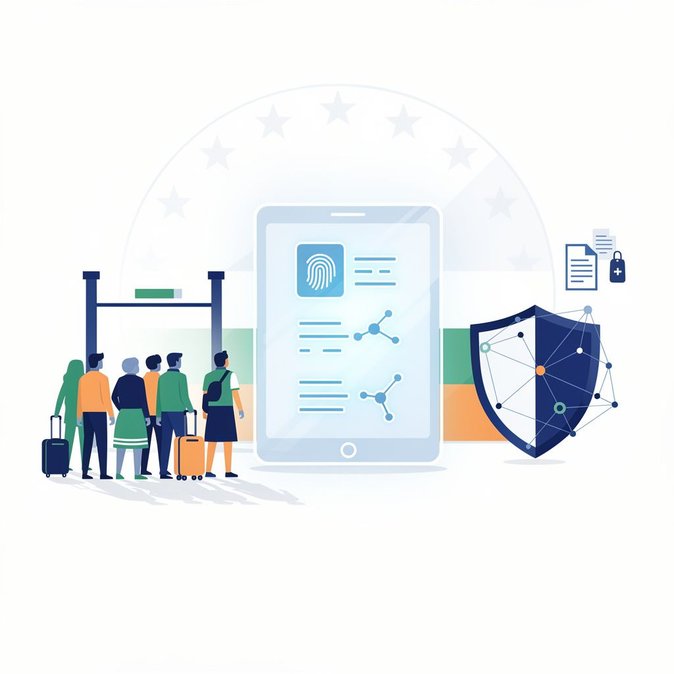
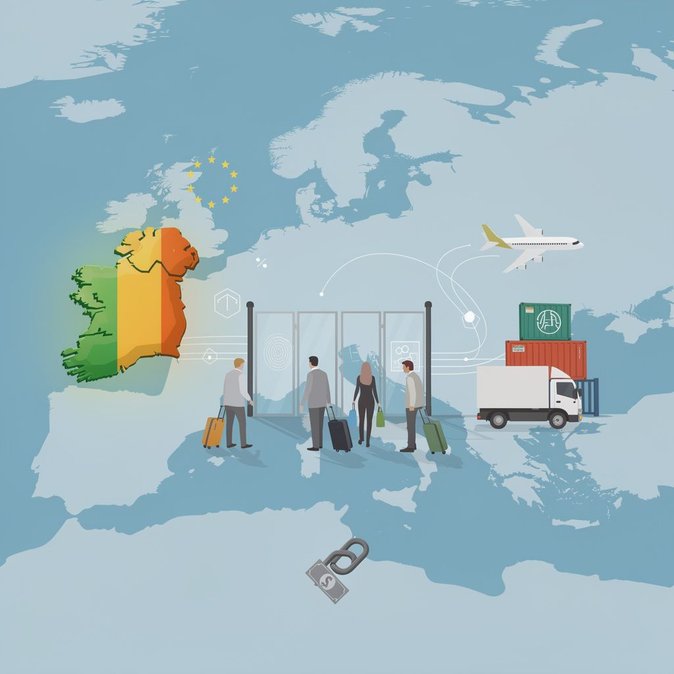
Just hours before taking over the rotating Presidency of the Council of the European Union (1 July – 31 December 2026), the Irish Government has published the themes it intends to drive in Brussels. Operating under the Gaelic-inspired slogan “Ní neart go cur le chéile – Strength with unity”, Dublin will devote one of its three flagship pillars to “Security,” with migration management sitting front-and-centre. Officials from the Department of Justice say the Presidency will concentrate on the full implementation of the Pact on Migration and Asylum, finalised earlier this month. Priorities include harmonising identity-verification procedures at external borders, pushing member states to digitalise return orders and accelerating work on interoperable databases such as the Entry/Exit System (EES) and the long-delayed ETIAS travel authorisation.
At a practical level, companies and individual travellers can streamline their preparations by using VisaHQ’s online visa and travel authorisation services. The platform’s Ireland portal (https://www.visahq.com/ireland/) offers up-to-date guidance on ETIAS requirements, identity documentation and any post-Brexit nuances, providing a one-stop resource that complements the Irish Presidency’s push for digitalised, hassle-free borders.
For employers running European mobility programmes from Ireland, the message is twofold. First, the Presidency will try to ensure that new IT platforms are ready before the next peak travel season, which should reduce queuing and manual passport stamping for non-EU assignees. Second, Dublin will champion “talent partnerships” that aim to match EU labour shortages with skills in origin countries—an initiative likely to expand the pipeline for Critical Skills Employment Permits. Irish officials will also use the chair to step up cross-border policing of organised immigration crime. Measures under discussion include freezing criminal assets linked to migrant smuggling networks and tightening security checks at Europe’s ports and airports—areas that could trigger new compliance obligations for corporate travel managers moving high volumes of staff. With Ireland’s Presidency coinciding with the first Christmas of full EES operation, industry bodies such as the Irish Travel Agents Association have welcomed the early clarity. “Knowing that Dublin will keep the pressure on a smooth rollout is helpful for travel-risk forecasting,” one large multinational told Global Mobility News. Companies should nevertheless budget for temporary disruption while the new systems bed in.
At a practical level, companies and individual travellers can streamline their preparations by using VisaHQ’s online visa and travel authorisation services. The platform’s Ireland portal (https://www.visahq.com/ireland/) offers up-to-date guidance on ETIAS requirements, identity documentation and any post-Brexit nuances, providing a one-stop resource that complements the Irish Presidency’s push for digitalised, hassle-free borders.
For employers running European mobility programmes from Ireland, the message is twofold. First, the Presidency will try to ensure that new IT platforms are ready before the next peak travel season, which should reduce queuing and manual passport stamping for non-EU assignees. Second, Dublin will champion “talent partnerships” that aim to match EU labour shortages with skills in origin countries—an initiative likely to expand the pipeline for Critical Skills Employment Permits. Irish officials will also use the chair to step up cross-border policing of organised immigration crime. Measures under discussion include freezing criminal assets linked to migrant smuggling networks and tightening security checks at Europe’s ports and airports—areas that could trigger new compliance obligations for corporate travel managers moving high volumes of staff. With Ireland’s Presidency coinciding with the first Christmas of full EES operation, industry bodies such as the Irish Travel Agents Association have welcomed the early clarity. “Knowing that Dublin will keep the pressure on a smooth rollout is helpful for travel-risk forecasting,” one large multinational told Global Mobility News. Companies should nevertheless budget for temporary disruption while the new systems bed in.