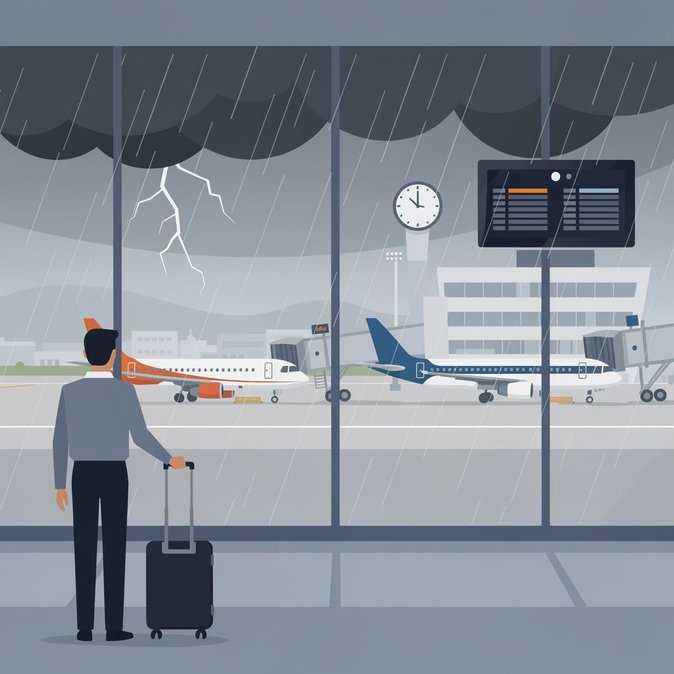
Monsoon downpours disrupted operations at India’s busiest airport on 30 June, prompting Akasa Air to issue a network-wide advisory that flights may be delayed out of Mumbai. Passengers were urged to check real-time status before heading to the airport.
If documentation adjustments also become necessary, VisaHQ can step in with expedited visa processing and on-demand guidance; their self-service portal for India (https://www.visahq.com/india/) lets travelers and travel managers handle e-visas, renewals and transit permits in minutes, adding a layer of certainty when weather throws flight plans off course.
SpiceJet simultaneously warned that poor visibility in Dharamshala could affect arrivals, departures and onward legs. The alerts come as the India Meteorological Department forecasts sustained heavy rainfall for Maharashtra and Himachal Pradesh through early July. From a mobility standpoint, the timing is problematic: both carriers are running peak-season schedules and tight rotations. Even short holdups in Mumbai ripple through the national grid, potentially causing missed international connections. Travel managers with employees ticketed on affected flights should activate contingency plans—re-routing via Bengaluru or Hyderabad, or booking buffer hotel nights before onward long-haul sectors. The incident is a reminder to build monsoon resilience into corporate travel policies, including flexible tickets and travel insurance that covers weather disruptions.
If documentation adjustments also become necessary, VisaHQ can step in with expedited visa processing and on-demand guidance; their self-service portal for India (https://www.visahq.com/india/) lets travelers and travel managers handle e-visas, renewals and transit permits in minutes, adding a layer of certainty when weather throws flight plans off course.
SpiceJet simultaneously warned that poor visibility in Dharamshala could affect arrivals, departures and onward legs. The alerts come as the India Meteorological Department forecasts sustained heavy rainfall for Maharashtra and Himachal Pradesh through early July. From a mobility standpoint, the timing is problematic: both carriers are running peak-season schedules and tight rotations. Even short holdups in Mumbai ripple through the national grid, potentially causing missed international connections. Travel managers with employees ticketed on affected flights should activate contingency plans—re-routing via Bengaluru or Hyderabad, or booking buffer hotel nights before onward long-haul sectors. The incident is a reminder to build monsoon resilience into corporate travel policies, including flexible tickets and travel insurance that covers weather disruptions.