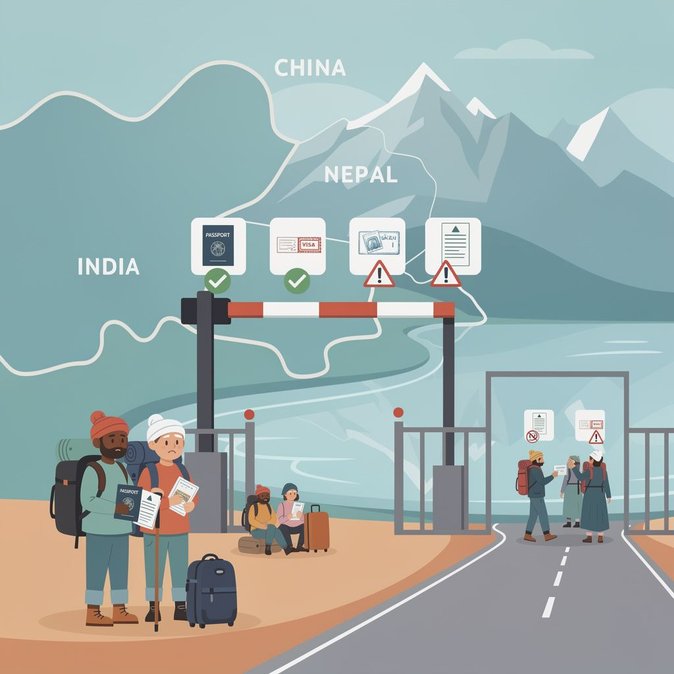
After receiving multiple SOS calls from Indians stranded in Kathmandu, the Ministry of External Affairs (MEA) on 29 June warned citizens planning the high-altitude Kailash Mansarovar pilgrimage not to leave India without confirmed Chinese entry permits and visas. Several travellers organised by unregistered private tour operators were reportedly denied onward passage into Tibet and left facing hefty accommodation costs. The advisory reminds pilgrims that the government-facilitated yatra has fixed routes via Lipulekh Pass (Uttarakhand) and Nathu La (Sikkim), but many budget packages route clients through Nepal, promising ‘on-arrival’ documentation that fails to materialise. MEA urged verification of operator credentials and possession of full paperwork—including Tibet Travel Permits—before crossing any border.
For pilgrims unsure about the paperwork maze, VisaHQ’s visa and permit specialists can review itineraries, secure the requisite Tibet Travel Permits, and lodge Chinese visa applications online, sparing travellers the risk of being stranded at the border. The service’s India portal (https://www.visahq.com/india/) offers step-by-step guidance, live status tracking and courier assistance, making it a practical back-up for corporate mobility teams or individual devotees booking outside the government yatra.
From a mobility-risk perspective, employers should note that incomplete documentation can trigger detentions under China’s exit-entry law, potentially exposing travellers to fines or blacklisting. Insurance policies often exclude claims arising from unauthorised border crossings, so companies sponsoring CSR groups or employee wellness treks must ensure compliance checks. The warning comes as India–China land crossings gradually reopen after years of pandemic closures and border tensions. Analysts expect scrutiny of Indian passports to remain high, and recommend submitting visa applications at least six weeks in advance, with contingency plans for sudden route closures due to weather or geopolitics.
For pilgrims unsure about the paperwork maze, VisaHQ’s visa and permit specialists can review itineraries, secure the requisite Tibet Travel Permits, and lodge Chinese visa applications online, sparing travellers the risk of being stranded at the border. The service’s India portal (https://www.visahq.com/india/) offers step-by-step guidance, live status tracking and courier assistance, making it a practical back-up for corporate mobility teams or individual devotees booking outside the government yatra.
From a mobility-risk perspective, employers should note that incomplete documentation can trigger detentions under China’s exit-entry law, potentially exposing travellers to fines or blacklisting. Insurance policies often exclude claims arising from unauthorised border crossings, so companies sponsoring CSR groups or employee wellness treks must ensure compliance checks. The warning comes as India–China land crossings gradually reopen after years of pandemic closures and border tensions. Analysts expect scrutiny of Indian passports to remain high, and recommend submitting visa applications at least six weeks in advance, with contingency plans for sudden route closures due to weather or geopolitics.