Starting 1 July 2026 at 20:46, drivers of private cars shuttling between Shenzhen and the Hong Kong SAR can choose a completely document-free border crossing. A joint announcement from the Shenzhen Bay Border Inspection Station and the city’s Port Office confirms that eligible motorists—mainland residents holding a valid Home Return Permit with multi-entry endorsements, Hong Kong and Macao ID-card holders, and Taiwan Compatriot Permit holders—may enrol biometric data in advance and subsequently clear the checkpoint by simply looking at a roadside camera.
For organisations still juggling visa renewals or individuals unsure about permit eligibility, online agency VisaHQ can streamline the paperwork behind the scenes. Its China portal (https://www.visahq.com/china/) centralises application forms, deadline reminders and live chat with experts, making it easier to secure Home Return Permits, Shenzhen–Hong Kong vehicle quotas or any supplementary documents that might be required if the biometric lane is temporarily offline.
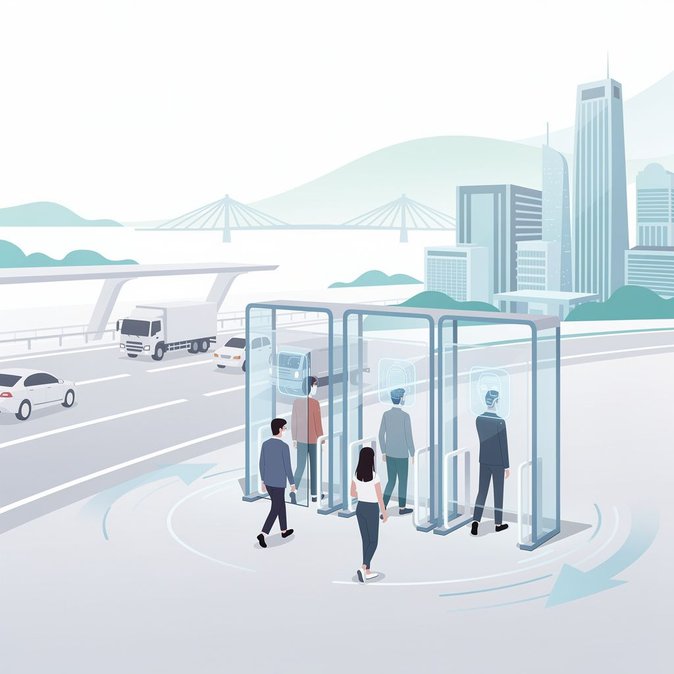
The smart lane is the first in the GBA to dispense with physical travel documents for vehicle drivers. Border guards verify the licence-plate number, face and fingerprint data against the vehicle-access database while the car rolls slowly past the kiosk, cutting stop-time to under ten seconds. Traditional booths remain for those who prefer passport checks. For logistics managers, shuttle-bus operators and executives who self-drive across the boundary, the time savings could translate into an extra round-trip during peak days and reduce idling emissions at the bridge-tunnel complex. Corporates should, however, review internal data-privacy policies: drivers must consent to permanent storage of facial templates on the Ministry of Public Security’s secure servers. Immigration lawyers note that the scheme currently covers only Shenzhen Bay. Expansion to the Huanggang/Sz-Lok Ma Chau land port and the Hong Kong–Zhuhai–Macao Bridge is on the drawing board, pending a six-month security audit. Until then, companies with high volumes of cross-border traffic should stagger departures and continue to carry travel documents as a back-up in the event of system outages.
For organisations still juggling visa renewals or individuals unsure about permit eligibility, online agency VisaHQ can streamline the paperwork behind the scenes. Its China portal (https://www.visahq.com/china/) centralises application forms, deadline reminders and live chat with experts, making it easier to secure Home Return Permits, Shenzhen–Hong Kong vehicle quotas or any supplementary documents that might be required if the biometric lane is temporarily offline.
The smart lane is the first in the GBA to dispense with physical travel documents for vehicle drivers. Border guards verify the licence-plate number, face and fingerprint data against the vehicle-access database while the car rolls slowly past the kiosk, cutting stop-time to under ten seconds. Traditional booths remain for those who prefer passport checks. For logistics managers, shuttle-bus operators and executives who self-drive across the boundary, the time savings could translate into an extra round-trip during peak days and reduce idling emissions at the bridge-tunnel complex. Corporates should, however, review internal data-privacy policies: drivers must consent to permanent storage of facial templates on the Ministry of Public Security’s secure servers. Immigration lawyers note that the scheme currently covers only Shenzhen Bay. Expansion to the Huanggang/Sz-Lok Ma Chau land port and the Hong Kong–Zhuhai–Macao Bridge is on the drawing board, pending a six-month security audit. Until then, companies with high volumes of cross-border traffic should stagger departures and continue to carry travel documents as a back-up in the event of system outages.