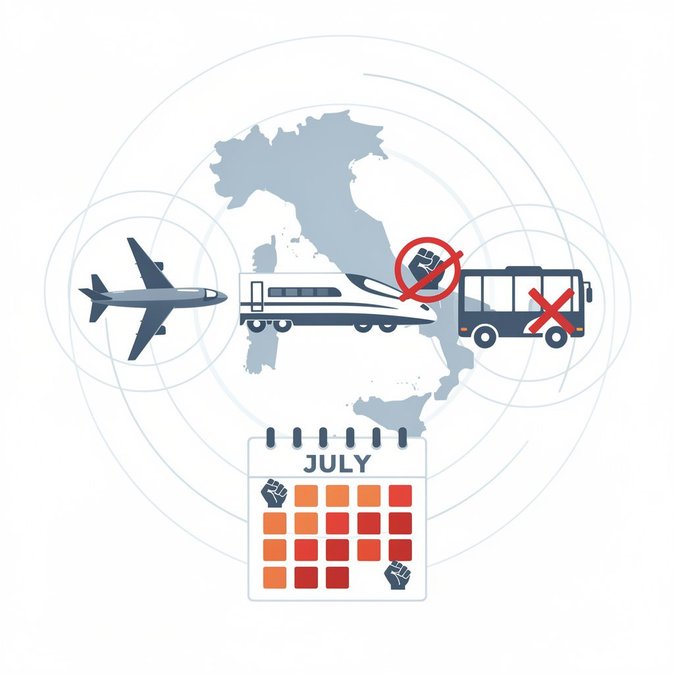
Sky TG24 has published the Ministry of Transport’s updated strike calendar, confirming at least 14 separate industrial actions across Italy during July 2026. Highlights include: • 5 July – national aviation strike (24 hours) plus Malpensa-specific ENAV action and 10-hour security halt at Rome airports; • 6-7 July – Mercitalia Shunting & Terminal rail strike (24 hours); • 7 July – general strike in Puglia covering public and private sectors; • 10 July – freight-rail stoppage at Captrain Italia; • 21 July – logistics workers at Malpensa cargo handling firms Alha and MLE-BCube.
Travellers navigating these disruptions may also need to double-check entry documents. VisaHQ’s dedicated Italy page (https://www.visahq.com/italy/) streamlines visa and passport services, delivering real-time guidance and expedited processing so that employees whose itineraries change at short notice can stay compliant and keep trips on track.
Employers with distributed workforces should map critical commuting corridors and communicate alternative options such as remote work or flexible hours. For cross-border travellers, note that EU 261 compensation is unavailable for flights cancelled due to strikes by third-party staff (e.g., ground handlers). Mobility budgets may need to absorb higher last-minute rail fares and hotel costs as passengers switch modes. HR teams should review assignment letters to ensure that delays caused by force-majeure transport strikes do not trigger disciplinary procedures for late arrival. Tax advisers remind companies that additional accommodation and subsistence paid to stranded employees remains tax-free within the statutory per-diem limits (€25.82 abroad, €15.49 domestic).
Travellers navigating these disruptions may also need to double-check entry documents. VisaHQ’s dedicated Italy page (https://www.visahq.com/italy/) streamlines visa and passport services, delivering real-time guidance and expedited processing so that employees whose itineraries change at short notice can stay compliant and keep trips on track.
Employers with distributed workforces should map critical commuting corridors and communicate alternative options such as remote work or flexible hours. For cross-border travellers, note that EU 261 compensation is unavailable for flights cancelled due to strikes by third-party staff (e.g., ground handlers). Mobility budgets may need to absorb higher last-minute rail fares and hotel costs as passengers switch modes. HR teams should review assignment letters to ensure that delays caused by force-majeure transport strikes do not trigger disciplinary procedures for late arrival. Tax advisers remind companies that additional accommodation and subsistence paid to stranded employees remains tax-free within the statutory per-diem limits (€25.82 abroad, €15.49 domestic).