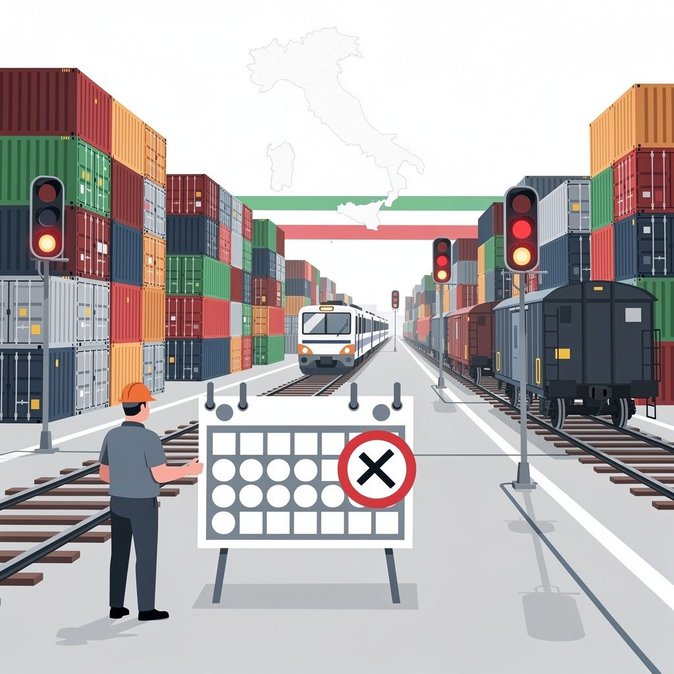
Industrial-action tracker StrikeTracker has updated its alert for Mercitalia Shunting & Terminal staff, confirming on 30 June that a planned 24-hour rail-freight strike originally scheduled for 29–30 June has been called off. Instead, the USB Lavoro Privato union will walk out from 21:00 on Monday 6 July to 21:00 on Tuesday 7 July. Mercitalia Shunting & Terminal handles first- and last-mile movements within key intermodal hubs across the national network, so the strike threatens loading, unloading and wagon-marshalling activities rather than passenger services. Logistics providers using the Verona Quadrante Europa, Melzo and Bologna Interporto facilities are likely to see processing slow-downs and may need to reroute sensitive consignments via road. The last-minute date change illustrates the fluid nature of Italy’s strike landscape: under current legislation, freight actions can be withdrawn or rescheduled up to 24 hours ahead if mediation succeeds. In this case, insiders say management offered a fast-tracked review of staffing levels, but talks later broke down, reviving the threat for early July. Businesses shipping time-critical components—particularly in the automotive and fashion sectors—should therefore pad lead-times next week and alert customs brokers to possible late-night terminal closures. Unlike passenger strikes, freight actions do not trigger statutory ‘guaranteed service’ windows, so service gaps could last the full 24 hours. From a broader mobility perspective, the episode shows why corporates need live data rather than static calendars. Integrating feeds from the MIT strike register and reputable aggregators into transport-management systems can help procurement teams pivot quickly when industrial-action parameters shift.
Source: StrikeTracker