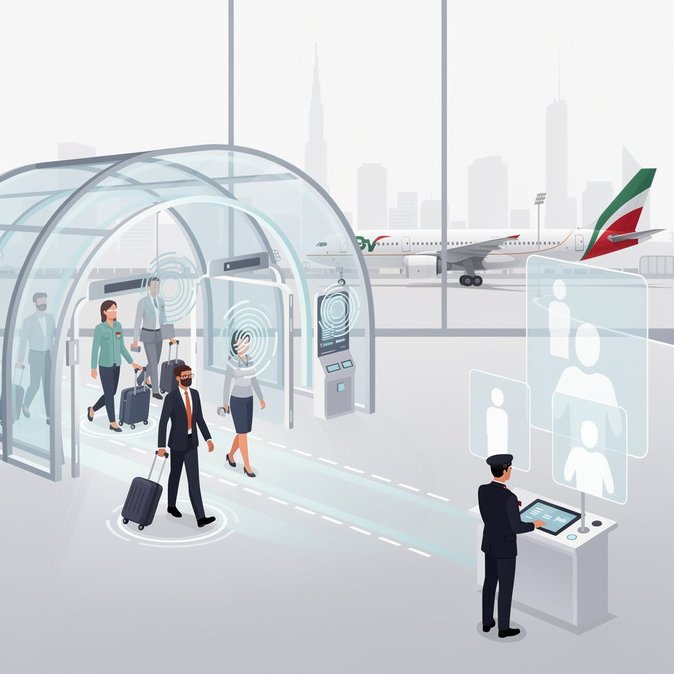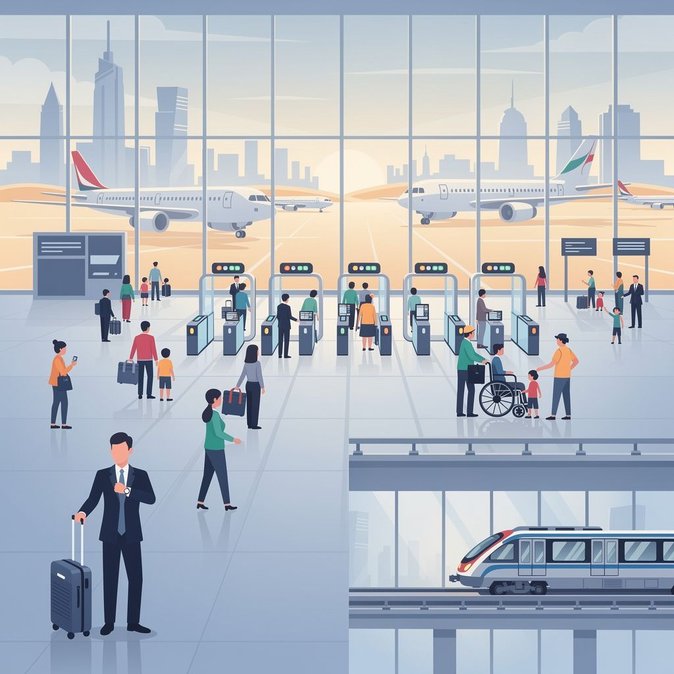
Dubai International Airport (DXB) – already the world’s busiest hub for international traffic – is preparing for its most intense fortnight of the year. According to Dubai Airports, about three million passengers are expected to pass through DXB between 2 and 15 July, coinciding with the UAE school break that traditionally triggers a mass summer getaway. The single-busiest day is forecast for Sunday, 12 July, when more than 225,000 people will transit the airport’s three terminals. Airport authorities have activated a comprehensive “summer readiness” plan that includes additional frontline staff, overflow check-in areas, and dedicated accessibility routes for People of Determination. Travellers are being urged to check in online, arrive no earlier than three hours before departure, and make use of Emirates’ city, home and self-service bag-drop options. Families with children aged 12 and over can use Smart Gates, while Dubai Metro services will run at peak frequency to ease road congestion around Terminal 3. Roughly half of July passengers will be transfer customers, underscoring Dubai’s strategic role as a connective node between Europe, Asia-Pacific and Africa. Airlines have added capacity on high-demand routes to London, Manila, Mumbai and Johannesburg, while Emirates warns of “particularly busy” departures during the 3-5 July weekend. To manage flows inside the building, DXB has deployed its new Express Maps QR-code way-finding system and reopened the Assisted Travel Lounge in Terminal 2. For corporate mobility managers, the message is clear: departing assignees should allow extra buffer time for kerb-to-gate formalities, especially if they need to collect VAT refunds or insurance letters airside. Companies that rely on fly-in/fly-out talent are also being advised to stagger departure dates and consider remote check-in services to mitigate missed connections. DXB’s surge is an early test of the Gulf’s broader tourist-season capacity, with Abu Dhabi’s Zayed International Airport and Doha’s Hamad International Airport expected to see similar peaks later in July. Looking ahead, Dubai Airports says it will continue to refine its biometric and advanced-analytics systems, aiming to process 135 million passengers annually by 2030 – a figure that would eclipse any current global gateway and cement the UAE’s position at the centre of long-haul aviation.
Source: The National