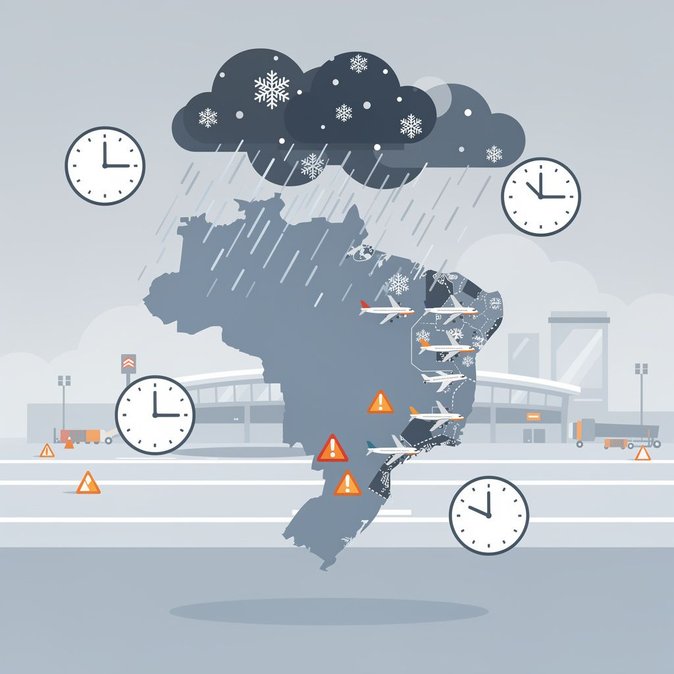
Brazil’s air-travel network suffered a difficult start to the week on 30 June 2026, after strong cold-front storms swept the South-East and South regions and triggered a cascade of schedule upsets. Real-time data from AirHelp show 256 separate disruptions—203 delays and 53 outright cancellations—spread across nine of the country’s busiest airports, led by São Paulo-Guarulhos, Congonhas and Viracopos. While weather was the immediate cause, analysts say the system’s fragility has been building for months. High seasonal demand, the closure of Venezuelan airspace for over-flights in May, and aircraft redeliveries that are running behind schedule have left little slack in airline rosters. As a result, early-morning delays quickly snowballed into missed onward rotations for LATAM Brasil, Azul and GOL. International partners that code-share on Brazilian metal—including Air Canada and Iberia—also suffered knock-on delays, complicating global corporate-travel itineraries. Under Brazil’s ANAC-400 passenger-rights regulation, weather events are classed as “extraordinary circumstances,” so cash compensation is unlikely. Even so, airlines must still offer care and re-routing. Lawyers remind mobility managers that hotel vouchers, meals and free communications are obligatory once a delay passes the four-hour mark on domestic segments, and two hours on international legs. Frequent-travel programmes allow rebooking online, but passengers without status faced long queues at congested service desks on Monday afternoon. Corporate-travel teams are being advised to keep travellers on flexible tickets for the rest of the Southern-winter storm season, and to budget extra connection time through the São Paulo hub in particular. Forward-looking data from ANAC’s slot-allocation filings indicate runway closures for routine works at both Congonhas and Recife in mid-July, suggesting further schedule pressure if poor weather returns. From a wider mobility-risk standpoint, the episode underlines the importance of real-time duty-of-care monitoring. Every major Brazilian carrier now publishes disruption APIs—something global-mobility managers can integrate into traveller-tracking dashboards to trigger accommodation or ground-transport support automatically when delays exceed company thresholds.
Source: AirHelp