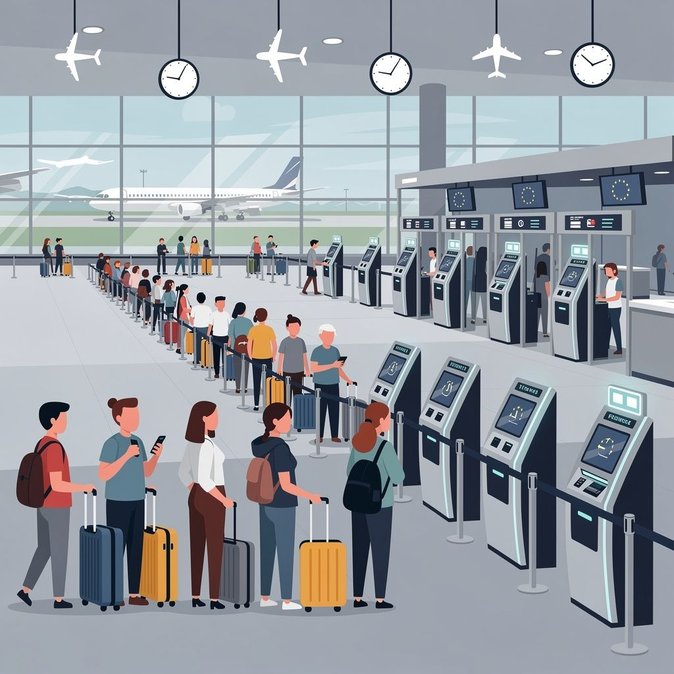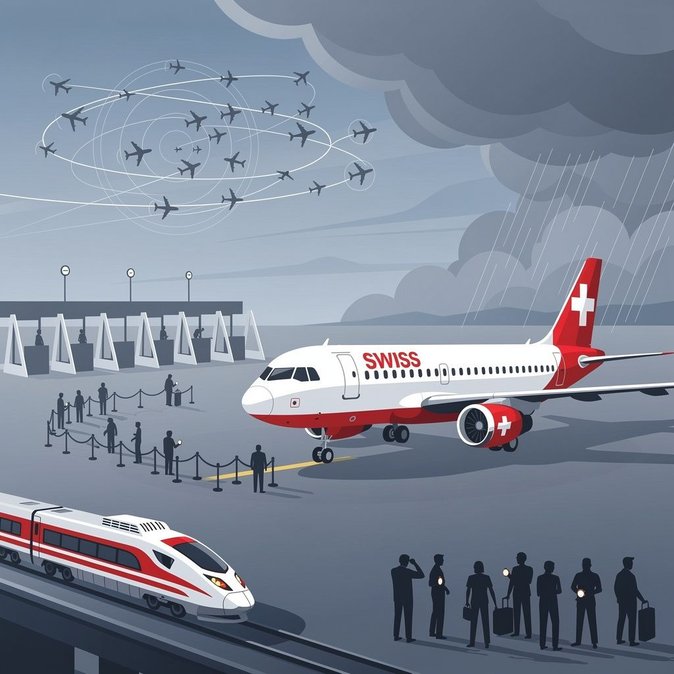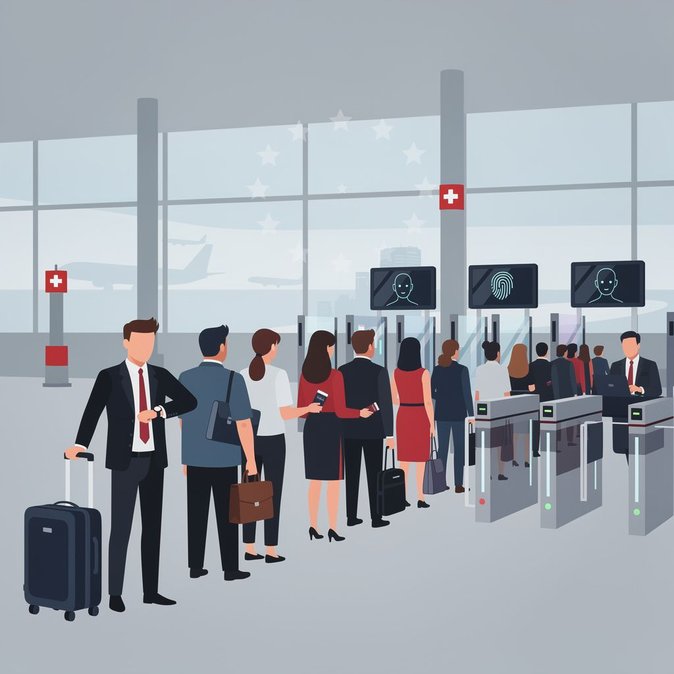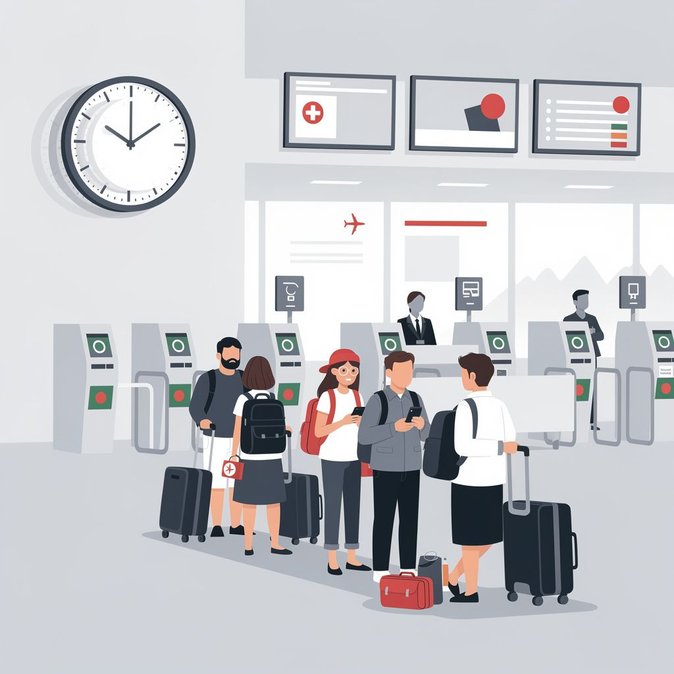
Just as the Swiss summer-holiday exodus begins, Zurich and Basel airports issued joint bulletins on 1 July advising travellers to arrive earlier than usual. The alert follows the introduction of the EU Entry/Exit System (EES), which requires first-time non-EU/Schengen visitors to provide fingerprints and a facial scan.
To help travellers navigate these new biometric requirements, VisaHQ provides a one-stop portal with real-time entry rules, step-by-step visa support and dedicated customer service for Switzerland and beyond. Before heading to the airport, passengers can check https://www.visahq.com/switzerland/ to confirm whether they need additional documents, schedule courier pick-ups or simply set up reminders, saving precious minutes when every second counts.
According to Zurich Airport, processing a family of four from a visa-exempt country now averages seven minutes instead of the previous two. On peak Saturdays more than 100,000 departing passengers are expected, meaning queues could spill back into the check-in hall if even a small percentage need full EES enrolment. The cantonal police have authorised overtime for 40 additional officers and reopened a mothballed control hall in Dock E to add 14 manual booths. The airport is directing Swiss, EU and EFTA citizens to e-gates (available from age 18 outbound and age 12 inbound) and recommending that all passengers complete flight and health declarations online to free agents for biometric capture. Basel-Mulhouse says similar measures are in place and that liaison officers from France’s Police aux Frontières will be on hand to manage flows on the French side of the terminal. For mobility managers the message is clear: build slack into itineraries. “We are telling executives to aim for D-2 connections instead of same-day turnarounds,” says Patrick Wu, travel lead at a multinational based in Zug. Tour operators are also lengthening coach-transfer schedules to ensure cruise and rail connections are not missed. Industry groups concede that the new system should improve security and ultimately speed repeat visits, but warn that the interim disruption could harm Switzerland’s reputation as a hassle-free hub. With travel demand at its highest since 2019, any additional friction risks pushing passengers – and meeting planners – to rival hubs in the region.
To help travellers navigate these new biometric requirements, VisaHQ provides a one-stop portal with real-time entry rules, step-by-step visa support and dedicated customer service for Switzerland and beyond. Before heading to the airport, passengers can check https://www.visahq.com/switzerland/ to confirm whether they need additional documents, schedule courier pick-ups or simply set up reminders, saving precious minutes when every second counts.
According to Zurich Airport, processing a family of four from a visa-exempt country now averages seven minutes instead of the previous two. On peak Saturdays more than 100,000 departing passengers are expected, meaning queues could spill back into the check-in hall if even a small percentage need full EES enrolment. The cantonal police have authorised overtime for 40 additional officers and reopened a mothballed control hall in Dock E to add 14 manual booths. The airport is directing Swiss, EU and EFTA citizens to e-gates (available from age 18 outbound and age 12 inbound) and recommending that all passengers complete flight and health declarations online to free agents for biometric capture. Basel-Mulhouse says similar measures are in place and that liaison officers from France’s Police aux Frontières will be on hand to manage flows on the French side of the terminal. For mobility managers the message is clear: build slack into itineraries. “We are telling executives to aim for D-2 connections instead of same-day turnarounds,” says Patrick Wu, travel lead at a multinational based in Zug. Tour operators are also lengthening coach-transfer schedules to ensure cruise and rail connections are not missed. Industry groups concede that the new system should improve security and ultimately speed repeat visits, but warn that the interim disruption could harm Switzerland’s reputation as a hassle-free hub. With travel demand at its highest since 2019, any additional friction risks pushing passengers – and meeting planners – to rival hubs in the region.