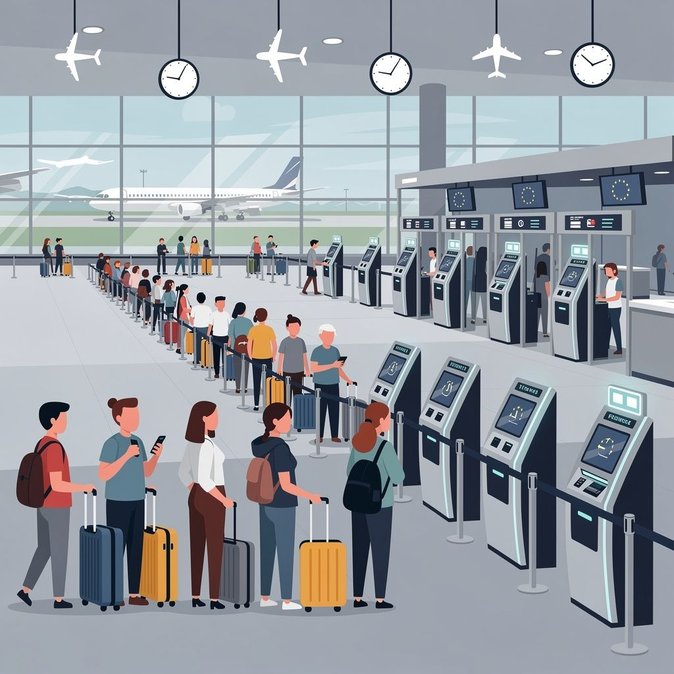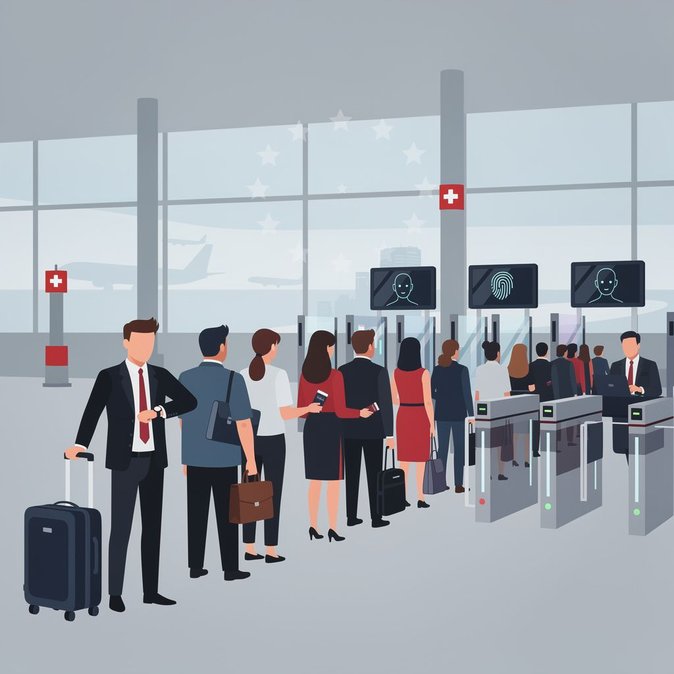
Switzerland’s participation in the Schengen area means that Zurich, Geneva and Basel-Mulhouse airports must now apply the European Entry/Exit System (EES) that became fully operational on 10 April 2026. The digital platform replaces passport stamps for non-EU / non-Schengen travellers with an electronic record that captures facial images, fingerprints and data from travel documents. In theory, the technology should speed up controls and improve security by allowing border guards to see instantly whether a visitor has overstayed the 90-day limit. In practice, the first big test – the July-August holiday rush – is revealing painful growing pains. Airlines for Europe, ACI Europe and IATA have asked Brussels to let airports “switch off” the system when queues exceed capacity, warning that missed connections and crew-duty-time breaches could ripple through airline schedules. At Swiss gateways, the Federal Office for Customs and Border Security (BAZG) and cantonal police forces have scrambled to add staff and set up mobile registration kiosks. Zurich Airport expects more than 110,000 passengers a day at peak weekends; management is urging third-country nationals to pre-register via the airport’s new “EES-FastTrack” counters and is advising Swiss and EU/EFTA citizens to use automated e-gates to keep overall lines moving. Business-travel associations fear lost productivity. “A 20-minute delay at passport control can wipe out the efficiency gains companies expect from short-haul day trips,” says Sandra Müller, mobility lead at SwissGlobal Consulting. She notes that Swiss firms are re-routing meetings to hubs such as Vienna or Milan until stabilisation is confirmed. Border authorities insist the pain is temporary. Frontex deputy executive director Uku Särekanno told Euronews that fingerprint capture is “probably the most challenging part”, predicting that processes will stabilise within two years as travellers build up reusable biometric files. Until then, mobility managers are advising travellers to add at least an extra hour to their airport itineraries.
Source: Euronews