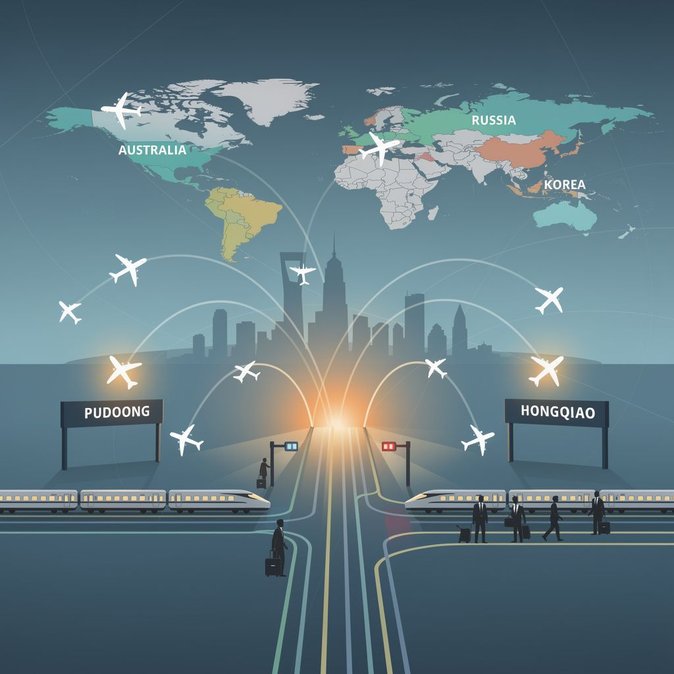
Shanghai’s two-airport system is running its largest international schedule ever after airlines opened or increased flights on 14 routes ahead of the July–August peak. According to a Shanghai Daily report, Pudong and Hongqiao airports now link the city to 302 points in 53 countries, surpassing pre-pandemic connectivity. Notable additions include China Eastern’s first direct service to Adelaide (three flights weekly) and Rossiya Airlines’ twice-weekly link to Krasnoyarsk—expanding Shanghai’s reach into the Australian market and Russia’s Siberian heartland respectively. Capacity has also been boosted on existing long-haul services to Marseille and Zurich, while short-haul Korea traffic gains a ninth weekly flight to Cheongju.
For international passengers plotting itineraries around these new links, VisaHQ can streamline the visa process from start to finish. The company’s digital portal covers Chinese entry permits as well as paperwork for more than 200 other countries, allowing travellers to upload documents, track applications, and receive approvals entirely online—visit https://www.visahq.com/china/ for an overview of services.
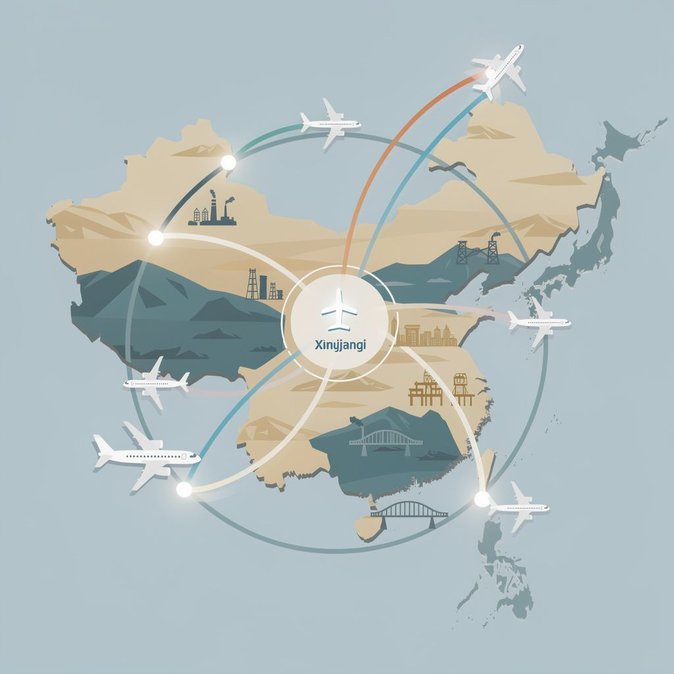
Domestic “fast-track” shuttle routes have been strengthened as well: 25 high-frequency trunk pairs now operate with at least 12 departures a day. That means a Beijing-bound traveller from Hongqiao can expect a departure roughly every 30 minutes during daylight hours, a boon for day-trip executives. The expansion is mirrored on the rails. The Yangtze River Delta Railway Group has added 32 seasonal trains, and the popular “Yangtze Star” luxury sleeper will operate to Xinjiang throughout July and August, offering an alternative for travellers wary of airport congestion. For global-mobility and relocation teams the implications are twofold: seat availability on key corporate routes is improving, but competition for accommodation in Shanghai itself will intensify as the city doubles as both origin and destination for holidaymakers and business visitors.
For international passengers plotting itineraries around these new links, VisaHQ can streamline the visa process from start to finish. The company’s digital portal covers Chinese entry permits as well as paperwork for more than 200 other countries, allowing travellers to upload documents, track applications, and receive approvals entirely online—visit https://www.visahq.com/china/ for an overview of services.
Domestic “fast-track” shuttle routes have been strengthened as well: 25 high-frequency trunk pairs now operate with at least 12 departures a day. That means a Beijing-bound traveller from Hongqiao can expect a departure roughly every 30 minutes during daylight hours, a boon for day-trip executives. The expansion is mirrored on the rails. The Yangtze River Delta Railway Group has added 32 seasonal trains, and the popular “Yangtze Star” luxury sleeper will operate to Xinjiang throughout July and August, offering an alternative for travellers wary of airport congestion. For global-mobility and relocation teams the implications are twofold: seat availability on key corporate routes is improving, but competition for accommodation in Shanghai itself will intensify as the city doubles as both origin and destination for holidaymakers and business visitors.