Speaking at the annual congress of the French National Aviation Federation (FNAM) on 1 July, Transport Minister Philippe Tabarot delivered an unusually candid assessment of France’s air-traffic control (ATC) shortcomings. He acknowledged that the Directorate of Air Navigation Services (DSNA) “does not yet meet the operational demands of the traffic that crosses our skies” and unveiled a multipoint plan to improve performance before the 2027 tourist surge.
Amid these logistical headaches, mobility managers also have to keep immigration paperwork from becoming another sticking point. Services such as VisaHQ, which offers fast, online visa and passport processing for France and more than 200 other jurisdictions, can take that burden off HR teams and travellers alike—streamlining applications, tracking status, and ensuring compliance in one place (https://www.visahq.com/france/).
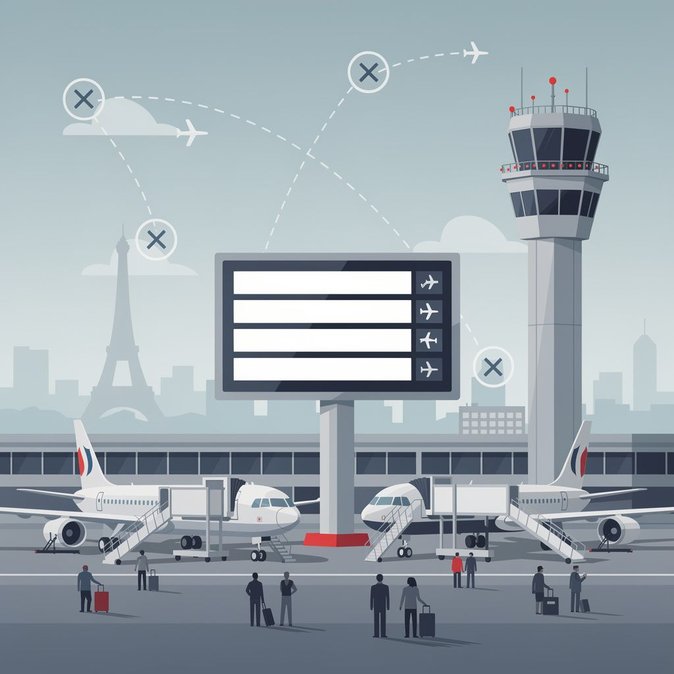
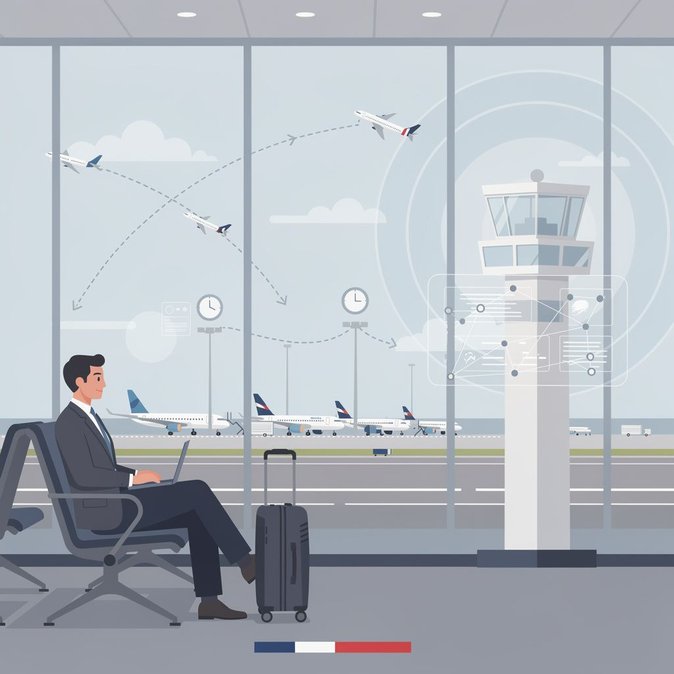
France sits astride Europe’s busiest north-south flight corridor; roughly three million aircraft movements traverse its airspace each year. Yet a recent Senate finance-committee report ranked French ATC the worst performer in Europe, with 6.6 million minutes of delay logged in 2025—an €800 million hit to airlines and untold disruption for business travellers. Tabarot cited rigid staffing models, ageing radar infrastructure and frequent labour disputes as root causes. Key remedies include accelerated hiring of 200 controllers by spring 2027, deployment of flexible rosters during summer peaks, and expansion of the €1 billion 4-Flight digital management platform co-developed with Thales. Early results are encouraging: DSNA says average en-route delays fell 35 % during the first five months of 2026 even as traffic volumes exceeded pre-pandemic levels. For global mobility teams the message is two-fold. First, punctuality for flights to and through France should gradually improve, but short-term pain persists as training pipelines catch up. Second, companies should brace for rolling ATC strikes in the autumn wage-negotiation season; the ministry did not rule out legislative measures to guarantee minimum service levels. Multinationals may wish to diversify routings via Madrid or Brussels and refine contingency plans for time-sensitive assignee moves. Industry bodies welcomed the transparency but warned that without parallel investments in airport capacity—particularly at Paris-Charles-de-Gaulle—bottlenecks may simply migrate from the skies to the tarmac. The minister promised an inter-ministerial task-force report by October outlining long-term runway and terminal upgrades.
Amid these logistical headaches, mobility managers also have to keep immigration paperwork from becoming another sticking point. Services such as VisaHQ, which offers fast, online visa and passport processing for France and more than 200 other jurisdictions, can take that burden off HR teams and travellers alike—streamlining applications, tracking status, and ensuring compliance in one place (https://www.visahq.com/france/).
France sits astride Europe’s busiest north-south flight corridor; roughly three million aircraft movements traverse its airspace each year. Yet a recent Senate finance-committee report ranked French ATC the worst performer in Europe, with 6.6 million minutes of delay logged in 2025—an €800 million hit to airlines and untold disruption for business travellers. Tabarot cited rigid staffing models, ageing radar infrastructure and frequent labour disputes as root causes. Key remedies include accelerated hiring of 200 controllers by spring 2027, deployment of flexible rosters during summer peaks, and expansion of the €1 billion 4-Flight digital management platform co-developed with Thales. Early results are encouraging: DSNA says average en-route delays fell 35 % during the first five months of 2026 even as traffic volumes exceeded pre-pandemic levels. For global mobility teams the message is two-fold. First, punctuality for flights to and through France should gradually improve, but short-term pain persists as training pipelines catch up. Second, companies should brace for rolling ATC strikes in the autumn wage-negotiation season; the ministry did not rule out legislative measures to guarantee minimum service levels. Multinationals may wish to diversify routings via Madrid or Brussels and refine contingency plans for time-sensitive assignee moves. Industry bodies welcomed the transparency but warned that without parallel investments in airport capacity—particularly at Paris-Charles-de-Gaulle—bottlenecks may simply migrate from the skies to the tarmac. The minister promised an inter-ministerial task-force report by October outlining long-term runway and terminal upgrades.