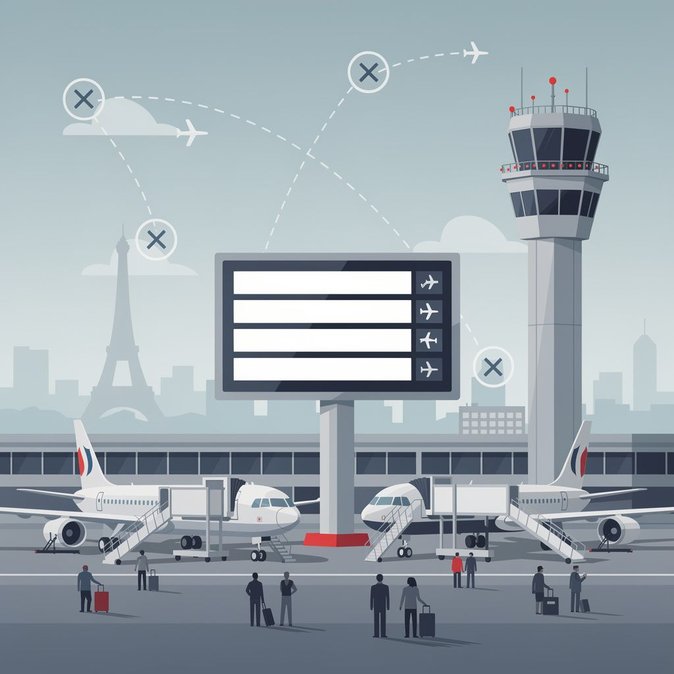
Ryanair’s latest broadside against the European Commission landed on 2 July with a stark warning: popular French holiday gateways such as Paris-Beauvais could grind to a stand-still once the new EU Entry/Exit System (EES) reaches full biometric enrolment volumes later this month.
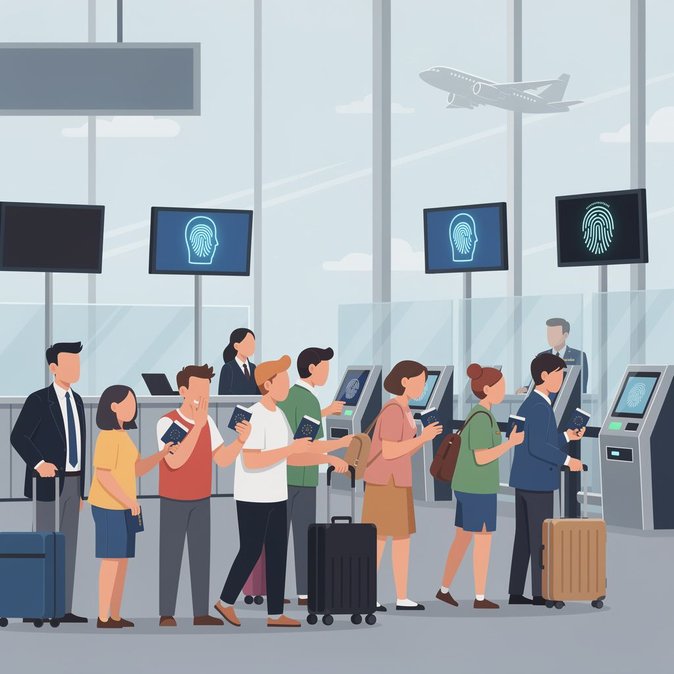
Under the scheme, every non-EU traveller must register fingerprints and a facial image the first time they enter the Schengen area and have them verified on every subsequent crossing. Although the EES went live in April, France has so far used a ‘light-touch’ approach at airports while hardware is phased in. Summer traffic, however, is already testing capacity.
Beauvais—heavily used by low-cost carriers—saw queues exceed 90 minutes during last weekend’s trial of the kiosks, according to Ryanair’s operations chief Neal McMahon.
The airline claims the airport has only eight functioning kiosks for up to 4,000 peak-hour passengers, forcing manual processing that adds roughly one minute per traveller. For a fully-loaded Boeing 737, that translates into a cumulative delay of more than an hour at a single border booth.
Industry associations Airlines for Europe, Airports Council International-Europe and IATA have jointly petitioned Brussels to suspend mandatory fingerprint capture throughout July and August or risk what they call “systemic gridlock”.
The Commission has summoned member states and carriers to an emergency meeting next week, but officials insist average processing times remain “manageable” at around 70 seconds.
For travellers who want an extra layer of certainty before heading to France under the new EES regime, VisaHQ offers an all-in-one portal that tracks the latest Schengen entry rules, biometric requirements and visa documentation. By visiting https://www.visahq.com/france/ individuals and corporate travel coordinators can receive step-by-step guidance, check eligibility in real time and even arrange expedited processing—helpful insurance against the unforeseen delays now cropping up at French border posts.
French border police unions counter that the figure ignores the bottleneck created when families or tour groups approach a kiosk together.
For business-travel managers the stakes are high. France hosts more than 1.3 million corporate meetings annually and many executives shuttle multiple times a month between Paris and non-EU hubs such as London, New York and Dubai. Missed connections can trigger knock-on visa overstays and unexpected hotel costs.
Travel-policy experts therefore advise Schengen-area assignees to build in longer connection buffers, pre-enrol passport details in airline apps and monitor live queue dashboards where available.
French airport operators argue that the chaos will be short-lived once frequent travellers are enrolled, but Ryanair insists the summer peak is the wrong moment for a stress test. Unless Brussels grants a seasonal derogation, mobility teams should prepare for longer dwell times at French border posts—especially for first-time visitors—to become the new normal, at least through the 2026 holiday season.
Under the scheme, every non-EU traveller must register fingerprints and a facial image the first time they enter the Schengen area and have them verified on every subsequent crossing. Although the EES went live in April, France has so far used a ‘light-touch’ approach at airports while hardware is phased in. Summer traffic, however, is already testing capacity.
Beauvais—heavily used by low-cost carriers—saw queues exceed 90 minutes during last weekend’s trial of the kiosks, according to Ryanair’s operations chief Neal McMahon.
The airline claims the airport has only eight functioning kiosks for up to 4,000 peak-hour passengers, forcing manual processing that adds roughly one minute per traveller. For a fully-loaded Boeing 737, that translates into a cumulative delay of more than an hour at a single border booth.
Industry associations Airlines for Europe, Airports Council International-Europe and IATA have jointly petitioned Brussels to suspend mandatory fingerprint capture throughout July and August or risk what they call “systemic gridlock”.
The Commission has summoned member states and carriers to an emergency meeting next week, but officials insist average processing times remain “manageable” at around 70 seconds.
For travellers who want an extra layer of certainty before heading to France under the new EES regime, VisaHQ offers an all-in-one portal that tracks the latest Schengen entry rules, biometric requirements and visa documentation. By visiting https://www.visahq.com/france/ individuals and corporate travel coordinators can receive step-by-step guidance, check eligibility in real time and even arrange expedited processing—helpful insurance against the unforeseen delays now cropping up at French border posts.
French border police unions counter that the figure ignores the bottleneck created when families or tour groups approach a kiosk together.
For business-travel managers the stakes are high. France hosts more than 1.3 million corporate meetings annually and many executives shuttle multiple times a month between Paris and non-EU hubs such as London, New York and Dubai. Missed connections can trigger knock-on visa overstays and unexpected hotel costs.
Travel-policy experts therefore advise Schengen-area assignees to build in longer connection buffers, pre-enrol passport details in airline apps and monitor live queue dashboards where available.
French airport operators argue that the chaos will be short-lived once frequent travellers are enrolled, but Ryanair insists the summer peak is the wrong moment for a stress test. Unless Brussels grants a seasonal derogation, mobility teams should prepare for longer dwell times at French border posts—especially for first-time visitors—to become the new normal, at least through the 2026 holiday season.