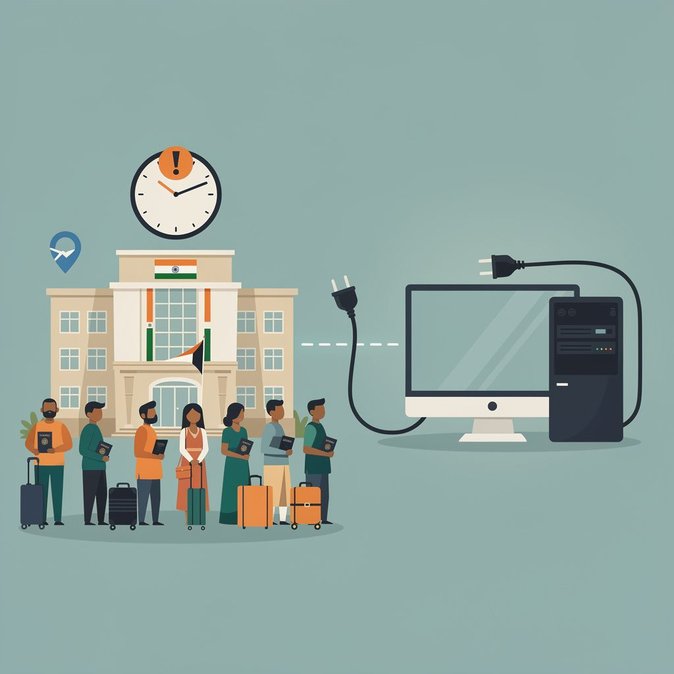
From 1 July, the Embassy of India in Kuwait has stopped accepting routine passport renewals, visa applications and attestation requests after its service agreement with BLS International expired without a seamless hand-over to the new vendor, Du Digital. Only documented emergencies—medical, family bereavement, expiring civil IDs—are now handled between 09:00 and 12:00 at the Diplomatic Enclave. Kuwait hosts an estimated 975,000 Indian nationals, many of whose residency permits and employment contracts hinge on timely passport validity. The abrupt pause risks legal-status lapses and travel disruptions, particularly for domestic workers and oil-sector staff whose civil IDs cannot be renewed if a passport has less than six months’ validity.
During such transition-induced bottlenecks, platforms like VisaHQ can streamline contingency planning. The firm’s online portal (https://www.visahq.com/india/) lets travelers and corporate HR teams pre-check documentation requirements, monitor policy updates, and prepare electronic visa or passport applications for submission the moment channels reopen—helping to minimize downtime, fines and compliance risks.
Employers have been urged to file group-letters attesting urgency, while individuals must bring tickets, medical papers or employer certifications. The Embassy says normal service will resume once biometric kits, data links and security clearances are installed at Du Digital’s new Indian Consular Application Centres, a process expected to take ‘several days’ but with no firm date. Corporate mobility managers should track employees’ passport expiry dates closely and prepare for expedited Tatkaal fees once regular processing reopens. Labour-law advisers warn that overstaying residence permits in Kuwait incurs daily fines of KD 2; companies may be liable if they fail to act. The episode echoes recent provider transitions in the UAE and Singapore and underlines a wider MEA push to rotate vendors every five years—a policy that, while boosting competition, has begun to create dangerous service gaps if transitions slip.
During such transition-induced bottlenecks, platforms like VisaHQ can streamline contingency planning. The firm’s online portal (https://www.visahq.com/india/) lets travelers and corporate HR teams pre-check documentation requirements, monitor policy updates, and prepare electronic visa or passport applications for submission the moment channels reopen—helping to minimize downtime, fines and compliance risks.
Employers have been urged to file group-letters attesting urgency, while individuals must bring tickets, medical papers or employer certifications. The Embassy says normal service will resume once biometric kits, data links and security clearances are installed at Du Digital’s new Indian Consular Application Centres, a process expected to take ‘several days’ but with no firm date. Corporate mobility managers should track employees’ passport expiry dates closely and prepare for expedited Tatkaal fees once regular processing reopens. Labour-law advisers warn that overstaying residence permits in Kuwait incurs daily fines of KD 2; companies may be liable if they fail to act. The episode echoes recent provider transitions in the UAE and Singapore and underlines a wider MEA push to rotate vendors every five years—a policy that, while boosting competition, has begun to create dangerous service gaps if transitions slip.