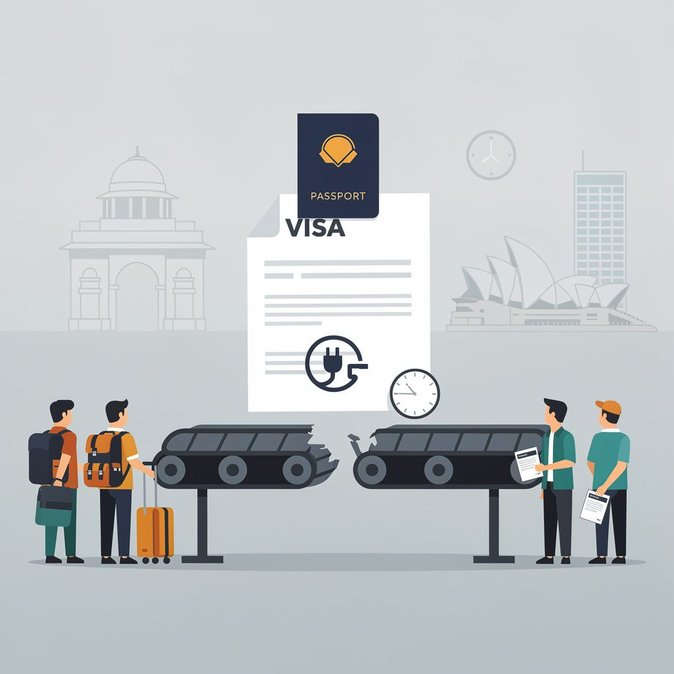
Indian travellers in Australia woke up on 1 July—the first day of the school-holiday rush—to find every India Visa & Passport Application Centre closed. Outsourcing partner VFS Global confirmed the blanket suspension after its 18-year contract expired on 30 June and a fresh tender was frozen by a Delhi High Court injunction. With no contract in force, the company says it has ‘no legal basis’ to process applications until the court reconvenes on 2 July. The shutdown halts tourist, business and medical visas for Australians heading to India, passport renewals for nearly 780,000 Indian citizens living in Australia, and all OCI card services. Pending applications are stuck in limbo; passports already lodged with VFS are locked in secure storage. Indian missions in Canberra, Sydney and Melbourne have opened emergency windows for life-and-death travel, but routine work is impossible. Travel-industry analysts estimate that more than 25,000 India-bound seats could fly empty over the next two weeks if services do not resume quickly. Corporates with short-notice travel are scrambling to re-route via Singapore or use e-Visa top-ups available only to limited nationalities. Airlines fear last-minute cancellations as travellers realise their documents will not arrive in time. The episode highlights India’s heavy reliance on private outsourcing for consular work. It also exposes a single-provider risk: when legal wrangling stalls a contract, an entire diaspora is cut off. Officials at the Ministry of External Affairs said alternative interim providers were “not feasible” given the biometric equipment already installed at VFS centres. Applicants are advised not to resubmit forms. Instead, monitor official social-media handles of the High Commission of India Canberra. Once the injunction lifts, VFS expects a fortnight-long backlog; premium lounge fees will not guarantee priority in the first reopening phase.
Source: NRI Affairs