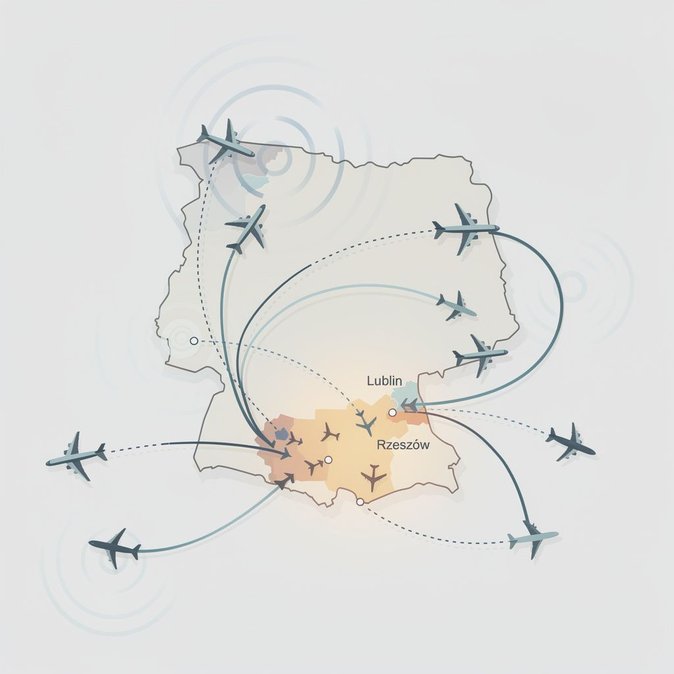
In the early hours of Thursday 2 July, Poland’s Armed Forces terminated a preventive air operation that had seen NATO fighters patrol the country’s south-eastern air corridor in response to overnight Russian missile strikes on Ukraine. The operation, announced just after midnight, prompted a temporary closure of civilian airspace around Lublin and Rzeszów-Jasionka airports. Both gateways reopened before dawn, and the military confirmed that “no airspace violations were detected.” While the closure lasted barely three hours, it forced LOT Polish Airlines and several cargo charters to divert to Warsaw and Katowice, causing cascading delays for morning departures. Rzeszów is a key logistics node for U.S. defence contractors moving equipment to Ukraine, while Lublin handles a growing number of seasonal charter flights. The incident underscores the geopolitical volatility that continues to affect flight planning over south-eastern Poland. Corporate security teams should ensure that real-time flight-tracking alerts are integrated into travel-risk management platforms and that contingency routings via Kraków or Warsaw are ready to activate. Travellers transiting the region should also be reminded that sudden Temporary Segregated Airspace (TSA) activations can invalidate EU261 compensation for delays. From a mobility-tax perspective, unexpected diversions within Poland do not create additional days of presence for expatriate commuters, but employers may need to adjust per-diem calculations if overnight accommodation changes.