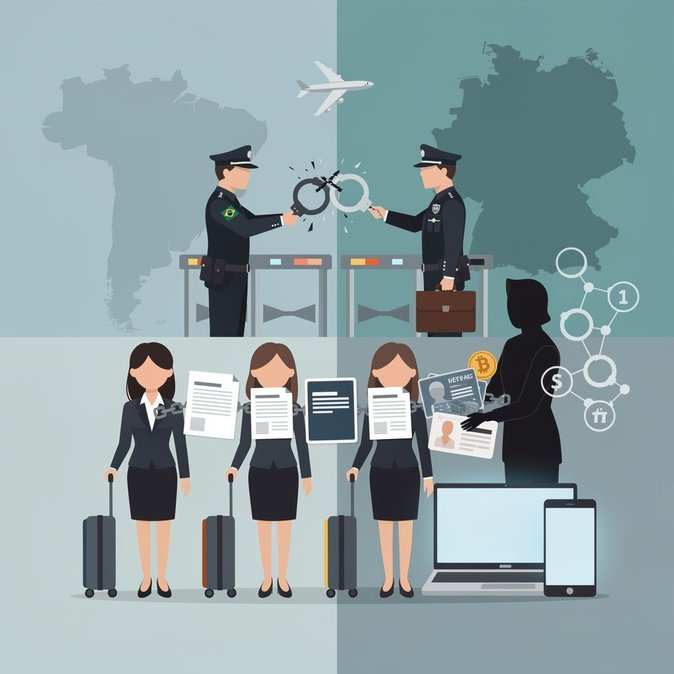
Brazil’s Federal Police (PF) announced on 3 July 2026 that it had arrested key members of an organisation that lured Brazilian women to Germany with false job offers and then forced them into sexual exploitation. Code-named “Operation COPA,” the investigation was run jointly with police in Mainz under the Europol umbrella. Brazilian agents executed search warrants in four states while German counterparts simultaneously took suspects into custody and froze assets believed to have been laundered through cryptocurrency wallets and shell travel agencies. According to PF briefings, the network used legitimate-looking travel-agency storefronts in São Paulo and Porto Alegre to obtain expedited passports and Schengen visas, then confiscated the documents on arrival in Europe. Victims’ families were coerced through threats and high-interest “relocation loans.” Authorities estimate at least 120 women were trafficked in the past 18 months. For global-mobility and travel-risk managers, the case highlights the duty of care when arranging third-party travel services and the importance of verifying recruiters. The German Federal Police have already flagged a surge in forged invitation letters allegedly issued by Brazilian subsidiaries of multinational firms—documents the ring used to smooth border formalities. Corporations operating exchange programmes between Brazil and the EU should expect closer scrutiny of sponsorship letters and may see longer secondary inspections until new vetting protocols settle. The operation also underscores the growing use of blockchain analytics in transnational investigations: Europol’s Financial Intelligence Unit traced more than €2 million in tethered stable-coin transfers that eventually paid for airline tickets and short-term rentals near Frankfurt Airport. Compliance teams should note that unexplained crypto flows tied to travel-expense ledgers could draw regulator attention.
Source: Polícia Federal (Brazil)