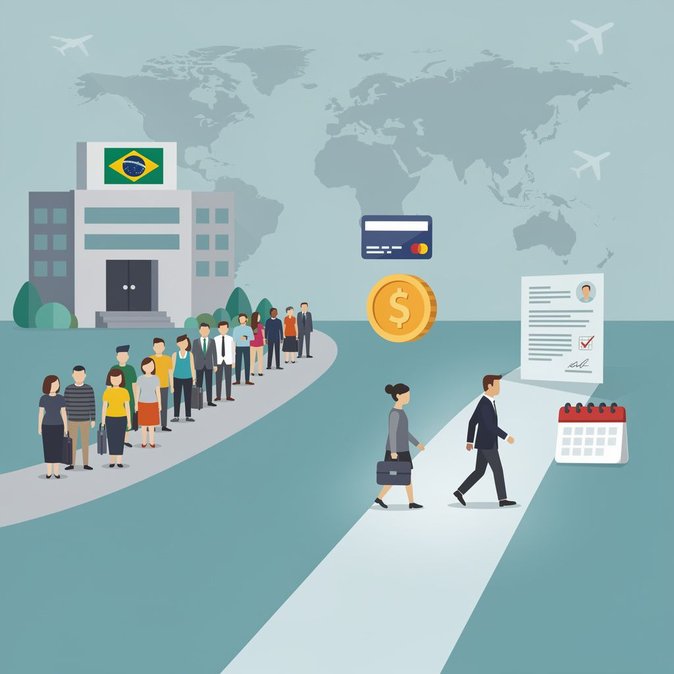
Brazilians seeking B1/B2 visitor visas for the United States can now pay US$750 (≈R$3,900) to leapfrog standard interview backlogs, the State Department confirmed on 3 July. The six-month pilot applies exclusively to applicants at US consulates in São Paulo, Rio de Janeiro, Brasília, Recife and Porto Alegre and promises an interview slot within ten working days. The premium aims to fund evening and weekend staffing to whittle down a queue that, for some posts, tops 250 days. Officials insist the programme is optional and adjudication standards remain unchanged, but consumer-rights groups call the scheme regressive, favouring affluent travellers. Corporate mobility managers see a silver lining: executives who must attend last-minute board meetings, trade fairs or troubleshooting visits finally have a predictable timeline. Multinational firms are already rewriting travel-approval matrices to allow the fee when delay would jeopardise revenue. Travel agencies predict little uptake from leisure passengers but brisk demand from high-net-worth families booking holiday packages at short notice. If successful, Washington may extend the fast-track fee to Mexico, India and the Philippines—other high-volume markets. Applicants still pay the regular US$185 MRV fee in addition to the surcharge and must submit DS-160 forms and biometrics. Refunds are not offered if the visa is refused, a clause critics argue could incentivise frivolous applications in hopes of quick review.
Source: O Correio Trends