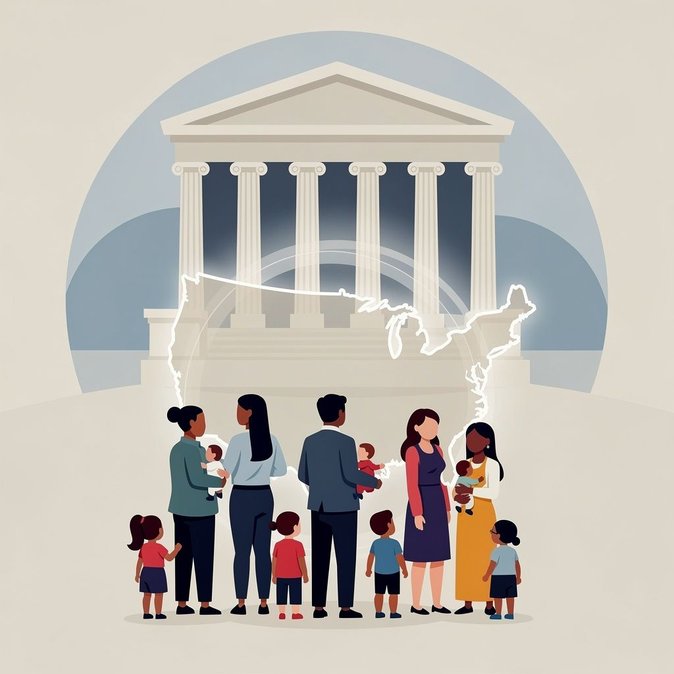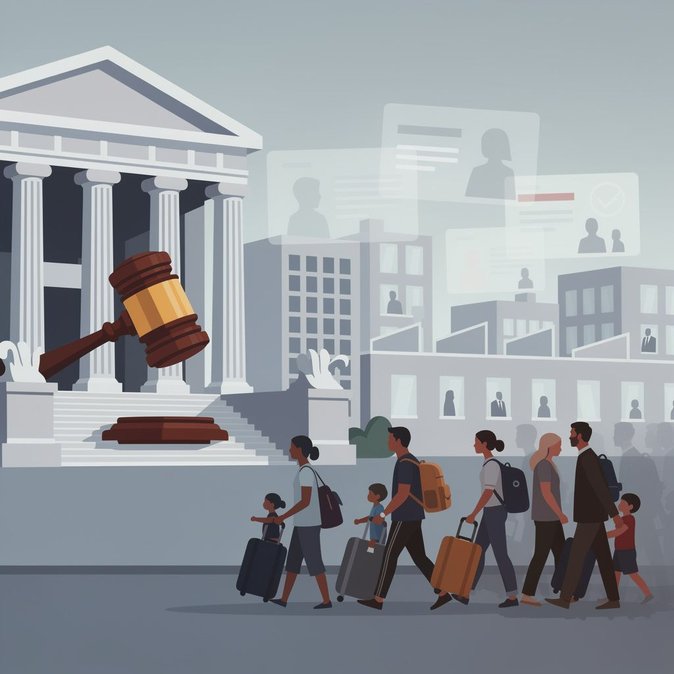
The Supreme Court’s July 3 ruling in Mullin v. Doe delivered another seismic shock to U.S. immigration law, holding that courts lack jurisdiction to review a presidential decision to terminate Temporary Protected Status (TPS). The 6-3 opinion, authored by Justice Samuel Alito, vacates lower-court injunctions that had preserved TPS for roughly 350,000 Haitians and 6,000 Syrians while litigation unfolded.
Individuals and employers now racing to understand alternative legal options may find practical help through VisaHQ, whose U.S. platform centralizes current visa requirements, humanitarian parole information, and work-authorization strategies. The service connects users with specialists who can streamline document preparation and stay ahead of fast-moving policy shifts—an invaluable resource when protections like TPS can disappear overnight.
TPS, created in 1990, allows nationals of countries in crisis to live and work temporarily in the United States. By insulating termination decisions from judicial scrutiny, the Court gives the executive branch unilateral power to end protections with immediate effect. Justice Elena Kagan’s dissent accused the majority of ignoring racial animus evident in public statements about Haitian migrants and of "closing courthouse doors on vulnerable communities." For employers, the ripple effects are immediate: once DHS publishes a termination notice, affected employees will lose work authorization and must cease employment upon E-Verify reverification deadlines. Industries with high TPS concentrations—hospitality, healthcare support, construction, and gig economy platforms—face abrupt labor shortages if Congress or DHS offers no grace period. Corporate counsel should audit I-9 records to identify TPS holders and develop contingency staffing plans. Mobility programs sponsoring H-1B, PERM or humanitarian options for long-term TPS staff should accelerate filings. With judicial review foreclosed, advocacy has shifted to Capitol Hill, where a narrow bipartisan bill could still legislatively restore protections. Until then, risk of detention and deportation looms, complicating duty-of-care obligations for U.S. multinationals with large Haitian or Syrian workforces.
Individuals and employers now racing to understand alternative legal options may find practical help through VisaHQ, whose U.S. platform centralizes current visa requirements, humanitarian parole information, and work-authorization strategies. The service connects users with specialists who can streamline document preparation and stay ahead of fast-moving policy shifts—an invaluable resource when protections like TPS can disappear overnight.
TPS, created in 1990, allows nationals of countries in crisis to live and work temporarily in the United States. By insulating termination decisions from judicial scrutiny, the Court gives the executive branch unilateral power to end protections with immediate effect. Justice Elena Kagan’s dissent accused the majority of ignoring racial animus evident in public statements about Haitian migrants and of "closing courthouse doors on vulnerable communities." For employers, the ripple effects are immediate: once DHS publishes a termination notice, affected employees will lose work authorization and must cease employment upon E-Verify reverification deadlines. Industries with high TPS concentrations—hospitality, healthcare support, construction, and gig economy platforms—face abrupt labor shortages if Congress or DHS offers no grace period. Corporate counsel should audit I-9 records to identify TPS holders and develop contingency staffing plans. Mobility programs sponsoring H-1B, PERM or humanitarian options for long-term TPS staff should accelerate filings. With judicial review foreclosed, advocacy has shifted to Capitol Hill, where a narrow bipartisan bill could still legislatively restore protections. Until then, risk of detention and deportation looms, complicating duty-of-care obligations for U.S. multinationals with large Haitian or Syrian workforces.