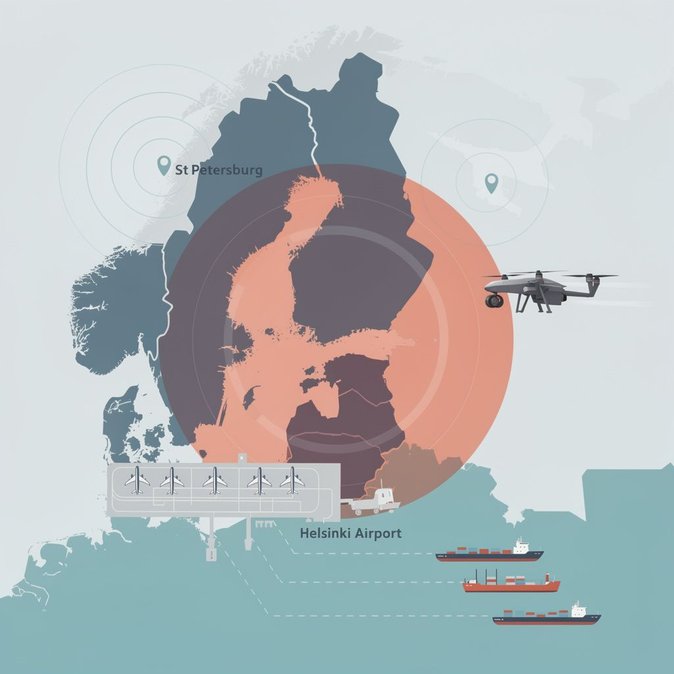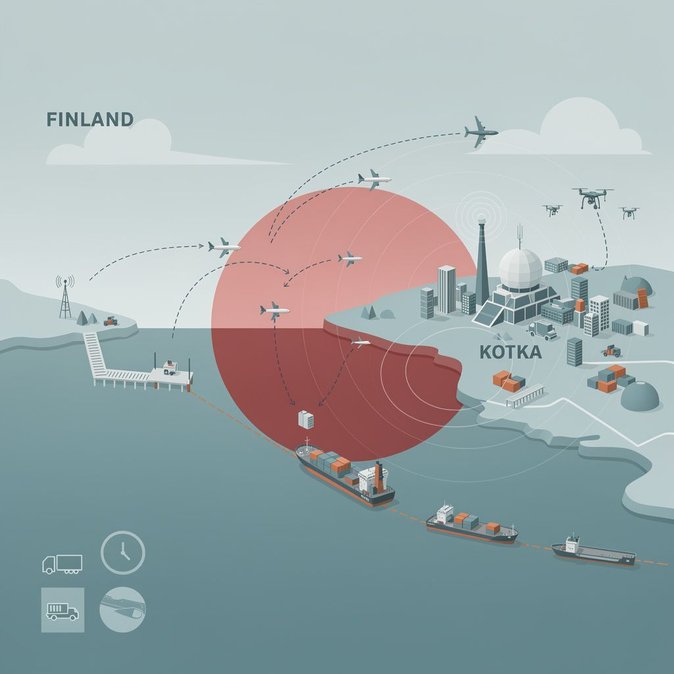
Finland’s Defence Forces imposed an exceptional, three-hour closure of both the airspace and the shipping lanes east of the coastal city of Kotka at dawn on Saturday, 4 July 2026. According to a statement given to public broadcaster Yle, the so-called ‘no-fly/no-sail’ zones were activated just after 05:00 local time in response to Ukrainian long-range drone strikes on Russian port infrastructure around St Petersburg, some 150 kilometres to the east. Hornet fighters were scrambled to reinforce patrols and local residents reported continuous jet noise overhead. Although no unmanned aircraft were detected inside Finnish territory, the Defence Forces said the measure was a precaution designed to “guarantee civil safety and freedom of action for the authorities” while the regional security picture clarified. The temporary flight restriction (TFR) was lifted at 09:18 once air-defence radars confirmed the situation had stabilised. Maritime traffic control simultaneously reopened the main shipping channel used by container and timber vessels heading to HaminaKotka, Finland’s largest export port. The episode underlines how Russia’s war in Ukraine is having a direct operational effect on Finnish border management only four months after the country joined NATO. Commercial airlines experienced minor re-routing and short delays, but Helsinki Airport’s hub operations were unaffected. Nevertheless, travel managers with staff transiting the eastern Gulf of Finland are being advised to monitor NOTAMs closely; even a short-lived TFR can trigger missed connections for time-critical cargo or crew changes. Legal experts note that Finland was acting within the Chicago Convention’s Article 9 provisions that allow states to restrict flights for military reasons. For corporate security teams, the key takeaway is that airspace or coastal closures—even if brief—are now a realistic contingency in south-eastern Finland and should be written into traveller-tracking and insurance protocols. Companies operating ro-ro logistics through HaminaKotka may also wish to develop diversion scenarios via Rauma or Turku should future closures last longer. By late afternoon on Saturday, civil aviation authorities confirmed that the backlog of eight affected Finnair and DHL freighter flights had been cleared and marine pilots reported normal vessel flows. However, the Defence Forces indicated that heightened surveillance will continue “for the foreseeable future,” meaning further snap restrictions remain possible.
Source: Yle News