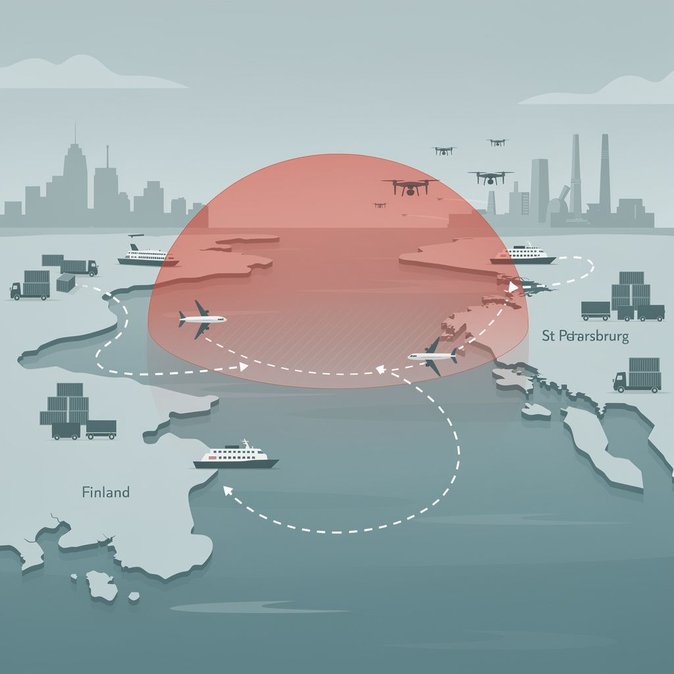
Finland’s Defence Forces imposed an extraordinary four-hour closure of the eastern Gulf of Finland’s aviation corridors and shipping fairways in the early hours of Saturday, 4 July, after Ukrainian long-range drones struck oil and military facilities around St Petersburg. Defence Minister Antti Häkkänen told national broadcaster Yle that radar operators picked up multiple UAV tracks heading toward Russian air-defence zones only 120 kilometres from the Finnish coast. Although none of the drones entered Finnish airspace, the ministry decided at 05:18 a.m. to activate a Notice to Airmen (NOTAM) and a corresponding maritime safety warning that halted all civilian flights below FL195 and diverted cargo vessels and passenger ferries away from the eastern gulf. The restrictions were lifted at 09:18 a.m. This is the second time in a week that Helsinki has used its emergency powers to close critical traffic lanes, highlighting the spill-over risks of Ukraine’s accelerating long-range campaign against Russian energy infrastructure. Air-traffic analysts note that the Gulf of Finland functions as the main approach path for flights to Helsinki-Vantaa Airport from Asia, while its shipping lanes carry half of Finland’s petroleum imports and most containerised trade with Central Europe. Even a short disruption obliges Finnair and major freight carriers to re-file flight plans via Swedish airspace and can delay scheduled ferry services between Helsinki and Tallinn. The incident also provided Finland’s newly operational NATO-integrated air-defence network its first real-world test. Häkkänen confirmed that F-35A fighters were placed on immediate readiness, backed by Army NH90 helicopters and Navy Hamina-class missile boats equipped with Saab Giraffe radars. “We were fully prepared to intercept any object violating our sovereign airspace,” the minister said, adding that no engagement was required. He warned, however, that similar pre-emptive closures could become “the new normal” as drone ranges increase. For companies moving staff or goods through southern Finland, the message is clear: build greater schedule flexibility into travel and logistics plans for the remainder of 2026. Aviation insurers are likely to re-examine war-risk premiums for flights transiting the corridor, while shipping lines may consider adopting wider safety margins east of Kotka. Employers with expatriates in the Helsinki metropolitan area should review crisis-communications protocols and ensure that staff are registered with Finland’s NIS-led SMS alert system, which would issue any future shelter-in-place warnings. The episode underscores how Finland’s geography—sandwiched between the Baltic’s busiest sea lane and Russia’s second-largest city—exposes global mobility operations to geopolitical flashpoints well beyond Finnish control. Multinational mobility managers are therefore advised to monitor Finnish Transport and Communications Agency (Traficom) bulletins alongside NATO air-domain awareness feeds when planning itineraries involving the Gulf region.
Source: Ukrainska Pravda (via Yle)
How VisaHQ can help
VisaHQ simplifies the visa application process for individuals and businesses. Check current travel requirements, prepare the required documents and manage your application online through the VisaHQ Finland portal.More From Finland
View all
EU Entry/Exit bottlenecks spark warnings for Finland-bound summer travellers
Schengen Working Party convenes in Brussels to advance 2026-27 border-free travel roadmap; Finland pushes security-tech upgrades