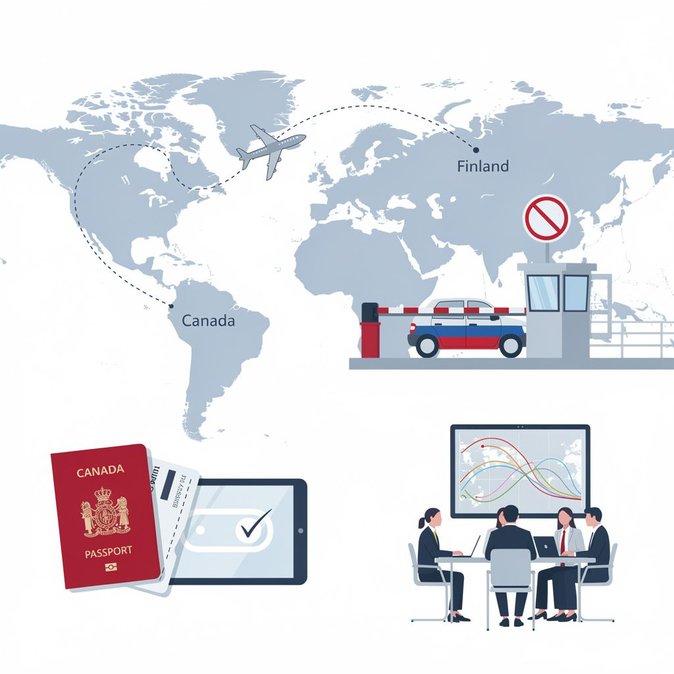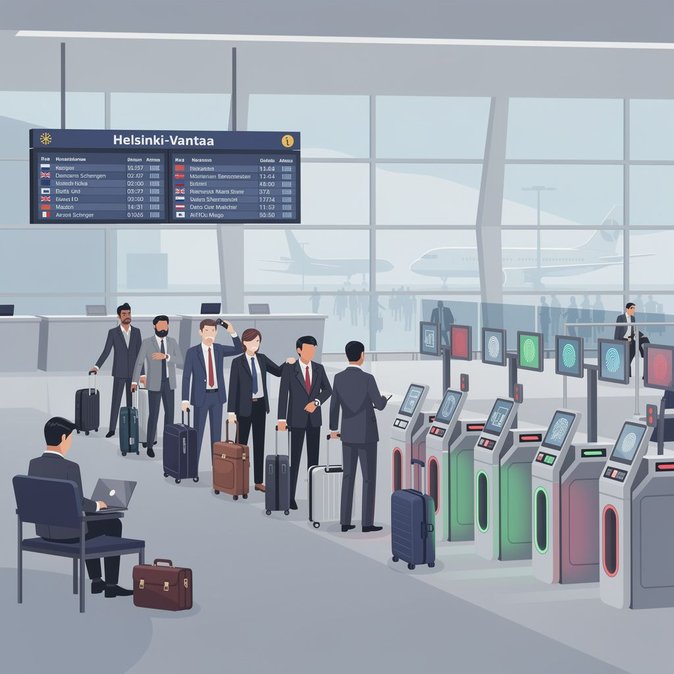
As European holiday traffic hits its zenith, the EU’s new biometric Entry/Exit System (EES) is struggling to cope. Gulf News reports that queues of up to five hours have formed at several Schengen airports, prompting aviation bodies ACI Europe, Airlines for Europe and IATA to demand emergency flexibility from Brussels. Although the article highlights scenes in southern hubs, Finnish airports are feeling the pressure as well: Helsinki-Vantaa must now fingerprint and photograph every third-country national entering Finland for the first time—a process border guards admit takes two to three minutes per traveller compared with theold passport-stamp swipe. Finavia says first-time registrations peaked at 600 an hour last weekend, forcing border officers to open overflow channels and redeploy staff from customs. The bottlenecks matter for the Nordic corporate market because Helsinki handles connecting flows from the UK, U S and Asia—nationalities all subject to EES. Travel-management firms are advising clients to schedule at least a 90-minute buffer between an EES-eligible arrival and any onward domestic flight; previously 45 minutes was considered safe. Beyond queues, airlines warn of wider operational knock-ons. Finnair says a single wide-body arrival with a large cohort of first-time EES passengers can delay the subsequent aircraft turn-round by 20 minutes, potentially cascading across the day’s rotations. Missed connections mean higher hotel and duty-of-care costs for employers—and, unlike weather delays, EES congestion is unlikely to qualify for compensation. Insurers are already signalling that EES-related expenses may be classed as ‘extraordinary circumstances’ and thus excluded from standard policies. The European Commission will meet industry representatives on 7 July to consider temporary exemptions. Until then, Finnish border authorities are implementing contingency plans: pre-registration kiosks in departure halls and pop-up processing booths at peak inbound banks. Companies sending staff to Finland this month should brief travellers on longer processing times, ensure passports have sufficient blank pages for contingency stamping and verify that Schengen short-stay limits are carefully monitored now that digital exit records will flag overstays automatically.
Source: Gulf News
How VisaHQ can help
VisaHQ simplifies the visa application process for individuals and businesses. Check current travel requirements, prepare the required documents and manage your application online through the VisaHQ Finland portal.More From Finland
View all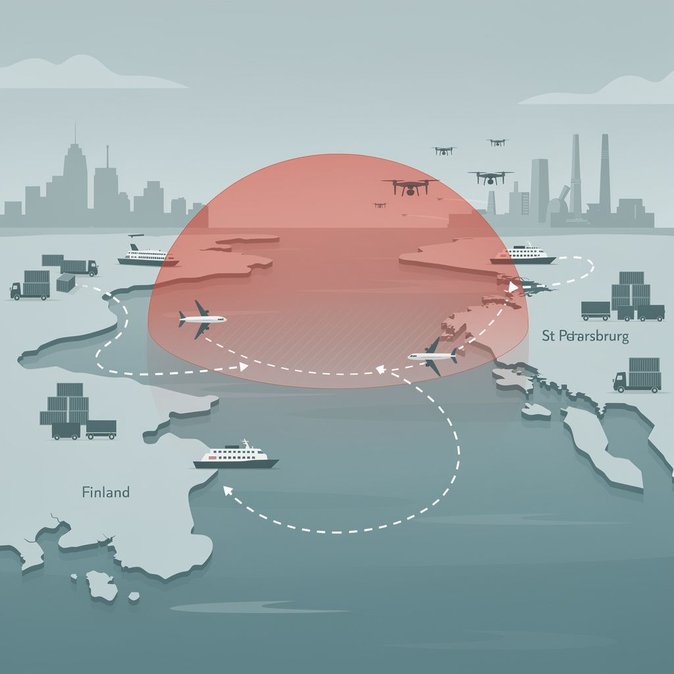
Finland briefly closes Gulf of Finland air and sea lanes after Ukrainian drone strikes near St Petersburg
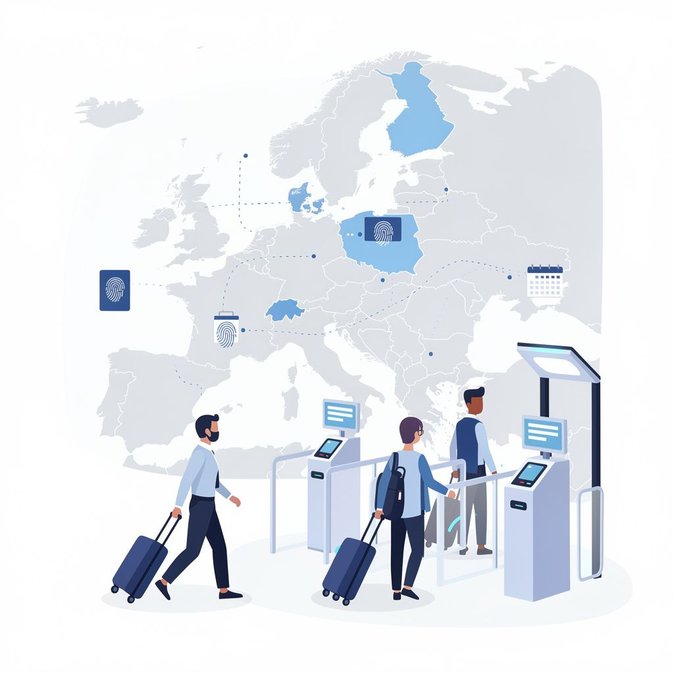
Schengen Working Party convenes in Brussels to advance 2026-27 border-free travel roadmap; Finland pushes security-tech upgrades