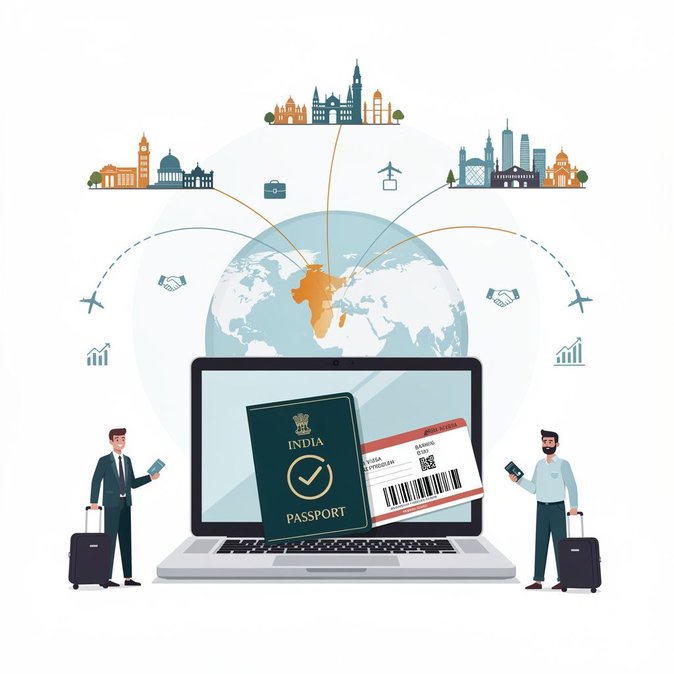
In the most significant expansion of India’s electronic visa regime since its launch in 2014, the Ministry of Home Affairs confirmed on Sunday that nationals of 25 additional countries will be eligible to apply for Indian e-Visas from 15 August 2026. The new cohort covers a mix of emerging trade partners and tourism source markets in Africa, Latin America and Eastern Europe, including Kenya, Colombia, Serbia, Tanzania, Peru and Georgia. According to the official notice, travellers will be able to lodge tourist, business, medical and conference e-Visa applications entirely online; approvals are expected within three to five working days. A 30-day double-entry permit will cost US $25, while one-year and five-year multiple-entry options will remain at US $40 and US $80 respectively. Pakistan and China remain excluded and must continue to apply through consulates. Officials told reporters that India processed 1.8 million e-Visas in 2025 and is targeting three million in 2026. The move is part of a wider strategy to rebuild inbound visitor numbers to 15 million—roughly 120 % of pre-pandemic levels—by 2027 and to support India’s fast-growing meetings-and-incentives market. Businesses have welcomed the change, noting that faster visa turnarounds will make it easier to bring in technicians, buyers and investors for short-term assignments. Trade associations in Kenya and Colombia have already announced business delegations for the fourth quarter. Practical tips for mobility managers: 1) encourage overseas staff to wait until the new list is published on 20 July before filing; 2) remind travellers that biometric enrolment on arrival remains mandatory; and 3) budget extra time at airports during the first month of the roll-out as immigration officers familiarise themselves with additional nationalities. Airlines have been advised to update their “OK-to-board” verification systems by 31 July.
Source: Atlas Guide