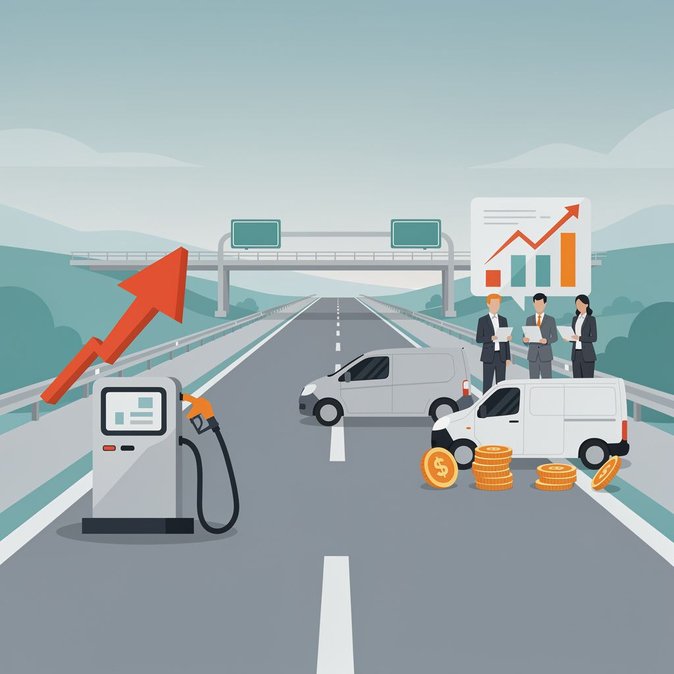
Only two days after the government allowed its temporary excise-duty discount to lapse, diesel prices on Italy’s autostrade have smashed the psychological €2 mark, averaging €2.004 per litre on 5 July. Self-service petrol is close behind at €1.932. The ministry of Enterprises and Made in Italy published the figures in its daily bulletin, prompting an outcry from consumer group Codacons, which estimates an annual cost of €1.42 billion for motorists. For corporate fleets the pain is immediate: a Milan–Rome round trip in a Euro 6 diesel saloon now costs about €18 more in fuel than last week. Logistics operators report that same-day courier quotes have jumped 4-6 %, and rental-car companies at Fiumicino have introduced a €6 “fuel-surcharge” on new contracts.
At least the bureaucratic side of travel can be planned with more certainty. Platforms such as VisaHQ provide up-to-date guidance on Italian entry requirements and can secure tourist, business or work visas online in a few clicks, sparing travellers an additional trip to the consulate. Their Italy portal (https://www.visahq.com/italy/) also posts alerts on regulatory changes—a useful resource for mobility managers juggling route, fuel and compliance costs alike.
The reinstated levy forms part of the 2026 Budget Law’s fiscal-consolidation drive. Industry lobbies argue that the measure undermines Italy’s attractiveness for road-based tourists and inbound assignees, many of whom rent cars to reach plants outside rail corridors. Some multinationals are already instructing employees to favour rail or pool-car schemes for domestic hops under 500 km. With oil prices currently below $70/barrel, analysts predict only marginal relief unless the government resurrects the discount—something the Treasury has ruled out before its September fiscal update. Mobility managers should re-forecast ground-travel budgets for Q3 and consider hybrid-fleet upgrades that qualify for regional eco-incentives.
At least the bureaucratic side of travel can be planned with more certainty. Platforms such as VisaHQ provide up-to-date guidance on Italian entry requirements and can secure tourist, business or work visas online in a few clicks, sparing travellers an additional trip to the consulate. Their Italy portal (https://www.visahq.com/italy/) also posts alerts on regulatory changes—a useful resource for mobility managers juggling route, fuel and compliance costs alike.
The reinstated levy forms part of the 2026 Budget Law’s fiscal-consolidation drive. Industry lobbies argue that the measure undermines Italy’s attractiveness for road-based tourists and inbound assignees, many of whom rent cars to reach plants outside rail corridors. Some multinationals are already instructing employees to favour rail or pool-car schemes for domestic hops under 500 km. With oil prices currently below $70/barrel, analysts predict only marginal relief unless the government resurrects the discount—something the Treasury has ruled out before its September fiscal update. Mobility managers should re-forecast ground-travel budgets for Q3 and consider hybrid-fleet upgrades that qualify for regional eco-incentives.