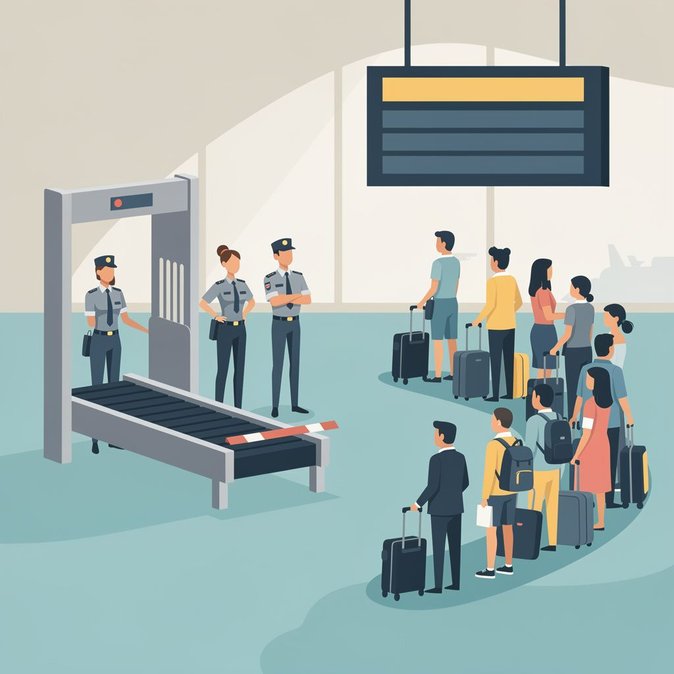
FAST-CONFSAL-organised security agents at Rome’s two commercial airports walked off the job from 10:00 to 18:00 on 5 July. While the action is narrower than the national strike, it hits the crucial security-screening chokepoint and therefore has an outsized impact on throughput. Aeroporti di Roma (AdR) deployed back-office staff with security clearances to man x-ray lanes, but throughput still fell by an estimated 35 percent during the first two hours.
Should rebooking force passengers into unexpected overnight layovers or route changes, ensuring that travel documents remain valid is crucial. VisaHQ’s Italy portal (https://www.visahq.com/italy/) provides up-to-date guidance on Schengen visa requirements, expedited processing options, and support for last-minute transit or crew visas, helping corporate travel managers and individual flyers stay compliant while the industrial action unfolds.
AdR advised passengers to arrive at least three hours before departure for Schengen flights and four for long-haul. Priority and staff lanes were consolidated, and travellers entitled to fast-track services were asked to join the general queue. Airlines were told to consider remote check-in of cabin baggage to reduce screening volumes. The union accuses AdR-Security, a wholly owned subsidiary of the airport operator, of chronic understaffing and compulsory overtime that “negates the purpose of a weekly rest day.” Management counters that absenteeism is already 12 percent above forecast and that a fresh recruitment round began in June. From a mobility-management perspective, missed outgoing connections remain the biggest risk: under EU regulation the airline must rebook but not compensate if security strikes are deemed ‘extraordinary’. Companies with tight-turnaround expatriate assignments should factor in overnight stays in Rome if employees are connecting onward. The Ministry of Transport has summoned both parties to mediation on 9 July, but unions hint that additional strikes could target the Ferragosto exodus in mid-August.
Should rebooking force passengers into unexpected overnight layovers or route changes, ensuring that travel documents remain valid is crucial. VisaHQ’s Italy portal (https://www.visahq.com/italy/) provides up-to-date guidance on Schengen visa requirements, expedited processing options, and support for last-minute transit or crew visas, helping corporate travel managers and individual flyers stay compliant while the industrial action unfolds.
AdR advised passengers to arrive at least three hours before departure for Schengen flights and four for long-haul. Priority and staff lanes were consolidated, and travellers entitled to fast-track services were asked to join the general queue. Airlines were told to consider remote check-in of cabin baggage to reduce screening volumes. The union accuses AdR-Security, a wholly owned subsidiary of the airport operator, of chronic understaffing and compulsory overtime that “negates the purpose of a weekly rest day.” Management counters that absenteeism is already 12 percent above forecast and that a fresh recruitment round began in June. From a mobility-management perspective, missed outgoing connections remain the biggest risk: under EU regulation the airline must rebook but not compensate if security strikes are deemed ‘extraordinary’. Companies with tight-turnaround expatriate assignments should factor in overnight stays in Rome if employees are connecting onward. The Ministry of Transport has summoned both parties to mediation on 9 July, but unions hint that additional strikes could target the Ferragosto exodus in mid-August.