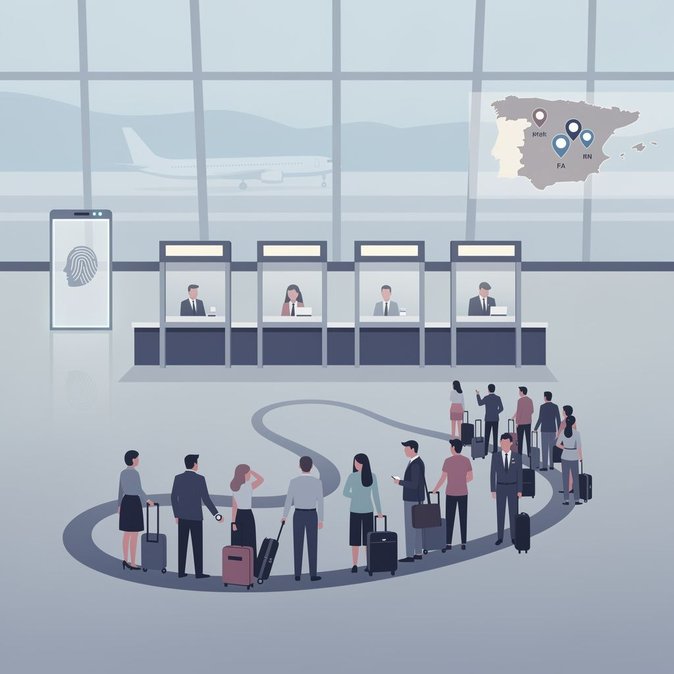
Low-cost giant Ryanair publicly singled out Tenerife Sur, Palma de Mallorca, Alicante and Málaga as Europe’s least-prepared airports for the EU’s forthcoming biometric Entry/Exit System (EES). In a statement picked up by trade outlet Preferente, the carrier warned that insufficient kiosks, staffing shortages and unreliable software could create “nightmare” waits for non-Schengen arrivals during the July-August peak.
Travelers looking for an extra layer of certainty can tap VisaHQ’s Spain portal, which consolidates the latest border-control rules—including EES updates—and offers personalized support for visa and passport documentation. Using the service ahead of departure helps corporate road warriors and holidaymakers alike cut down on surprises once they reach the biometric kiosks.
The criticism follows industry-wide concerns that the switch from manual stamps to biometric capture will slow processing times just as traffic surpasses pre-pandemic highs. Business-travel planners fear missed connections on intra-EU itineraries that originate outside the bloc, as well as reputational damage when executives are stuck in hour-long queues. Airport authorities in the Canary Islands and on the mainland insist contingency rosters are in place, but Ryanair’s naming-and-shaming raises the political stakes ahead of Spain’s peak holiday weeks. The company has already lobbied Madrid to postpone full EES activation until September, echoing a similar move by Greece. Travel-risk consultants recommend booking Fast-Track services where available and alerting travellers to arrive at least 30 minutes earlier for passport control at the four airports. They also urge multinational firms to capture real-time queue data—via apps or on-site observers—to adjust ground transfers and meeting schedules dynamically.
Travelers looking for an extra layer of certainty can tap VisaHQ’s Spain portal, which consolidates the latest border-control rules—including EES updates—and offers personalized support for visa and passport documentation. Using the service ahead of departure helps corporate road warriors and holidaymakers alike cut down on surprises once they reach the biometric kiosks.
The criticism follows industry-wide concerns that the switch from manual stamps to biometric capture will slow processing times just as traffic surpasses pre-pandemic highs. Business-travel planners fear missed connections on intra-EU itineraries that originate outside the bloc, as well as reputational damage when executives are stuck in hour-long queues. Airport authorities in the Canary Islands and on the mainland insist contingency rosters are in place, but Ryanair’s naming-and-shaming raises the political stakes ahead of Spain’s peak holiday weeks. The company has already lobbied Madrid to postpone full EES activation until September, echoing a similar move by Greece. Travel-risk consultants recommend booking Fast-Track services where available and alerting travellers to arrive at least 30 minutes earlier for passport control at the four airports. They also urge multinational firms to capture real-time queue data—via apps or on-site observers—to adjust ground transfers and meeting schedules dynamically.