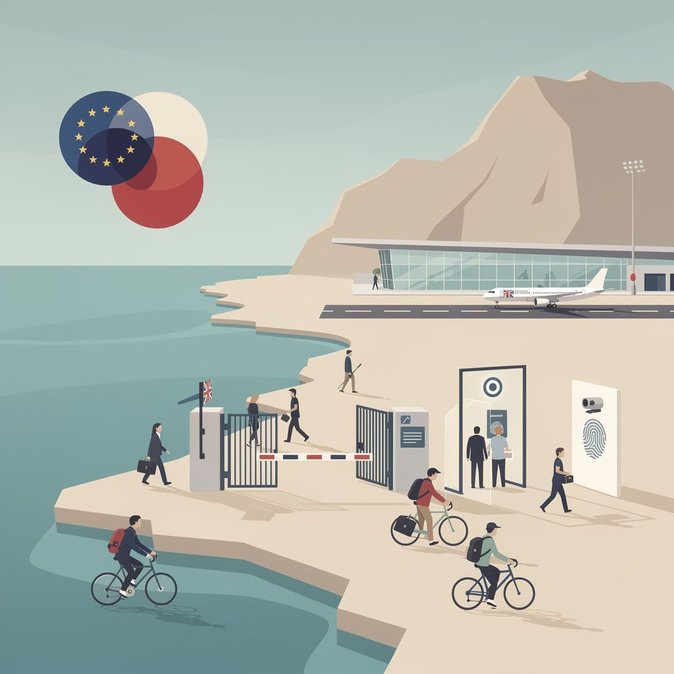
Prime Minister Pedro Sánchez will travel to La Línea de la Concepción on 13 July ahead of the ceremonial opening of a new EU–UK treaty that will integrate Gibraltar into the Schengen area. According to The Olive Press, the land border—affecting 15,000 daily cross-border workers—will be physically dismantled two days later, with passport controls relocated to Gibraltar International Airport. Under the accord, Policía Nacional officers, supported initially by Frontex, will operate the EU’s biometric Entry/Exit System (SES) inside the airport. Travellers arriving from non-Schengen countries will enrol fingerprints and facial images on entry, while those crossing on foot or by road will in future move freely—mirroring arrangements between Schengen states. Businesses on both sides of the frontier expect reduced congestion to boost hiring flexibility and same-day trade, although the relocation of checks to the airport means that air travellers will face EES kiosks similar to those now rolling out across mainland Spain. Ferry links with Morocco have been paused to simplify the transition during the first months of operation. The political symbolism is significant: the Rock’s integration into Schengen comes after decades of sovereignty tensions and follows Spain’s recent decision to remove Gibraltar from its tax-haven blacklist. Still unknown is whether the UK—currently in caretaker mode following Prime Minister Keir Starmer’s resignation—will send a delegation to the opening ceremony. Mobility managers with staff based on the Costa del Sol or in Gibraltar should update travel policies: cross-border commutes will no longer require passport stamps, but flights into Gibraltar from the UK will become an external Schengen arrival, triggering EES registration.
Source: The Olive Press
How VisaHQ can help
VisaHQ simplifies the visa application process for individuals and businesses. Check current travel requirements, prepare the required documents and manage your application online through the VisaHQ Spain portal.More From Spain
View all
Supreme Court orders Interior Ministry to reveal nationalities of migrants held in Spain’s detention centres
Brussels rules out full summer suspension of the EU Entry/Exit System but keeps biometric ‘pause’ option until September