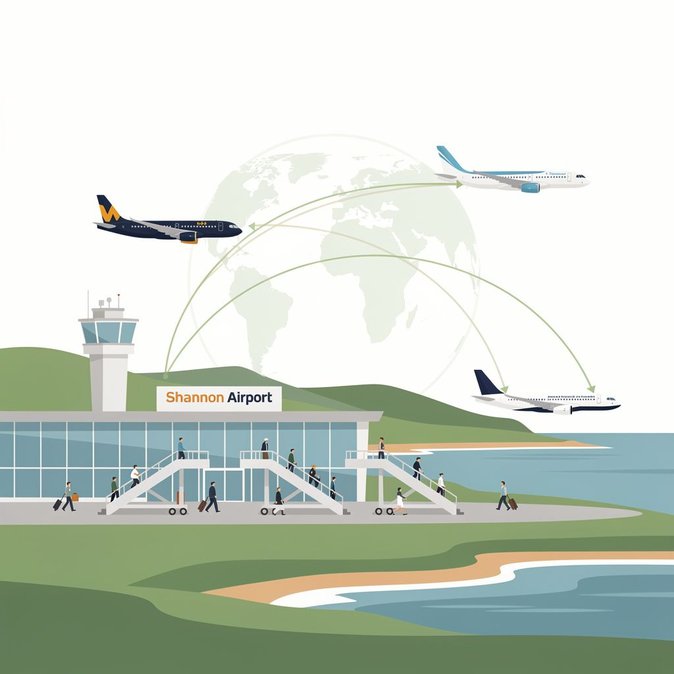
In a press release dated 6 July 2026, An Garda Síochána disclosed the outcomes of “Operation Global Chain”, a Europe-wide week of action (8–12 June) targeting human-trafficking networks. Working with Europol, Interpol and Frontex, Garda National Protective Services Bureau (GNPSB) officers carried out 166 welfare inspections at suspected brothels, interviewed 269 sex workers of multiple nationalities and monitored passenger flows at Dublin, Cork, Knock and Shannon airports as well as Dublin and Rosslare ports. Over 17,000 travellers, 543 vehicles and 350 lorries were screened.
![An Garda Síochána Details Results of Operation Global Chain Anti-Trafficking Sweep]()
In this evolving enforcement environment, VisaHQ can assist employers, mobility teams and individual travellers by securing the correct Irish visas and supporting documents, tracking application status in real time, and providing up-to-date guidance on regulatory changes—helping to minimise delays or refusals at the border.
No victims were officially identified during the operation, but Gardaí seized €25,000 in cash linked to suspected organised crime and arrested a German national in Cork under a European Arrest Warrant for child-kidnapping offences. A separate follow-up raid in Limerick on 30 June netted €840,000 in cash and led to money-laundering charges against a local suspect, now before the courts. Operation Global Chain forms part of the EU’s EMPACT security cycle and underscores how immigration enforcement intersects with corporate mobility. GNPSB personnel collaborated with Border Management Unit officers stationed at arrival gates to profile risk indicators; this included checks on passengers travelling on genuine documents but with itineraries consistent with labour or sexual exploitation. For companies moving staff into Ireland, the results are a reminder of heightened scrutiny at ports of entry. Mobility managers should ensure travellers carry assignment letters and know-your-customer screening is up to date for third-party labour suppliers. Staff working in hospitality and agri-food — sectors identified by GNPSB as higher risk — should be briefed on signs of forced labour and given clear channels to report concerns under Ireland’s Criminal Justice (Smuggling of Persons and Trafficking) Act 2024. The Garda statement also signals that further joint actions are planned ahead of Ireland’s Justice and Home Affairs Council meetings during the EU Presidency. Cross-border companies should expect spot-checks on recruitment documentation and be prepared to evidence compliance with the new Corporate Sustainability Due Diligence Directive once transposed.

In this evolving enforcement environment, VisaHQ can assist employers, mobility teams and individual travellers by securing the correct Irish visas and supporting documents, tracking application status in real time, and providing up-to-date guidance on regulatory changes—helping to minimise delays or refusals at the border.
No victims were officially identified during the operation, but Gardaí seized €25,000 in cash linked to suspected organised crime and arrested a German national in Cork under a European Arrest Warrant for child-kidnapping offences. A separate follow-up raid in Limerick on 30 June netted €840,000 in cash and led to money-laundering charges against a local suspect, now before the courts. Operation Global Chain forms part of the EU’s EMPACT security cycle and underscores how immigration enforcement intersects with corporate mobility. GNPSB personnel collaborated with Border Management Unit officers stationed at arrival gates to profile risk indicators; this included checks on passengers travelling on genuine documents but with itineraries consistent with labour or sexual exploitation. For companies moving staff into Ireland, the results are a reminder of heightened scrutiny at ports of entry. Mobility managers should ensure travellers carry assignment letters and know-your-customer screening is up to date for third-party labour suppliers. Staff working in hospitality and agri-food — sectors identified by GNPSB as higher risk — should be briefed on signs of forced labour and given clear channels to report concerns under Ireland’s Criminal Justice (Smuggling of Persons and Trafficking) Act 2024. The Garda statement also signals that further joint actions are planned ahead of Ireland’s Justice and Home Affairs Council meetings during the EU Presidency. Cross-border companies should expect spot-checks on recruitment documentation and be prepared to evidence compliance with the new Corporate Sustainability Due Diligence Directive once transposed.