The SNCTA, France’s largest air-traffic-controller union, has issued formal notice of a four-day strike beginning 07 October 2026. Details published on 7 July via Russian newswire AK&M confirm walkouts from 07:00 CET on 7 October until the morning of 11 October.
The timing coincides with the critical ‘shoulder-season’ window when corporate relocations and international assignments ramp up after the summer lull.
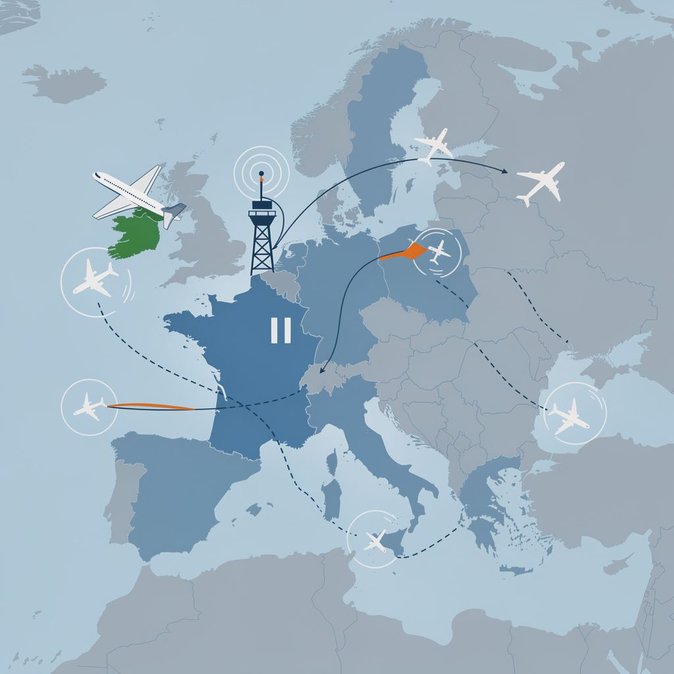
The implications for Ireland are immediate. Even flights that merely overfly French airspace – including key Dublin–Barcelona, Cork–Malaga and Shannon–Rome services – require French ATC clearance.
During a similar 48-hour stoppage last spring, Ryanair cancelled more than 400 flights, 60 of them involving Irish airports, and Aer Lingus was forced to re-route transatlantic flights to avoid French FIRs, adding up to 45 minutes to block times.
Ryanair is again the most exposed; it operates up to 3,500 Europe-wide flights daily and estimates that 30 % cross French skies.
The carrier has urged the European Commission to invoke minimum-service legislation that would protect overflight routes, but Brussels has so far resisted.
Aer Lingus and Irish-based charter operator ASL Airlines Ireland are drawing up contingency plans that include tactical fuel stops in the UK and extended crew-duty waivers.
Global mobility managers should begin scenario-planning now.
October traditionally sees a spike in assignee start-dates aligned with academic terms; delays could ripple into visa-activation windows and corporate housing contracts.
For travellers or HR teams who suddenly need to amend start dates or secure fresh entry permits because of flight disruptions, VisaHQ can help streamline the process. Its Dublin-based portal offers real-time visa requirement checks and rapid document processing, ensuring assignees obtain updated visas or letters of invitation in hours rather than days.
Best practice is to book flexible fares, brief travellers on potential reroutings via Amsterdam or Frankfurt, and monitor the Network Manager’s daily flow management plans from Eurocontrol.
The Department of Foreign Affairs in Dublin has advised passengers to allow extra connection time and to stay in close contact with their airline.
If the strike proceeds, Irish passengers will be entitled to meals, accommodation and – depending on delay length – compensation under EU Regulation 261.
The timing coincides with the critical ‘shoulder-season’ window when corporate relocations and international assignments ramp up after the summer lull.
The implications for Ireland are immediate. Even flights that merely overfly French airspace – including key Dublin–Barcelona, Cork–Malaga and Shannon–Rome services – require French ATC clearance.
During a similar 48-hour stoppage last spring, Ryanair cancelled more than 400 flights, 60 of them involving Irish airports, and Aer Lingus was forced to re-route transatlantic flights to avoid French FIRs, adding up to 45 minutes to block times.
Ryanair is again the most exposed; it operates up to 3,500 Europe-wide flights daily and estimates that 30 % cross French skies.
The carrier has urged the European Commission to invoke minimum-service legislation that would protect overflight routes, but Brussels has so far resisted.
Aer Lingus and Irish-based charter operator ASL Airlines Ireland are drawing up contingency plans that include tactical fuel stops in the UK and extended crew-duty waivers.
Global mobility managers should begin scenario-planning now.
October traditionally sees a spike in assignee start-dates aligned with academic terms; delays could ripple into visa-activation windows and corporate housing contracts.
For travellers or HR teams who suddenly need to amend start dates or secure fresh entry permits because of flight disruptions, VisaHQ can help streamline the process. Its Dublin-based portal offers real-time visa requirement checks and rapid document processing, ensuring assignees obtain updated visas or letters of invitation in hours rather than days.
Best practice is to book flexible fares, brief travellers on potential reroutings via Amsterdam or Frankfurt, and monitor the Network Manager’s daily flow management plans from Eurocontrol.
The Department of Foreign Affairs in Dublin has advised passengers to allow extra connection time and to stay in close contact with their airline.
If the strike proceeds, Irish passengers will be entitled to meals, accommodation and – depending on delay length – compensation under EU Regulation 261.