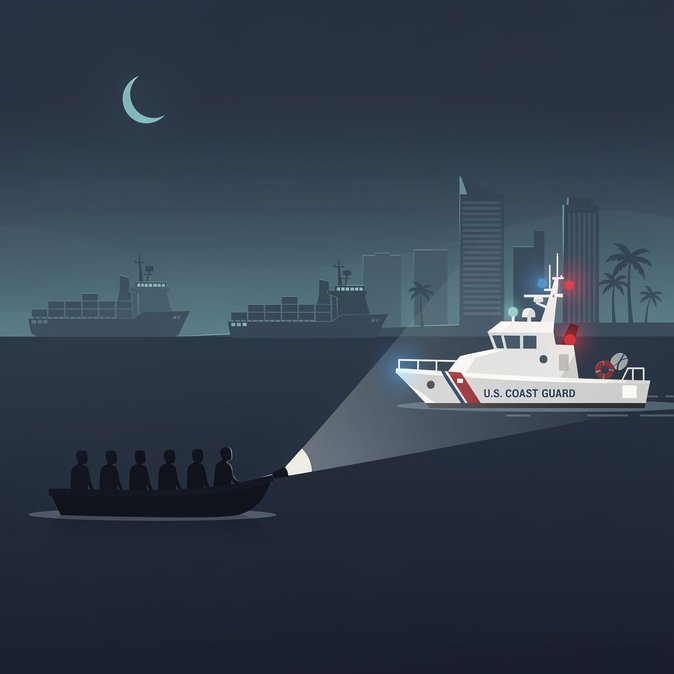
U.S. maritime enforcement authorities remain busy in South Florida. On 25 June a Coast Guard Cutter Richard Etheridge crew, working with Customs and Border Protection Air and Marine Operations, intercepted an unlit vessel 11 miles east of Government Cut carrying five foreign nationals and one U.S. citizen. After initial processing at sea, the migrants were transferred on 28 June to Homeland Security Investigations for further action; the Coast Guard announced the case publicly on 7 July. The interdiction is part of Operation Vigilant Sentry, a multi-layered campaign to deter irregular maritime migration through the Florida Straits, Mona Passage and Windward Passage. So far this fiscal year, Coast Guard Southeast has reported 47 migrant-smuggling events involving more than 380 individuals—up 12 percent year-on-year.
Organizations needing to arrange visas, humanitarian parole documentation or emergency travel papers for crew members and relocated staff can streamline the process through VisaHQ. The firm’s online platform guides employers and travelers through U.S. and third-country visa requirements, provides real-time status tracking, and can expedite filings so that immigration paperwork doesn’t become another operational bottleneck amid heightened maritime enforcement.
For companies relocating staff to Miami or relying on charter vessels in the Caribbean, the incident reinforces the likelihood of stepped-up patrols and potential boarding delays. Vessel operators should ensure that crew manifests, U.S. Coast Guard 96-hour Notice of Arrival filings and Automatic Identification System (AIS) transponders are fully compliant to avoid being mistaken for smuggling craft. Mobility programmes with Cuban, Haitian or Venezuelan assignees should also prepare for heightened scrutiny at sea and at land ports as political instability in the region continues to push migration flows northward. Employers may wish to review humanitarian-based parole options and ensure that workers know their rights if questioned by maritime authorities.
Organizations needing to arrange visas, humanitarian parole documentation or emergency travel papers for crew members and relocated staff can streamline the process through VisaHQ. The firm’s online platform guides employers and travelers through U.S. and third-country visa requirements, provides real-time status tracking, and can expedite filings so that immigration paperwork doesn’t become another operational bottleneck amid heightened maritime enforcement.
For companies relocating staff to Miami or relying on charter vessels in the Caribbean, the incident reinforces the likelihood of stepped-up patrols and potential boarding delays. Vessel operators should ensure that crew manifests, U.S. Coast Guard 96-hour Notice of Arrival filings and Automatic Identification System (AIS) transponders are fully compliant to avoid being mistaken for smuggling craft. Mobility programmes with Cuban, Haitian or Venezuelan assignees should also prepare for heightened scrutiny at sea and at land ports as political instability in the region continues to push migration flows northward. Employers may wish to review humanitarian-based parole options and ensure that workers know their rights if questioned by maritime authorities.