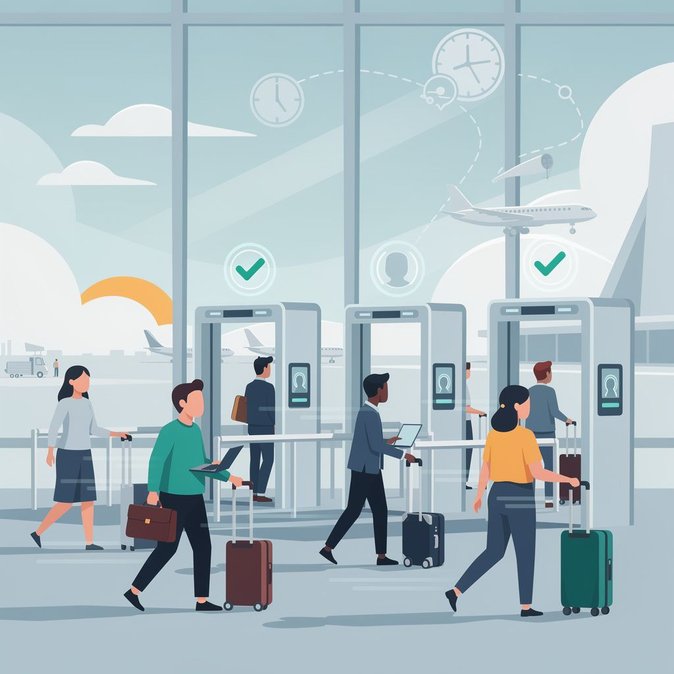
Dubai has published its mid-year border-control statistics – and they read like an airport operations manual from the future. According to figures released by the General Directorate of Residency and Foreigners Affairs (GDRFA) and reported by The Economic Times on 8 July 2026, more than 9.4 million passengers used the emirate’s fully automated Smart Travel ecosystem between 1 January and 30 June. Of those travellers, 9.02 million cleared immigration through the biometric Smart Gates and a further 439,000 enjoyed the premium ‘Travel Without Borders – Red Carpet’ service in business- and first-class zones.
For corporates or individuals who still need help securing the right UAE entry status before they can enjoy those lightning-fast Smart Gates, VisaHQ can cut through the paperwork. The company’s portal consolidates the latest visa requirements, offers digital application tools, and provides courier support, ensuring travelers arrive with approvals already in hand and fully able to capitalize on Dubai’s new high-speed border experience.
The numbers matter for global mobility managers because the technology is starting to eliminate the two traditional pain-points of international assignments – unpredictable border queues and document checks. GDRFA says it has cut the average passport-control transaction from 12.5 seconds to just 3.4 seconds, freeing up capacity during the UAE’s peak summer travel season and reducing the risk that connecting business travellers will miss onward flights from Dubai International (DXB) or Al Maktoum (DWC). Behind the speed is a layered set-up: facial-recognition cameras at the initial kiosk, an iris scan at the swing-gate, and AI decisioning software that cross-checks watch-lists faster than a human officer can swipe a passport. Passengers who pre-register their biometrics can walk straight through; those who have not enrolled can still use conventional counters, but GDRFA is urging corporates to add Smart-Gate registration to their pre-departure check-lists. The practical implications extend beyond leisure traffic. Multinational companies routing project teams through DXB can now budget tighter lay-over windows and book later hotel shuttles. Airlines, meanwhile, are adjusting rosters because crew immigration at dedicated smart gates is taking under 60 seconds per aircraft, shaving turnaround times. For relocation programmes, the message is clear: the UAE’s investment in border tech is translating directly into employee experience and duty-of-care dividends. Looking ahead, GDRFA officials say the ecosystem will be expanded to Terminal 2 and to Abu Dhabi’s new Zayed International Airport by early 2027. The authority also links the initiative to Dubai’s Economic Agenda D33, which aims to double the size of the emirate’s economy in ten years by attracting talent and investment – an objective that hinges on friction-free mobility.
For corporates or individuals who still need help securing the right UAE entry status before they can enjoy those lightning-fast Smart Gates, VisaHQ can cut through the paperwork. The company’s portal consolidates the latest visa requirements, offers digital application tools, and provides courier support, ensuring travelers arrive with approvals already in hand and fully able to capitalize on Dubai’s new high-speed border experience.
The numbers matter for global mobility managers because the technology is starting to eliminate the two traditional pain-points of international assignments – unpredictable border queues and document checks. GDRFA says it has cut the average passport-control transaction from 12.5 seconds to just 3.4 seconds, freeing up capacity during the UAE’s peak summer travel season and reducing the risk that connecting business travellers will miss onward flights from Dubai International (DXB) or Al Maktoum (DWC). Behind the speed is a layered set-up: facial-recognition cameras at the initial kiosk, an iris scan at the swing-gate, and AI decisioning software that cross-checks watch-lists faster than a human officer can swipe a passport. Passengers who pre-register their biometrics can walk straight through; those who have not enrolled can still use conventional counters, but GDRFA is urging corporates to add Smart-Gate registration to their pre-departure check-lists. The practical implications extend beyond leisure traffic. Multinational companies routing project teams through DXB can now budget tighter lay-over windows and book later hotel shuttles. Airlines, meanwhile, are adjusting rosters because crew immigration at dedicated smart gates is taking under 60 seconds per aircraft, shaving turnaround times. For relocation programmes, the message is clear: the UAE’s investment in border tech is translating directly into employee experience and duty-of-care dividends. Looking ahead, GDRFA officials say the ecosystem will be expanded to Terminal 2 and to Abu Dhabi’s new Zayed International Airport by early 2027. The authority also links the initiative to Dubai’s Economic Agenda D33, which aims to double the size of the emirate’s economy in ten years by attracting talent and investment – an objective that hinges on friction-free mobility.