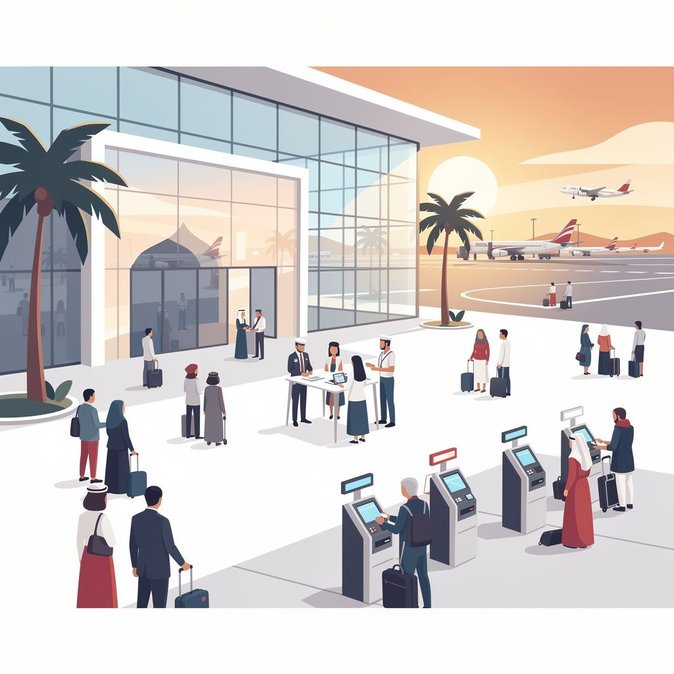
Dubai’s Immigration authorities have released new half-year data showing just how quickly the emirate’s airports are redefining border control. Between 1 January and 30 June 2026, 9,024,736 passengers completed formalities through the 120 biometric Smart Gates across Dubai International Airport (DXB) and Al Maktoum International, while a further 439,321 premium customers used the invitation-only “Travel Without Borders – Red Carpet” lane. Together, the two services processed 9,464,057 travellers — more than the entire population of the UAE — in an average of 3.4 seconds per person, slashing historical clearance times by 60 per cent. The Smart Gate ecosystem uses facial, iris and fingerprint recognition to match passengers against federal immigration databases without requiring passports or boarding passes. Lieutenant-General Mohammed Al Marri, Director-General of the General Directorate of Identity and Foreigners Affairs (GDRFA-Dubai), said the system now handles up to 10 passengers simultaneously, contributing to DXB’s ability to retain its crown as the world’s busiest hub for international traffic. Officials urged all eligible business visitors and residents to pre-register online before arriving in Dubai so that their first entry is as frictionless as onward journeys. Companies flying executives in for board meetings or conferences can also purchase the Red Carpet service, which offers kerb-side reception, lounge access and fast-track immigration for Dh525 per passenger — a perk increasingly bundled with premium-class tickets and hotel packages. For multinational mobility managers, the numbers confirm Dubai’s strategy of turning the border itself into a competitive advantage. Shorter queues translate directly into tighter meeting schedules, quicker aircraft turn-arounds and improved employee experience scores. At a macro level, analysts note that automated border clearance underpins the forthcoming GCC “Grand Tours” unified tourist visa by proving that the region can move high volumes securely while sharing data in real time.
Source: Gulf News