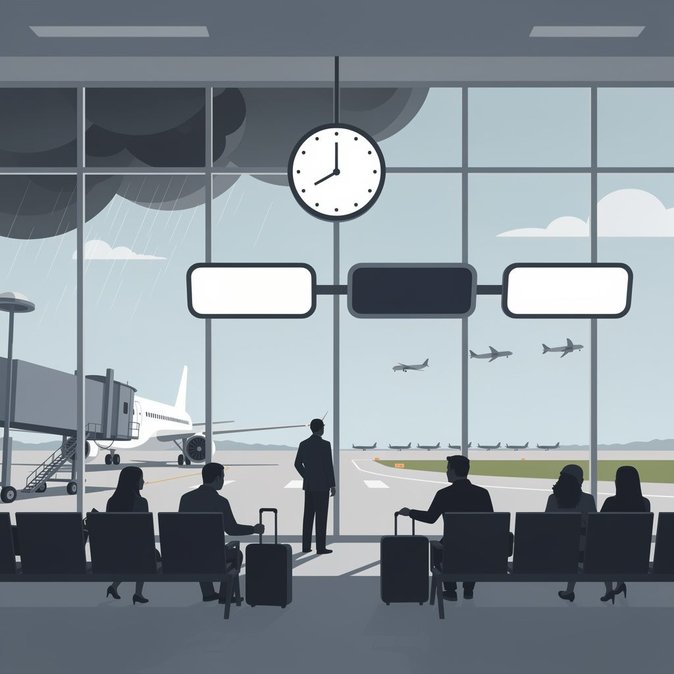
Passengers checking the departure boards at Zurich-Kloten on 8 July were greeted by a sea of yellow and red alerts. Industry monitor FlightAware counted 135 delayed departures and five outright cancellations between 06:00 and 12:00. The disruption hit a broad mix of carriers—Air Baltic, Austrian Airlines, British Airways and Qatar Airways among them—and rippled across connections to North America, Asia and the Middle East. Airport officials blamed a combination of morning thunderstorms over the Plateau and knock-on air-traffic-control flow restrictions in southern Germany. Because Zurich is both a gateway and a transfer hub for SWISS and Lufthansa Group partners, even short-haul holdups quickly cascade: a delayed A320 rotation to Frankfurt can strand onward passengers booked to São Paulo or Johannesburg. For corporate travel managers the glitch is a reminder that Europe’s summer schedule is operating with little slack. SWISS is already short of cockpit crew—one reason it scrapped more than 300 flights from the July–August roster—and Skyguide, Switzerland’s air-navigation provider, is nursing radar-software issues that forced a partial shutdown only two weeks ago. Add active thunder-cell systems and the prospect of French ATC strikes, and Zurich’s on-time performance can swing from 85 % to barely 60 % in a matter of hours. Under EU Regulation 261, travellers whose flights departed more than three hours late may be entitled to compensation of up to €600, provided the delay is not solely weather-related. Mobility heads should therefore encourage employees to keep boarding passes and request written cause codes from gate agents. Where delays stem from crew or technical shortages, airlines remain liable for meals and, if necessary, hotel accommodation. Practical tips: advise staff to book the first flight of the day where possible, maintain at least three-hour connection buffers, and register for airline apps that push real-time gate changes. Zurich Airport’s own app now offers predictive security-queue wait times—a useful tool when re-routing travellers at short notice.
Source: Travel and Tour World