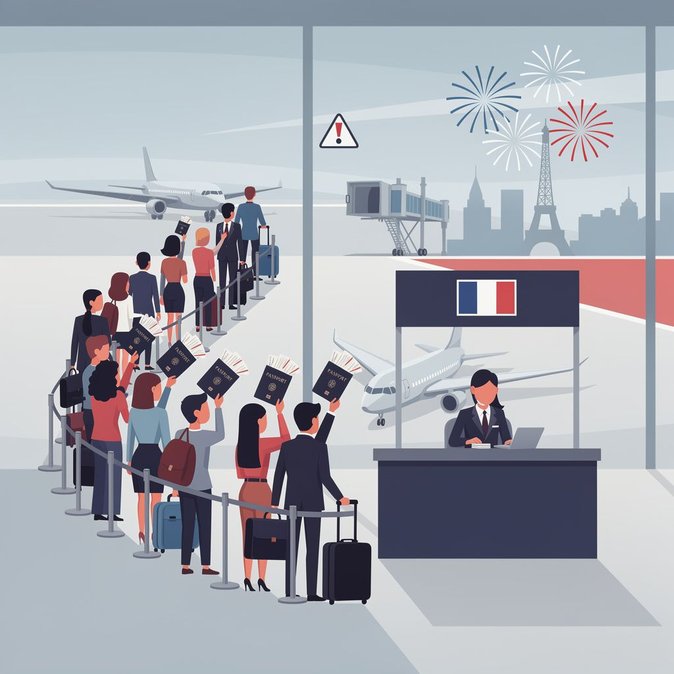
Less than three months after the EU’s Entry/Exit System (EES) went live, Brussels is conceding that the second pillar of its new border architecture—the European Travel Information and Authorisation System (ETIAS)—will not be ready for the planned Q4 2026 start-date. Officials speaking to the Financial Times confirmed the delay late on 7 July; Euronews, The Points Guy and several travel industry outlets carried the story on 8 July. EES, which requires first-time non-EU entrants to give fingerprints and facial images on arrival, caused four-hour queues at peak times in Paris-CDG, Madrid-Barajas and Frankfurt in June. With biometric kiosks still missing at many land crossings, the Council’s working group concluded that rolling out ETIAS—a €20 pre-travel clearance modelled on the US ESTA—would overwhelm border forces during the 2026-holiday surge. For France, the delay means airlines, ferry operators and rail carriers have thirteen extra months before they must verify that UK, US, Canadian and other visa-exempt passengers hold an approved ETIAS. Tour operators selling 2026 packages can drop the €20 fee from pricing assumptions, while corporate-travel managers gain breathing space to adapt booking workflows and traveller-tracking tools. The Commission insists ETIAS will still open for voluntary applications in mid-2027, after additional testing with the aviation sector. In the meantime, EES teething troubles are expected to continue; the interior ministry told French media it is fast-tracking 300 extra Auxiliaires de Vacances (temporary passport officers) for CDG and Orly from 15 July.