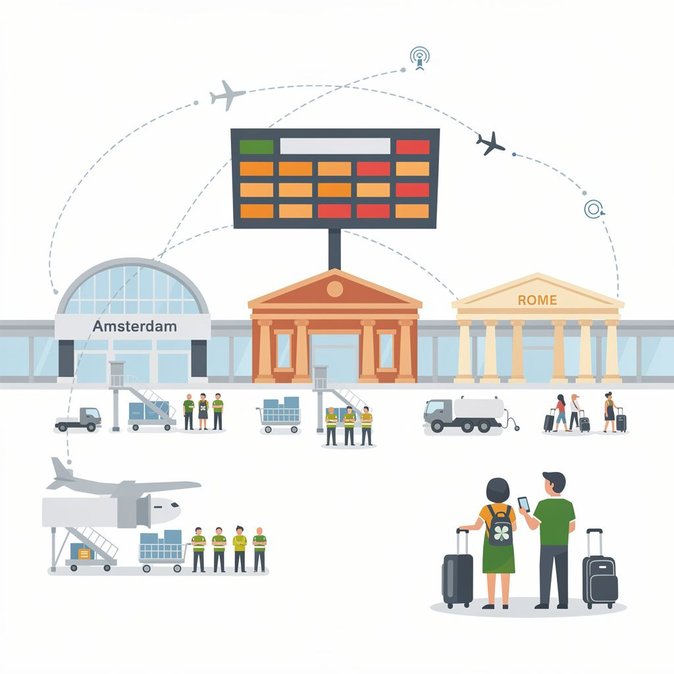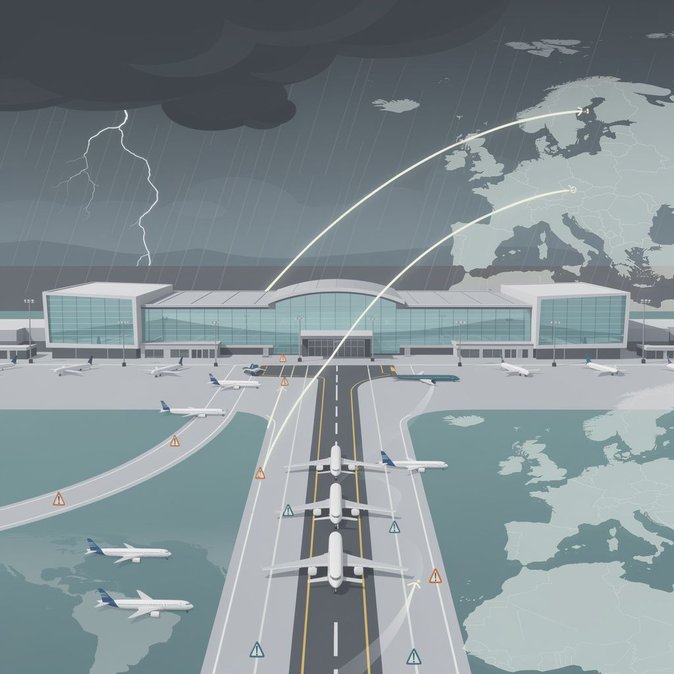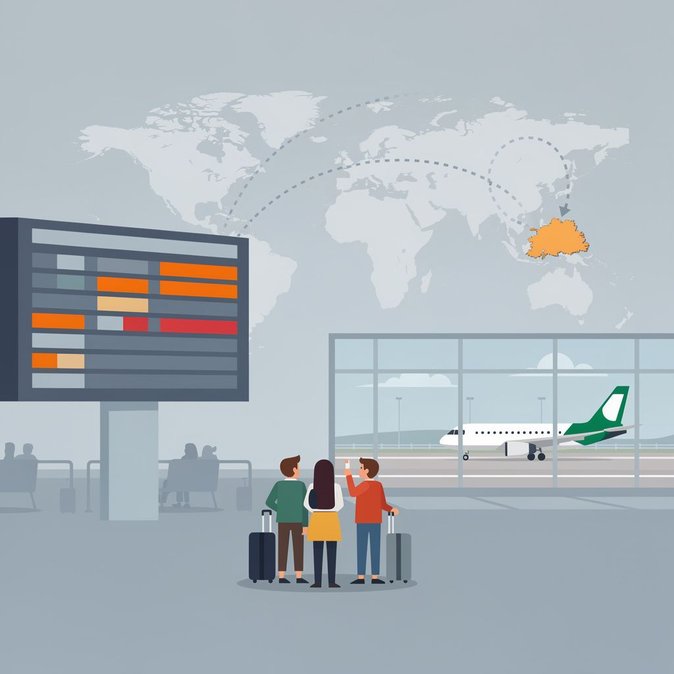
Business travellers connecting between New England and Ireland faced a rough day on 8 July when Bradley International Airport (BDL) in Connecticut logged five cancellations and 24 delays. Data published by Nomad Lawyer shows Aer Lingus’ daily EI 132/133 Dublin rotation suffered a 100 percent delay rate, missing its departure slot by more than two hours. Because Bradley hosts only one trans-atlantic frequency, the slip had disproportionate consequences: passengers arriving in Dublin after noon lost same-day onward connections to mainland Europe and had to be rebooked or accommodated overnight.
For travellers suddenly needing to rearrange itineraries or extend their stay in Ireland, VisaHQ can smooth the paperwork side of the ordeal. Its dedicated Ireland page lets business passengers organise visas, passport renewals and other consular services online, often in one business day, ensuring documentation keeps pace with fast-changing flight schedules.
U.S. exporters of premium seafood – a high-value cargo regularly shipped on the route – also reported spoilage-risk concerns. Operational analysts say secondary airports like BDL are especially vulnerable when crew shortages or thunderstorms ripple through the wider U.S. system. Airlines typically station no spare aircraft at such out-stations, so a late inbound immediately cascades into the outbound schedule. For Irish corporates with sizeable footprints in New England’s pharma and fintech clusters, the advice is to pad itineraries or consider Boston Logan as a backup. Aer Lingus told clients it expects the service to operate on time on 9 July, but warned that any further ATC flow restrictions along the Eastern Seaboard could revive delays. The incident illustrates the interconnected nature of global mobility: disruption thousands of kilometres away can strand executives arriving into Ireland, affecting meeting schedules, project roll-outs and supply-chain synchronisation.
For travellers suddenly needing to rearrange itineraries or extend their stay in Ireland, VisaHQ can smooth the paperwork side of the ordeal. Its dedicated Ireland page lets business passengers organise visas, passport renewals and other consular services online, often in one business day, ensuring documentation keeps pace with fast-changing flight schedules.
U.S. exporters of premium seafood – a high-value cargo regularly shipped on the route – also reported spoilage-risk concerns. Operational analysts say secondary airports like BDL are especially vulnerable when crew shortages or thunderstorms ripple through the wider U.S. system. Airlines typically station no spare aircraft at such out-stations, so a late inbound immediately cascades into the outbound schedule. For Irish corporates with sizeable footprints in New England’s pharma and fintech clusters, the advice is to pad itineraries or consider Boston Logan as a backup. Aer Lingus told clients it expects the service to operate on time on 9 July, but warned that any further ATC flow restrictions along the Eastern Seaboard could revive delays. The incident illustrates the interconnected nature of global mobility: disruption thousands of kilometres away can strand executives arriving into Ireland, affecting meeting schedules, project roll-outs and supply-chain synchronisation.