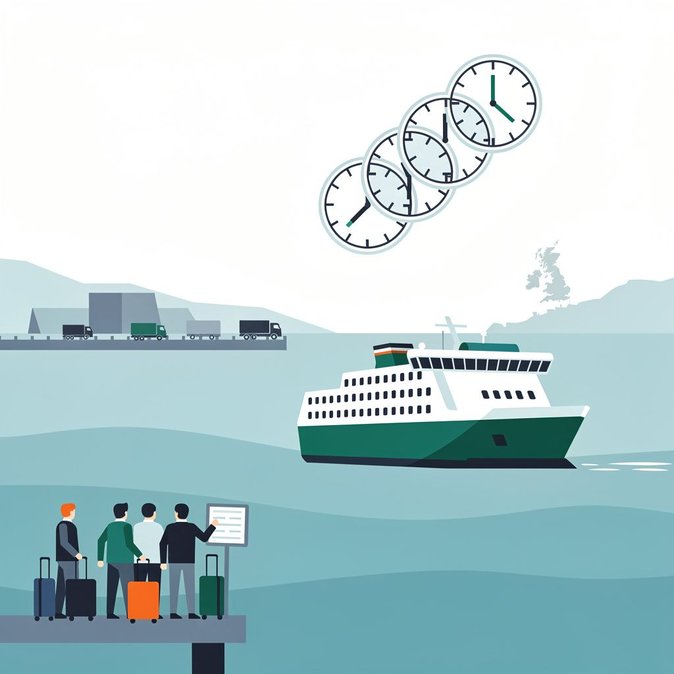
Irish Ferries issued an urgent sailing bulletin on 8 July advising passengers that eight Dublin–Holyhead and Holyhead–Dublin crossings would depart up to 45 minutes earlier than timetabled. The company cited ‘operational reasons’, understood to include tidal constraints in the Irish Sea and an unscheduled technical inspection of the flagship Ulysses. For commuters in the thriving Ireland-U.K. SailRail market and for logistics firms running just-in-time supply chains, the short-notice retiming created headaches. Several freight forwarders had to re-slot time-sensitive perishable loads and reorganise driver rest schedules to stay within EU tachograph rules. Irish Rail reported a spike in calls to its SailRail helpline from passengers worried about missed train connections onward to London, Manchester and Birmingham. The episode exposes the narrow timetable resilience on the principal East-West sea corridor. With aircraft belly-hold capacity constrained by the carbon cap on Dublin Airport, shippers have increasingly pivoted to ferry routes for time-critical e-commerce and pharmaceutical consignments. Industry associations are urging the Department of Transport to accelerate consultations on a ‘green lane’ pilot at Dublin Port that would allow authorised shippers to board the next available sailing when delays or early departures occur. Mobility managers should alert travelling employees to monitor Irish Ferries’ sailing-updates page and allow at least 60 minutes check-in buffer during the peak summer season. Where meetings in the U.K. cannot be flexed, contingency options include the Rosslare–Fishguard route or regional flights from Cork, though both involve longer surface legs. Irish Ferries says the affected services will revert to the normal timetable from 9 July once Ulysses returns to full rotation, but it has not ruled out further adjustments if prevailing southerlies intensify later in the week.
Source: Irish Ferries – Sailing Updates