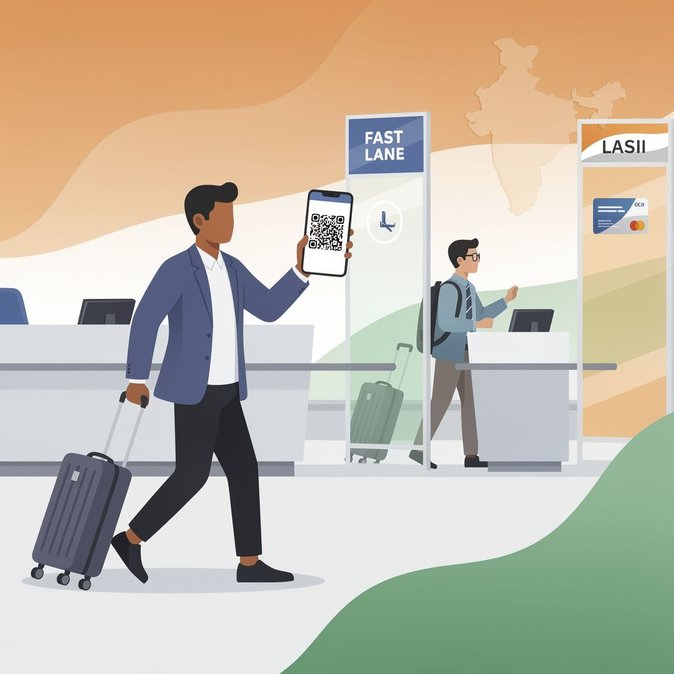
India’s push to decentralise international air gateways gathered pace on 8 July 2026 after Union Home Minister Amit Shah directed that full-service immigration counters be activated at Noida’s upcoming Jewar International Airport and the expanded Maharaja Bir Bikram Airport in Agartala. Reviewing passenger-flow bottlenecks with the Civil Aviation ministry, Shah said both airports must be ready for foreign arrivals well before their commercial opening dates so that carriers can file schedules and market new routes with confidence. Jewar—officially renamed Noida International Airport—is touted as the National Capital Region’s second hub and is expected to siphon off point-to-point traffic from Delhi. The absence of an approved immigration check-post has been a sticking point in bilateral air-services talks; Thursday’s directive removes that uncertainty. In the northeast, Agartala’s new terminal was inaugurated last year but has been handling only domestic flights pending immigration clearance; its upgrade will give India Inc quicker access to Bangladesh and Southeast Asia. Shah also unveiled an aggressive two-year timeline to modernise 62 existing airports with automated tray-return X-ray systems, additional aerobridges and, critically, dedicated Fast-Track Immigration – Trusted Traveller Programme (FTI-TTP) lanes. Airlines will be asked to push WhatsApp enrolment links to passengers at the time of ticket purchase—a sign the government wants the FTI-TTP operational before the 2027 tourism season. In parallel, the Home Ministry ordered that Foreigners Regional Registration Offices (FRROs) be established in every state capital by 2027. This will spare intra-country assignees the need to travel to metropolitan cities for residence permit extensions. Employers of foreign experts in Tier-2 manufacturing clusters welcomed the move, noting that ‘time off the factory floor’ currently costs millions in lost productivity. Taken together, the announcements signal a shift from ad-hoc airport upgrades to a centrally coordinated passenger-experience blueprint—one that relies heavily on automation and digital pre-clearance. For businesses mapping expansion strategies beyond India’s metros, the prospect of true international gateways in emerging economic zones could be a game-changer.
Source: The Economic Times