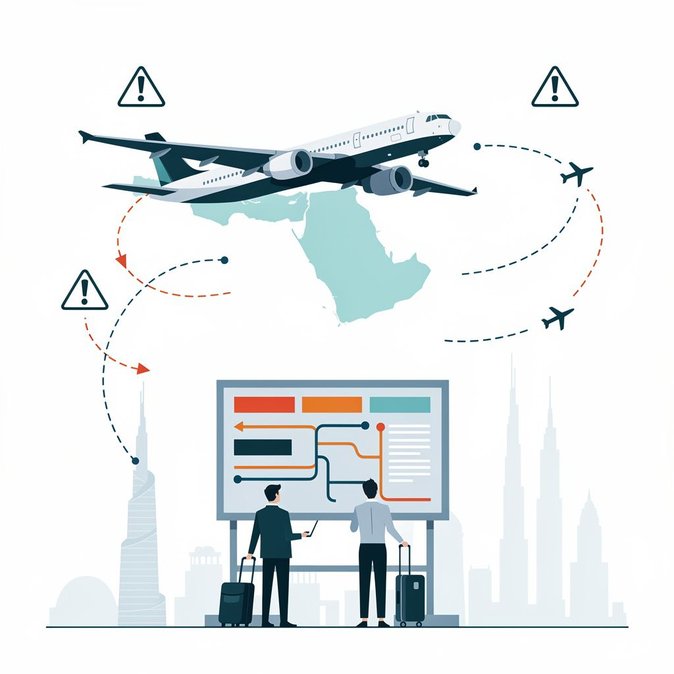
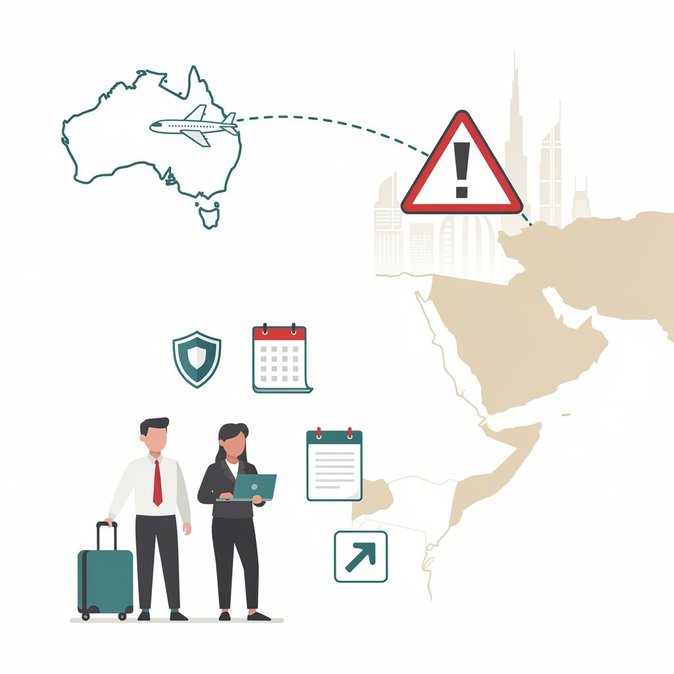
Australia’s Department of Foreign Affairs and Trade (DFAT) updated its Smartraveller advice for the United Arab Emirates on 9 July 2026, keeping the overall level at “Reconsider your need to travel” but adding new detail on flight disruption risks and shelter-in-place guidance. The refreshed notice highlights that military action linked to the wider Middle-East conflict could trigger sudden closures of UAE airspace. Travellers are urged to keep flexible bookings, purchase insurance that covers conflict-related disruption and monitor airline channels for last-minute schedule changes.
If your organisation is rearranging travel documentation amid such volatility, VisaHQ can streamline the paperwork. The platform’s dedicated United Arab Emirates portal lets travellers and programme managers verify entry requirements in real time, submit e-visas, and receive status alerts, reducing the administrative burden while you focus on contingency planning.
DFAT explicitly names Dubai International and Abu Dhabi International airports as facilities that could be affected with little warning, a reminder that business itineraries through the Gulf’s two busiest hubs remain vulnerable. Beyond aviation, the advisory underlines heightened terrorism and civil-unrest risks, advising visitors to avoid large gatherings and venues popular with expatriates. Companies with regional mobile workforces are encouraged to review emergency communication trees and ensure that employees know hotel refuge areas or other hardened shelters. Global mobility managers moving staff into or through the Emirates should therefore: (1) keep duplicate routing options via Doha or Muscat, (2) confirm that assignment contracts include evacuation coverage, and (3) brief travelling executives on the UAE’s strict cyber-crime and social-media laws, which remain fully enforceable even during crises. The update reinforces the importance of pairing the UAE’s attractive visa regimes with robust duty-of-care planning.
If your organisation is rearranging travel documentation amid such volatility, VisaHQ can streamline the paperwork. The platform’s dedicated United Arab Emirates portal lets travellers and programme managers verify entry requirements in real time, submit e-visas, and receive status alerts, reducing the administrative burden while you focus on contingency planning.
DFAT explicitly names Dubai International and Abu Dhabi International airports as facilities that could be affected with little warning, a reminder that business itineraries through the Gulf’s two busiest hubs remain vulnerable. Beyond aviation, the advisory underlines heightened terrorism and civil-unrest risks, advising visitors to avoid large gatherings and venues popular with expatriates. Companies with regional mobile workforces are encouraged to review emergency communication trees and ensure that employees know hotel refuge areas or other hardened shelters. Global mobility managers moving staff into or through the Emirates should therefore: (1) keep duplicate routing options via Doha or Muscat, (2) confirm that assignment contracts include evacuation coverage, and (3) brief travelling executives on the UAE’s strict cyber-crime and social-media laws, which remain fully enforceable even during crises. The update reinforces the importance of pairing the UAE’s attractive visa regimes with robust duty-of-care planning.