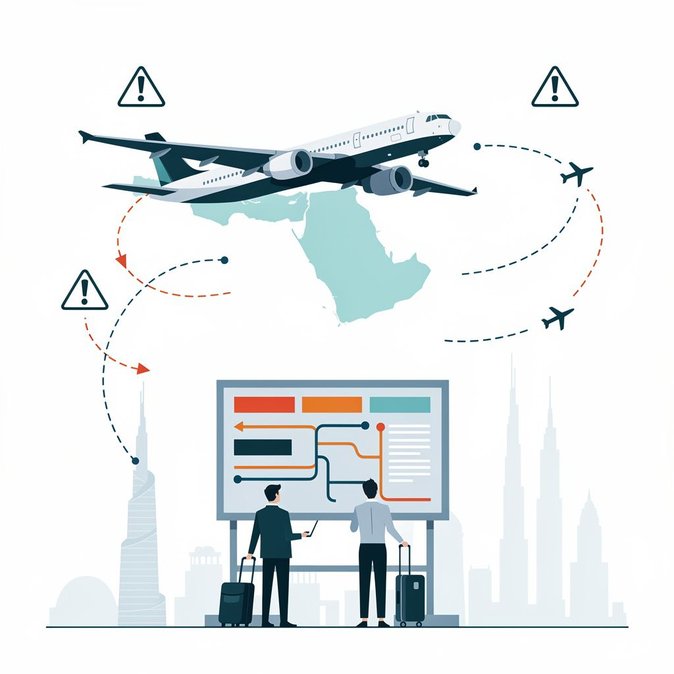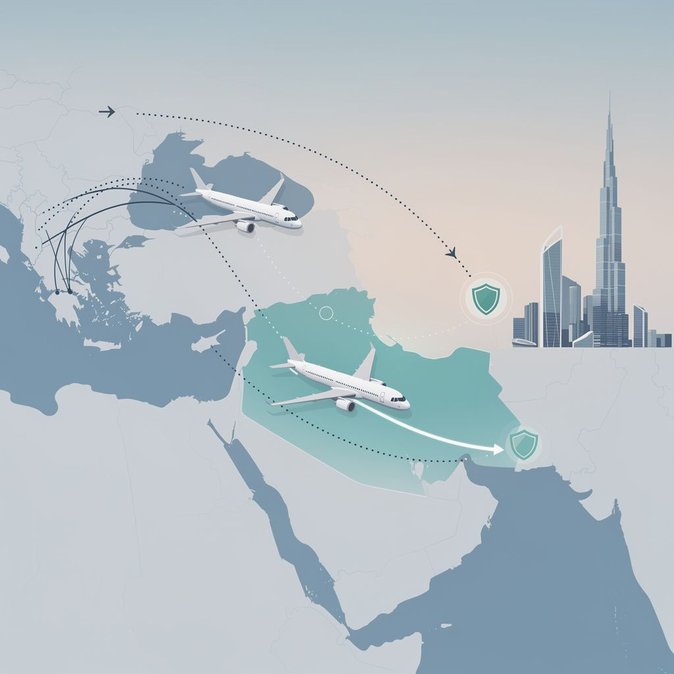
The European Union Aviation Safety Agency (EASA) has withdrawn its Conflict Zone Information Bulletin (CZIB) covering the entire Middle East and Persian Gulf after determining that the broad-based warning no longer reflects current threat levels. In its place, the regulator on 8 July 2026 issued a more granular Information Note that assigns only a “medium” residual risk rating to most FIRs in the region—including the United Arab Emirates—while maintaining separate high-risk CZIBs for the airspaces of Iran, Iraq and Lebanon. According to EASA, the decision followed consultations with the European Commission, EU member states and industry experts in the Integrated EU Aviation Security Risk Assessment Group. Recent cease-fire agreements and a marked reduction in cross-border missile activity were cited as factors enabling the downgrade. The dedicated Information Note clarifies that Emirati airspace is no longer subject to blanket conflict-zone advisories, although operators must continue to conduct route-specific risk assessments and maintain the ability to divert if regional tensions flare up again. For Emirates, Etihad and flydubai, the change removes an operational irritant that had required extra crew briefings and heightened insurance notifications on every sector to Europe. Global carriers such as Lufthansa, Air France–KLM and BA, which had introduced higher fuel contingencies and off-routing around parts of the Gulf, can now consider resuming the most direct routings into Dubai and Abu Dhabi, saving up to 15 minutes of block time on Europe-bound flights. Aviation brokers say war-risk insurance premiums for lay-overs in UAE hubs could fall by 5-10 per cent over the next renewal cycle if the lower threat rating holds. Corporate travel managers are being advised to keep monitoring NOTAMs and security briefings because Iran, Iraq and Lebanon remain high-risk zones. Travellers whose itineraries include multiple GCC states should also note that Saudi and Kuwaiti airspace still carry ‘medium’ advisories. Nevertheless, the EASA move is a vote of confidence in the UAE’s air-defence shielding and will be welcomed by multinational companies that rely on just-in-time connections through Dubai International (DXB) and Abu Dhabi’s Zayed International Airport. Practical tip: Airlines may take several weeks to recalibrate flight plans and insurance documentation, so travellers should continue to build in buffer time for the remainder of July. Those shipping high-value or time-critical cargo should liaise with freight forwarders to see whether routings and surcharges are being adjusted downward in light of the revised security assessment.