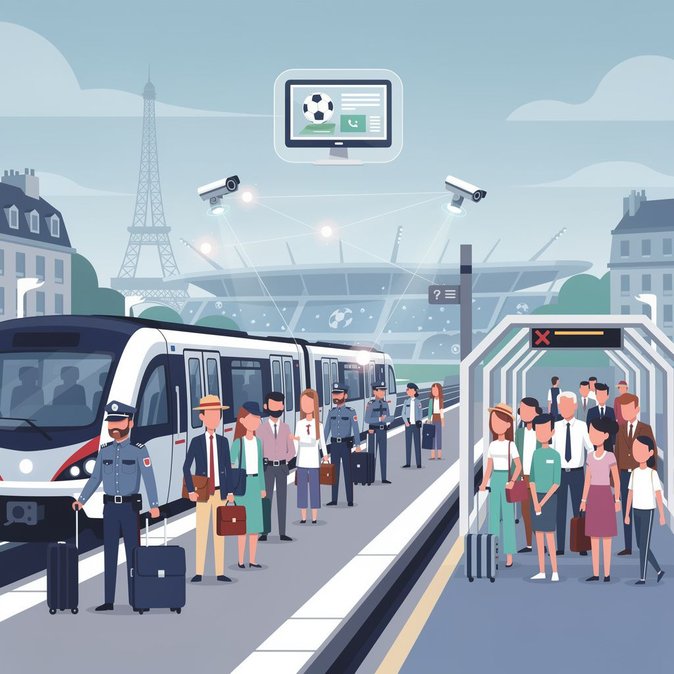
Transport Minister Philippe Tabarot and Paris Police Prefect Laurent Nuñez unveiled on 9 July an ambitious security plan covering the capital’s 400-plus metro, RER and bus stations. With France hosting record visitor numbers for the World Cup quarter-finals and a packed festival calendar, authorities fear a spike in pick-pocketing, ticket fraud and crowd-related incidents. The plan deploys 1,200 additional plain-clothes officers during peak evening hours, backed by rapid-response units stationed at Châtelet-les-Halles, Gare de Lyon and La Défense.
Before even stepping onto Paris’s upgraded transport network, international visitors will want their paperwork in perfect order. VisaHQ can streamline the entire Schengen visa process for France—offering digital document checks, courier pickup and real-time status alerts—so travellers spend less time on bureaucracy and more time enjoying the city’s sights. Find out more at
State-of-the-art AI video analytics, previously tested during the 2024 Olympics, will flag abandoned luggage and suspicious behaviour in real time; alerts will feed into a newly-built joint command centre linking RATP, SNCF and National Police databases. For international travellers, the most visible change will be ‘Fast-Track Tourist Corridors’ at Charles-de-Gaulle and Orly stations, allowing holders of contactless Navigo Easy passes or NFC-enabled passports to clear the gates without stopping at kiosks. Corporate mobility managers can pre-enrol visiting staff via a secure API, receiving aggregated footfall data to optimise journey planning. The Interior Ministry has also revived multilingual ‘Transit Angels’—roaming stewards fluent in six languages—to assist with way-finding and discourage unlicensed taxi touts that proliferate during big sporting events. A pilot at Gare du Nord last month reduced passenger complaints by 38 %. While business and tourist lobbies welcomed the initiative, digital-rights groups warned about proportionality and data retention rules around live facial recognition. Officials said all analytics are anonymised and stored for no more than 30 days unless flagged for judicial follow-up.

Before even stepping onto Paris’s upgraded transport network, international visitors will want their paperwork in perfect order. VisaHQ can streamline the entire Schengen visa process for France—offering digital document checks, courier pickup and real-time status alerts—so travellers spend less time on bureaucracy and more time enjoying the city’s sights. Find out more at
State-of-the-art AI video analytics, previously tested during the 2024 Olympics, will flag abandoned luggage and suspicious behaviour in real time; alerts will feed into a newly-built joint command centre linking RATP, SNCF and National Police databases. For international travellers, the most visible change will be ‘Fast-Track Tourist Corridors’ at Charles-de-Gaulle and Orly stations, allowing holders of contactless Navigo Easy passes or NFC-enabled passports to clear the gates without stopping at kiosks. Corporate mobility managers can pre-enrol visiting staff via a secure API, receiving aggregated footfall data to optimise journey planning. The Interior Ministry has also revived multilingual ‘Transit Angels’—roaming stewards fluent in six languages—to assist with way-finding and discourage unlicensed taxi touts that proliferate during big sporting events. A pilot at Gare du Nord last month reduced passenger complaints by 38 %. While business and tourist lobbies welcomed the initiative, digital-rights groups warned about proportionality and data retention rules around live facial recognition. Officials said all analytics are anonymised and stored for no more than 30 days unless flagged for judicial follow-up.