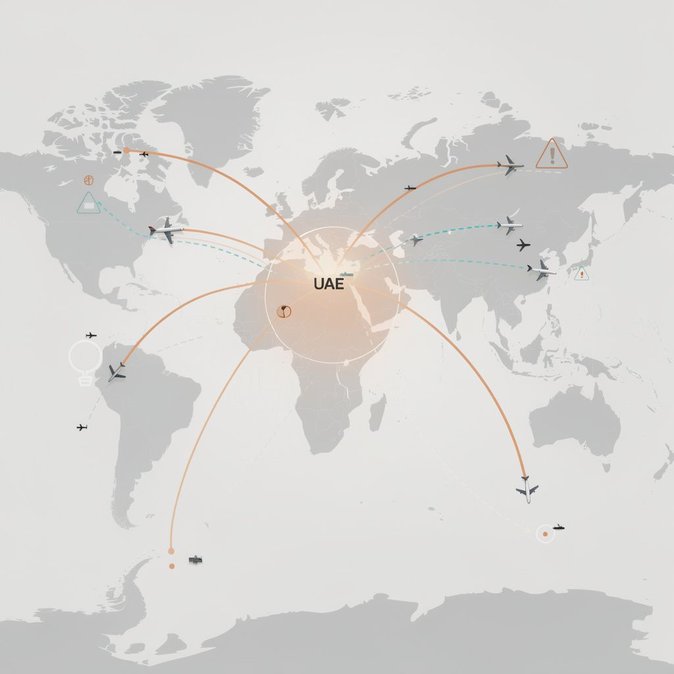
Condé Nast Traveller Middle East released an extensive “flight-disruption tracker” on 10 July 2026 after a fresh spike in US-Iran hostilities triggered missile activity around the Strait of Hormuz. The report compiles the latest operational status of 15 major carriers serving Dubai and Abu Dhabi. Emirates is flying to 96 % of its pre-war network but urges passengers to re-check status even after online check-in, while British Airways, KLM and Singapore Airlines continue suspensions until late summer. Flydubai warns that rerouted corridors are lengthening flight times and crowding peak-hour slots. Aviation authorities confirm that UAE air-space remains open under heightened surveillance. Dubai Airports expects more than 200,000 daily passengers between 2 and 12 July and recommends arriving three hours before departure. For mobility programmes, the key take-aways are: • Expect limited premium-class inventory on Europe and US routes as capacity remains 10–25 % below 2023 levels. • Build buffer days into assignment-start dates. • Advise travellers to monitor corporate security apps for rapid air-space notices. Why it matters: The Gulf’s role as a global connection hub means any Middle-East flare-up reverberates through corporate travel worldwide. Centralised, regularly updated disruption dashboards help mobility managers make real-time routing decisions and keep relocating staff informed.
Source: Condé Nast Traveller Middle East