
The United Nations High Commissioner for Refugees (UNHCR) updated its Brazil help-site on July 10 with an important notice for Haitians planning to migrate. Since December 2025, issuance of Brazil’s humanitarian visa for Haitian nationals is contingent on so-called “community sponsorship.” Applicants must now present evidence that a church, NGO or private sponsor in Brazil can provide accommodation and initial support. According to the Federal Police, the requirement was introduced after a 58 percent surge in irregular crossings at the northern border last year strained local shelters. No organisation has yet been officially accredited as a sponsor, leaving prospective migrants in limbo. The Ministries of Justice and Foreign Affairs are drafting an ordinance, expected in August, that will spell out accreditation criteria such as financial guarantees and integration programs. Until then, humanitarian-visa slots at Brazilian consulates in Port-au-Prince and Santo Domingo remain suspended. By contrast, the electronic family-reunion visa—available to spouses, children and parents of Haitians already holding Brazilian residence—remains fully digital, fee-free and valid through 30 June 2026. Applicants upload scans of passports, photos and (for minors) parental authorisation; approvals are delivered via QR code within ten days, a process praised by mobility specialists as “a model of low-cost, high-volume processing.” Holders must still register with the Federal Police within 90 days of arrival to obtain a Carteira de Registro Nacional Migratório. For global-mobility and refugee-support NGOs the message is two-fold: manage expectations of would-be humanitarian entrants and pivot resources toward helping accredited sponsors meet forthcoming compliance benchmarks. Multinational companies that employ Haitian talent under Brazil’s digital-nomad or work-permit categories should also monitor the sponsorship ordinance, as it may become a template for other humanitarian caseloads such as Afghans and Venezuelans. Brazil hosts an estimated 143,000 Haitians, many of whom arrived after the 2010 earthquake under an earlier humanitarian programme. The new restrictions signal Brasília’s attempt to balance humanitarian commitments with mounting local-integration costs—an issue resonating in the run-up to municipal elections this October.
Source: UNHCR Brazil (ACNUR)
How VisaHQ can help
VisaHQ simplifies the visa application process for individuals and businesses. Check current travel requirements, prepare the required documents and manage your application online through the VisaHQ Brazil portal.More From Brazil
View all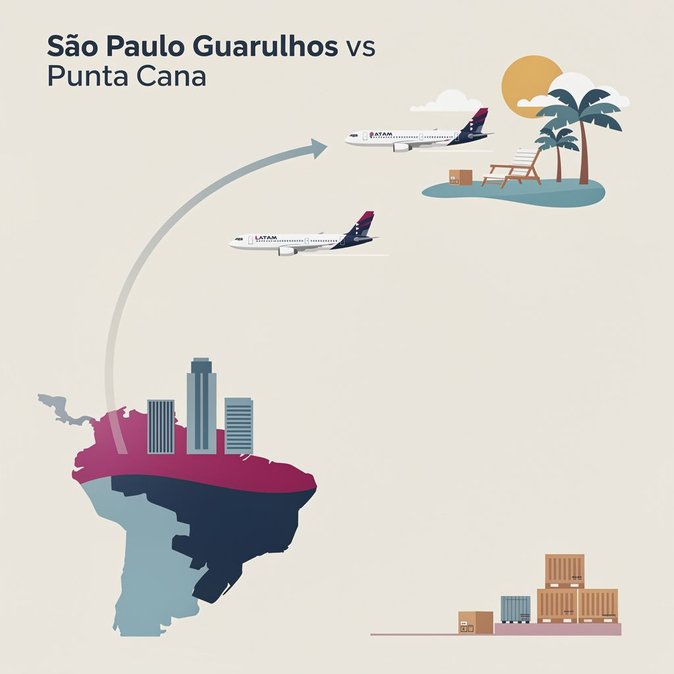
LATAM Adds Five-Weekly São Paulo–Punta Cana Flights Ahead of Peak Leisure Season

Brazil’s ANAC Makes Adjacent Seating for Children Under 16 Mandatory and Free on All Domestic and International Flights