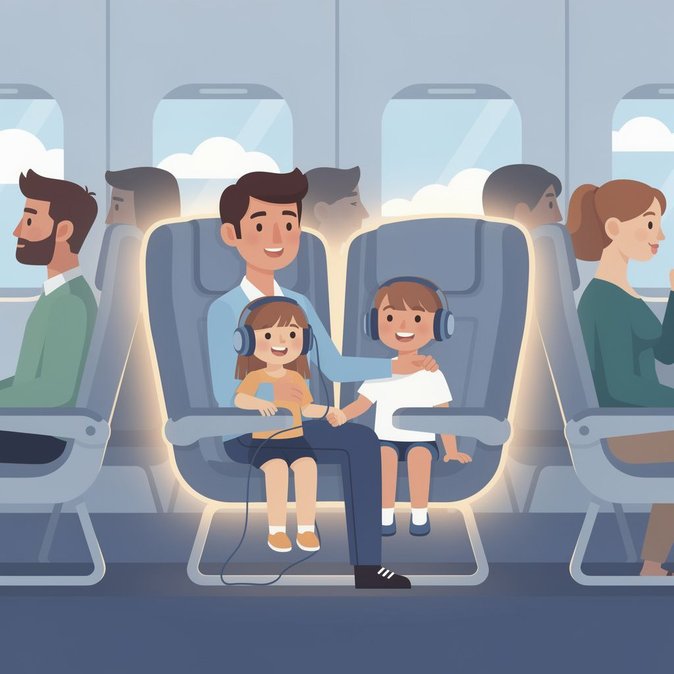
Brazilian families—and the thousands of expatriates and business travelers who fly within Brazil every week—will no longer have to pay to keep their children close during a flight. On July 8, the National Civil Aviation Agency (ANAC) published Resolution 807/2026 in the Federal Gazette and, little more than 24 hours later, the rule is in force. Airlines must now allocate seats side-by-side for passengers under 16 and at least one accompanying adult at the moment the ticket is issued, without charging the seat-selection fee that has become common since Brazil deregulated ancillary pricing in 2017. The measure grew out of a class-action lawsuit filed by consumer-rights groups in 2019; in May this year the 8th Federal Court of Brasília ordered ANAC to introduce safeguards “with immediate effect.” The agency consulted carriers and airports before opting for a nationwide rule rather than case-by-case enforcement. ANAC president Tiago Chagas Faierstein stressed that “the economic freedom of airlines ends where the fundamental right to family integrity and child protection begins.” Operationally, the obligation is minor—global distribution systems already allow seat blocking—but the financial impact could be significant for low-cost carriers that rely on seat-selection revenue. Brazil’s three largest airlines (GOL, LATAM Brasil and Azul) told Agência Brasil they expect a hit of R$150–170 million (US$27–30 million) a year in lost fees but support the rule to avoid reputational damage. Carriers that fail to comply face administrative fines under Resolution 762/2024 that start at R$10,000 per passenger. For corporate mobility managers the practical advice is simple: check that travel-booking tools are passing the age of the traveler; if a child’s date of birth is missing, the system may default to a paid seat map and generate an avoidable expense. Multinational firms should also update Brazil travel policies to reflect the new entitlement so employees do not pay out-of-pocket and later seek reimbursement. Finally, expatriates relocating with school-age children should note that the rule applies to inbound and outbound international segments operated by Brazilian or foreign carriers as long as the ticket is issued in Brazil. The resolution enters Brazil’s growing catalogue of passenger-protection norms—such as the 2019 “12-hour meal” rule for flight delays—that sometimes exceed standards in North America or Europe. Observers see it as part of a broader consumer-rights wave ahead of Brazil’s October 2026 general election, where air-travel costs have become a campaign talking point.
Source: Agência Brasil