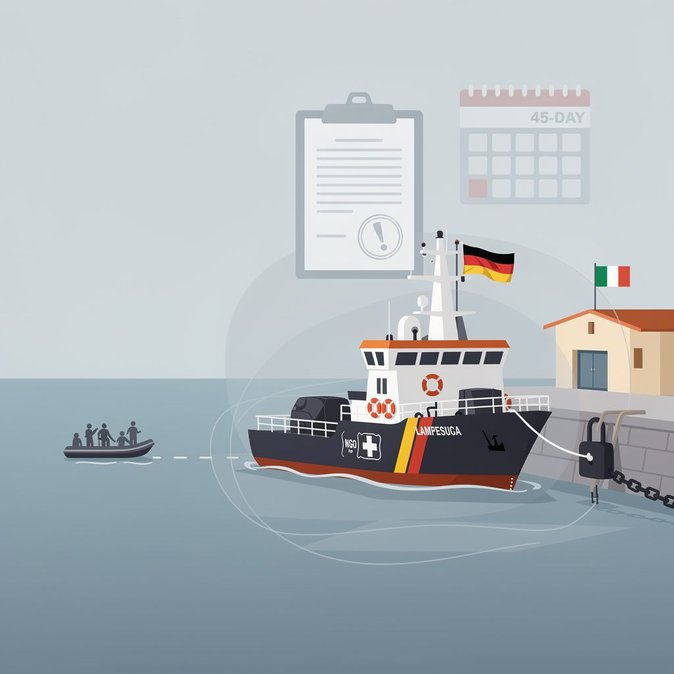
Italian maritime authorities have imposed a 45-day administrative detention and a €10,000 fine on the German-flagged rescue vessel Trotamar III following the disembarkation of 25 migrants in Lampedusa on 9 July. Officials allege the crew failed to relay real-time coordinates and medical information to the Maritime Rescue Coordination Centre, as required by Decree-Law 15/2026 that tightens operational rules for NGO ships.
For organisations and individuals navigating Italy’s evolving compliance landscape—whether in humanitarian work, shipping or routine business travel—VisaHQ can streamline the paperwork. Its dedicated Italy hub offers fast visa processing, passport renewal assistance and customised alerts, helping crews and corporate mobility teams keep voyages on schedule and avoid administrative penalties.
The sanction is the first high-profile application of the new decree’s Article 12-bis, which empowers port captains to levy on-the-spot fines and immobilise vessels for procedural breaches. Human-rights groups say the measure effectively curtails life-saving activities in the central Mediterranean; the Interior Ministry argues it brings “order and accountability” to a previously opaque sector. For global-mobility programmes, the case signals a stricter enforcement environment that could extend to commercial shipping and private-yacht operations, especially regarding advance passenger and crew manifests. Companies moving staff by sea—such as offshore-energy contractors or luxury-cruise operators—should review compliance protocols and communication channels with MRCC Rome. Politically, the detention may play into Italy’s ongoing negotiations with Tunisia and Libya on joint patrols and returns, and it dovetails with the EU’s freshly enacted Migration & Asylum Pact, which emphasises rapid border procedures and responsibility sharing. A hearing at the Civil Court of Palermo is expected next week after the NGO filed an urgent appeal. Should the sanction be upheld, Trotamar’s operator faces additional costs for crew accommodation and charter-party penalties, and insurers may reassess risk premiums for NGO fleets operating under similar mandates.
For organisations and individuals navigating Italy’s evolving compliance landscape—whether in humanitarian work, shipping or routine business travel—VisaHQ can streamline the paperwork. Its dedicated Italy hub offers fast visa processing, passport renewal assistance and customised alerts, helping crews and corporate mobility teams keep voyages on schedule and avoid administrative penalties.
The sanction is the first high-profile application of the new decree’s Article 12-bis, which empowers port captains to levy on-the-spot fines and immobilise vessels for procedural breaches. Human-rights groups say the measure effectively curtails life-saving activities in the central Mediterranean; the Interior Ministry argues it brings “order and accountability” to a previously opaque sector. For global-mobility programmes, the case signals a stricter enforcement environment that could extend to commercial shipping and private-yacht operations, especially regarding advance passenger and crew manifests. Companies moving staff by sea—such as offshore-energy contractors or luxury-cruise operators—should review compliance protocols and communication channels with MRCC Rome. Politically, the detention may play into Italy’s ongoing negotiations with Tunisia and Libya on joint patrols and returns, and it dovetails with the EU’s freshly enacted Migration & Asylum Pact, which emphasises rapid border procedures and responsibility sharing. A hearing at the Civil Court of Palermo is expected next week after the NGO filed an urgent appeal. Should the sanction be upheld, Trotamar’s operator faces additional costs for crew accommodation and charter-party penalties, and insurers may reassess risk premiums for NGO fleets operating under similar mandates.