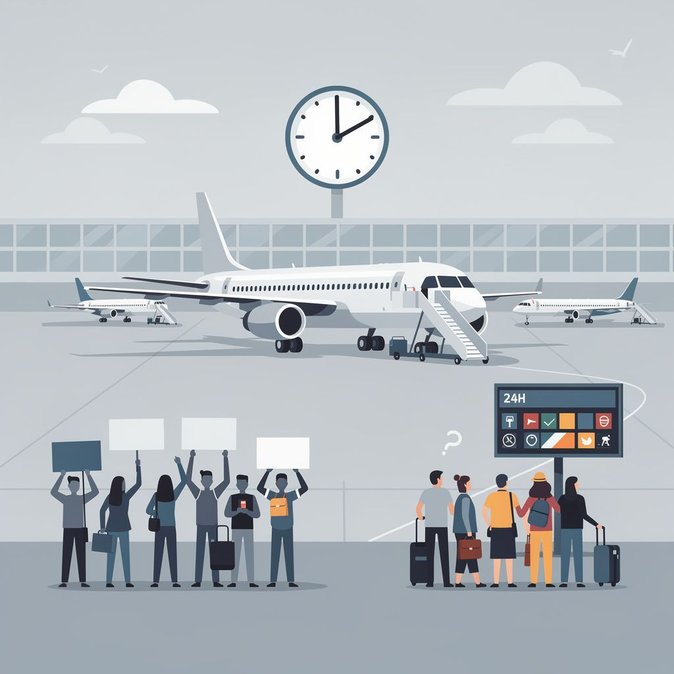
Italy’s summer travel season was jolted on 9 July when thousands of airport and airline employees walked out for 24 hours, paralysing operations at major hubs from Milan-Malpensa and Rome-Fiumicino to Catania. Cabin-crew, ground-handling agents, security screeners and air-traffic controllers belonging to several unions—including CUB Trasporti, UILTrasporti and UNICA—took coordinated action over stalled contract talks on pay, scheduling and staffing levels. By mid-afternoon more than 450 flights had been cancelled and many others delayed, forcing carriers such as easyJet, Ryanair, Lufthansa and ITA Airways to re-book or refund passengers. Business travellers reported missed client meetings and lost connections, while cargo handlers warned of a backlog of high-value perishables. Italy’s Civil Aviation Authority (ENAC) applied the statutory “protected slots” from 07:00-10:00 and 18:00-21:00, but queues still stretched outside terminal doors as biometric Entry/Exit System checks added to the bottlenecks. The dispute highlights a continent-wide wave of industrial unrest in aviation, with pilots striking at Lufthansa in Germany and ground staff threatening action in Spain later this month. Italian unions argue that post-pandemic recovery has returned airline profits while wage growth has lagged inflation; management counters that staffing costs have already risen 11 % this year and further increases jeopardise route viability. For multinational companies the disruption underscores the need for robust travel-risk policies, flexible ticketing arrangements and remote-meeting contingencies. Mobility managers are advising executives to add at least four hours of slack to itineraries through mid-July and to monitor the Ministry of Transport’s strike calendar daily. If no agreement is found, unions have promised a second 48-hour walk-out in early August—peak holiday week for much of Europe. Looking longer-term, stakeholders say chronic labour shortages and the new EU Entry/Exit biometric checks will keep pressure on Italian airports. Employers face a choice between higher salaries to attract staff or continued labour turbulence that risks denting Italy’s reputation as a reliable gateway for tourism and international commerce.
Source: World Socialist Web Site