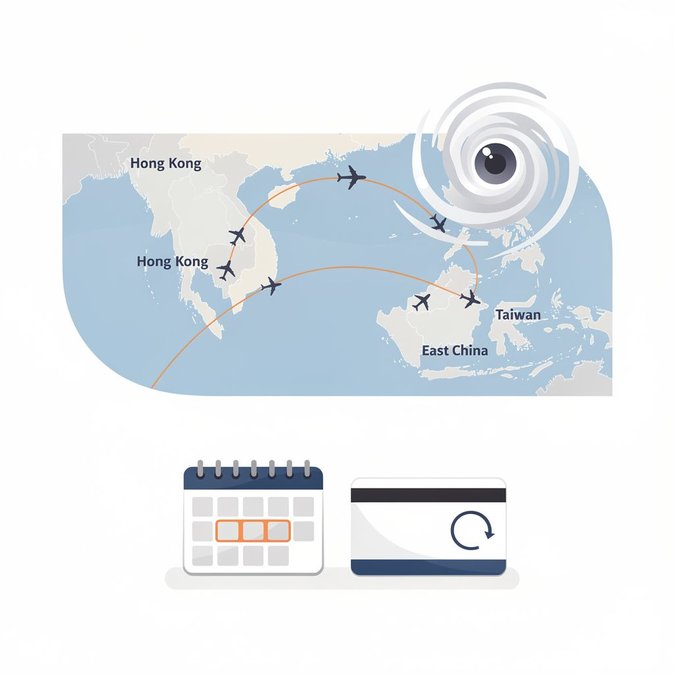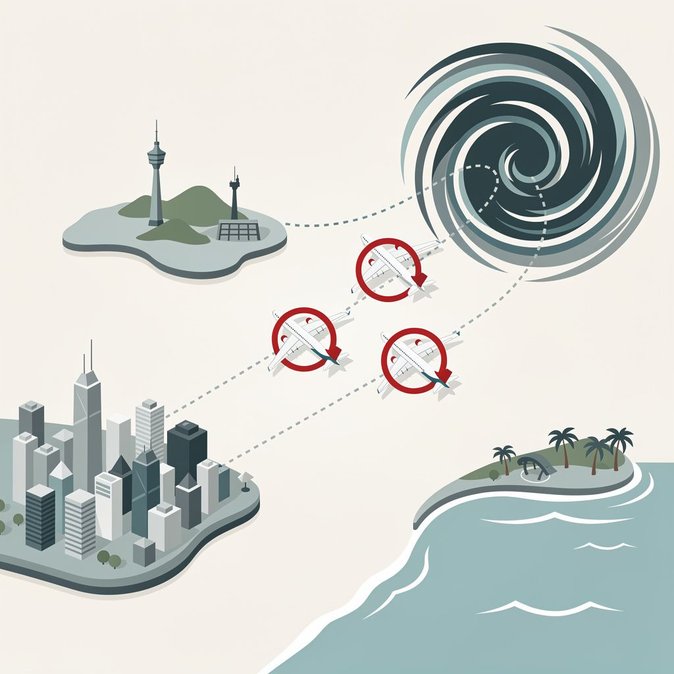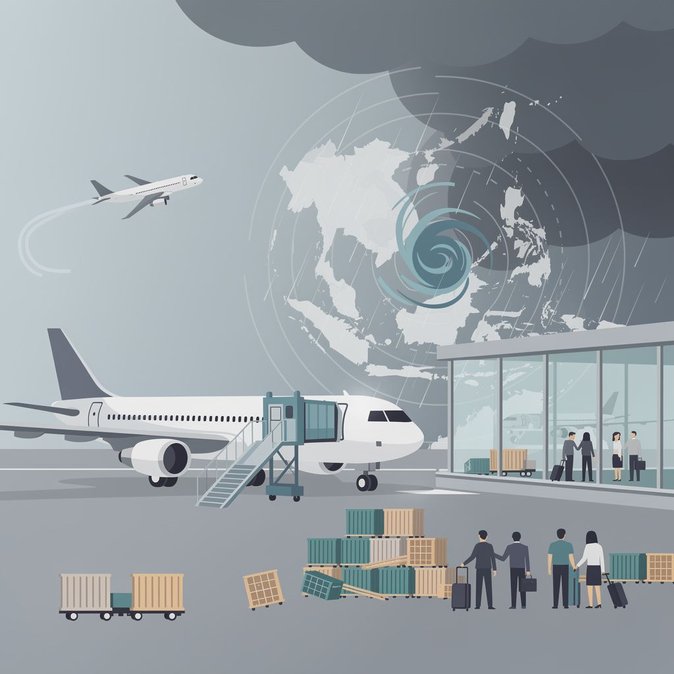
Hong Kong awoke on 11 July to the news that Severe Typhoon “Bavi,” now packing sustained winds of 155 km/h, had inched to within 430 kilometres of the territory and was tracking toward the eastern Pearl River Estuary. At 14:00 HKT the Hong Kong Observatory issued an updated tropical-cyclone bulletin warning of gale-force squalls in the next 24 hours, while the Airport Authority moved the airport to ‘Typhoon Readiness Level 2’. Almost immediately, local carriers began thinning their schedules. HK Express deferred flights UO824 / 825 (Hong Kong–Okinawa) to 12 July and postponed UO858 / 879 (Hong Kong–Ishigaki) by 24 hours, notifying passengers overnight by SMS and email. Greater Bay Airlines and Cathay Pacific followed suit, scrubbing a combined 22 departures to Taipei, Seoul and Manila for 11–12 July. Cargo operators have shifted wide-body freighters to overnight slots in an attempt to beat the weather-related capacity crunch. Air-traffic flow control compounded the disruption. A NOTAM issued at 07:27 UTC on 10 July placed hourly caps on aircraft overflying Hong Kong FIR via waypoint TAMOT “due to sector capacity,” effectively rationing slots for regional jets returning to their home bases ahead of the storm. Forwarders say import clearances for perishables are being prioritised, but exporters of high-tech components face 24-48-hour backlogs. Business-travel managers are urging staff to reconfirm meetings in Shenzhen and Guangzhou that require same-day return, noting that ferry and helicopter links across the delta are likely to be suspended if Signal 8 is raised. Companies with assignees arriving this weekend are being advised to arrange hotel accommodation on Lantau or Kowloon in case road access to the airport is curtailed. In practical terms, travellers should monitor airline apps, allow extra transfer time, and keep contingency cash or cards ready: cash machines and ride-hailing prices historically spike during Signal 8 closures. HR teams should also cross-check insurance coverage for typhoon-related delays, which some policies treat as a force-majeure exclusion.