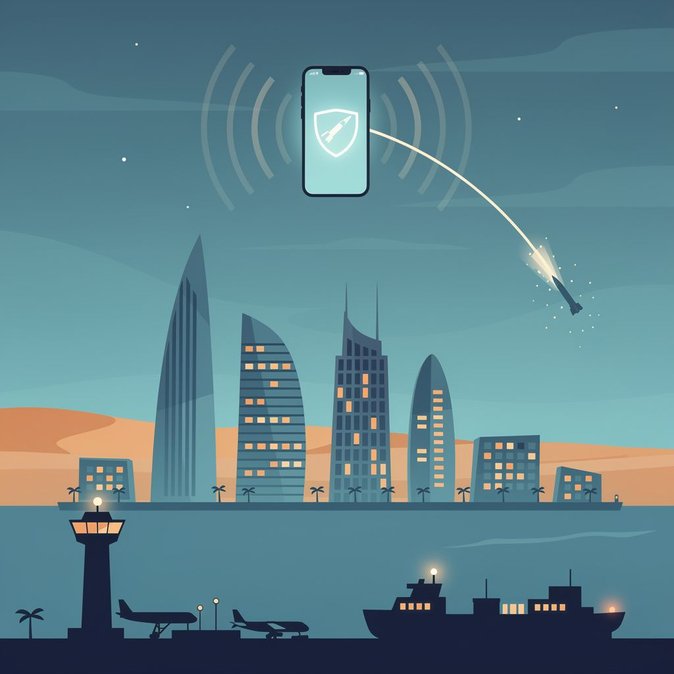
The United Arab Emirates’ National Emergency Crisis and Disasters Management Authority (NCEMA) triggered its phone-alert system on the morning of 12 July after defence radars detected missile activity beyond the country’s frontiers. The Ministry of Defence confirmed that air-defence batteries had responded and that the threat was neutralised well outside UAE territory. Residents received a bilingual push notification thanking them for their co-operation and assuring them that “the situation is stable”. While no UAE airports or seaports suspended operations, the brief alert underscores the elevated regional risk environment as US-Iran hostilities have spilled over into maritime and air domains. NCEMA said monitoring systems remain on 24-hour high alert and that precautionary warnings may be issued even when likelihood of impact is low, urging the public to rely solely on official channels. For global mobility managers, the incident is a reminder to keep real-time duty-of-care protocols in place for staff travelling through the Gulf’s busiest hub. Companies should ensure travellers are enrolled in airline or third-party alert systems, maintain up-to-date contact trees, and review contingency plans covering potential temporary airspace closures or flight-path diversions. Airlines have so far reported only minor routing adjustments and no cancellations, but war-risk insurance premiums remain volatile. Businesses with supply-chain exposure through Jebel Ali Port or Dubai International Airport should likewise monitor advisories from NCEMA and the General Civil Aviation Authority (GCAA). The UAE’s rapid use of its alert network – first unveiled after drone strikes in 2022 – has been widely praised by risk consultancies as a model for keeping residents and expatriates informed without unduly disrupting commerce. For now, authorities emphasise that normal activities and travel can proceed, with national systems “maintaining the highest level of readiness”.
Source: Gulf News