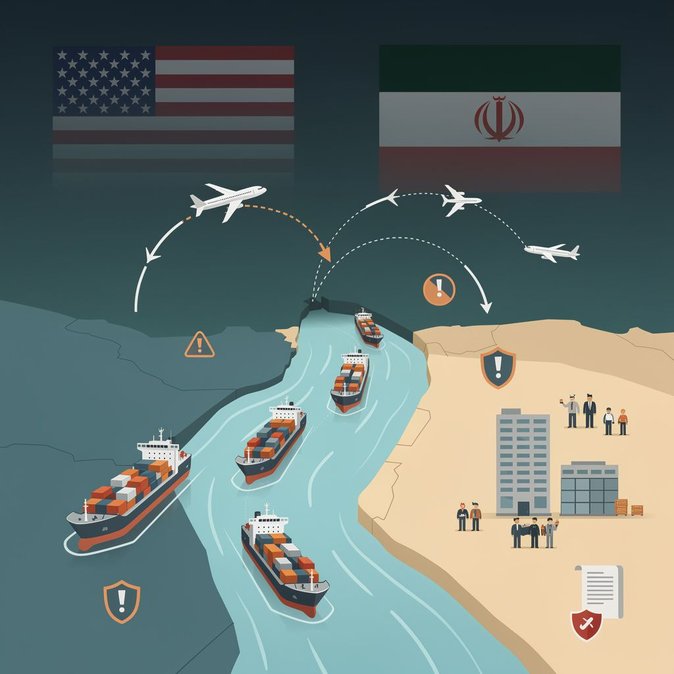
A live Gulf News briefing on July 11, 2026, summarised the latest developments in the US–Iran conflict and what they mean for people living and working in the UAE. Although a cease-fire was agreed in May, fresh threats from both sides have kept the Strait of Hormuz—through which a third of the world’s seaborne oil passes—under close watch. Iran’s Foreign Minister Abbas Araghchi arrived in Muscat for talks, while US President Donald Trump warned of “severe retaliation” if Iranian forces target American interests. Market analysts report higher insurance premiums for tankers transiting the strait and advise exporters to factor in possible shipping delays. For multinational companies the main mobility concern is contingency planning. During the height of hostilities in March, missile strikes briefly closed Dubai International Airport, forcing widespread flight diversions. Although UAE airspace is now open, corporate security teams are re-checking evacuation protocols, supplier routings and travel-approval thresholds for staff who must move between Dubai, Abu Dhabi and regional hubs in Oman, Qatar and Saudi Arabia. The UAE government has not re-introduced entry restrictions, but officials continue to urge residents to follow verified channels such as ICP and GDRFA for travel updates and to avoid circulating images of security incidents—an offence under federal cyber-crime law. Risk consultants note that any renewed escalation could prompt insurers to tighten war-risk coverage, which would feed through to freight costs and potentially disrupt just-in-time supply chains centred on Jebel Ali Port. While diplomacy appears to be making progress, mobility managers are advised to maintain high levels of situational awareness, ensure employees register with their embassies, and confirm that emergency visas for dependants can be processed on short notice should evacuation become necessary.
Source: Gulf News